
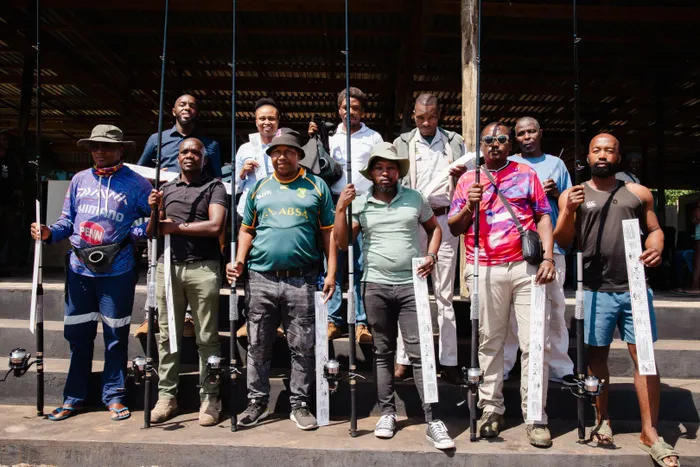
Nyembe community fisher folk accept fishing rods as part of an initiative deigned to improve the management and sustainability of small-scale fisheries in South Africa.
Image: Mnqobi Zuma
In a significant step towards sustainable fishing in northern KwaZulu-Natal, the KwaSokhulu and Nyembe communities gathered for a momentous occasion as WILDTRUST’s Small-Scale Fishers and Marine Protected Areas (MPAs) Project presented fishing rods to local fisherfolk. This initiative not only marks a celebration of community camaraderie but aims to establish a more sustainable approach to fishing, distancing local practices from damaging methods like gillnetting.
The distribution of fishing rods seeks to instil a culture of responsible harvesting, a change greatly appreciated by many in the fishing community. “Having these fishing rods will be very beneficial to us. I believe this is a start to a greater future for the Nyembe fishing community,” said Velani Mjadu, a fisherman from Nyembe, encapsulating the hope and anticipation felt by many.
The overarching goal of the Small-Scale Fishers and MPAs Project is to enhance the management and sustainability of small-scale fisheries throughout South Africa. It is designed to forge positive relationships between Marine Protected Areas (MPAs) and the vulnerable rural fishers who depend on these resources for their livelihoods and food security. By fostering an understanding of the advantages of MPAs, the project aims to ensure that tangible benefits reach the local communities that surround them, ultimately promoting socio-ecological resilience.
Educational outreach was a key element of the recent events, as fishers received vital resource materials regarding responsible handling practices for apex species such as sharks and rays. This knowledge is crucial in ensuring that if these magnificent creatures are inadvertently caught, they are released safely back into their habitats. Engagement from stakeholders like the iSimangaliso Wetland Park Authority and representatives from Ezemvelo KZN Wildlife provided fishers with insights into responsible harvesting laws, highlighting the importance of sustainable fishing practices.
The hands-on training segments at the beach emphasised practical skill development. Seasoned fishers guided their peers in the effective use of rods, fostering a spirit of collaboration and camaraderie within the community. Notably, this initiative endeavoured to empower women, who have traditionally been excluded from rod fishing. Tholakele Mnguni, a mussel harvester from KwaSokhulu, voiced the collective hope of the women in the community, stating, “We are happy with these rods, especially for the women in this community, because mussel harvesting is seasonal. Having these rods will allow us to fish when it’s off-season for mussel harvesting.”
The successful roll-out of this transformative initiative was made possible through the generous support of ICONIQ, Oceans 5, and the Blue Action Fund. Together with WILDTRUST and its partners, this initiative is set to not only empower small-scale fishing communities but also play a vital role in safeguarding marine biodiversity for future generations.
IOS