
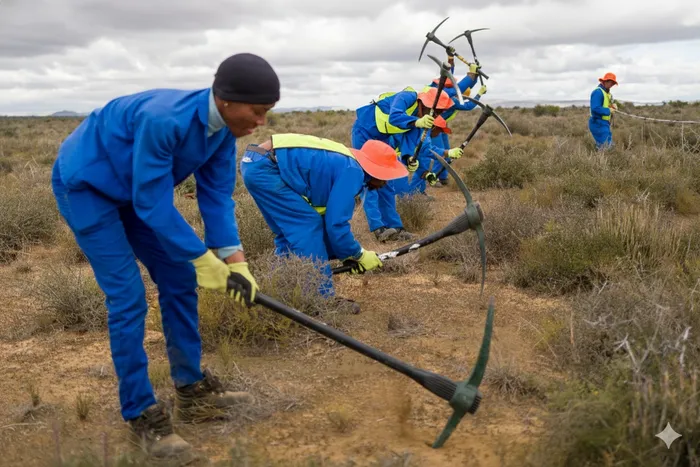
People work on the Thicket Restoration in the Eastern Cape to revive one of the country’s most biodiverse yet neglected ecosystems. The project aims to restore 800,000 hectares of native subtropical thicket by 2030.
Image: Todd Brown/UNEP
In a significant environmental milestone, the United Nations has officially recognised the restoration of South Africa’s subtropical thicket in the Eastern Cape as a World Restoration Flagship. This announcement comes just ahead of the 7th United Nations Environment Assembly (UNEA-7) and highlights South Africa's commitment to boosting agrifood systems, enhancing biodiversity, and contributing to global climate goals, alongside similar initiatives in Australia and Canada.
The recognition is part of a broader initiative led by the UN Environment Programme (UNEP) and the Food and Agriculture Organization of the United Nations (FAO) under the UN Decade on Ecosystem Restoration (2021–2030). These flagship projects are hailed as ambitious, science-based, and inclusive examples of restoration in action. As UNEP Executive Director Inger Andersen said, “One hectare at a time, governments, communities, and partners are restoring forests, grasslands, shrublands, coastlines, and marine environments.” This collaborative effort focuses on integrating indigenous knowledge with modern science to restore damaged ecosystems sustainably.
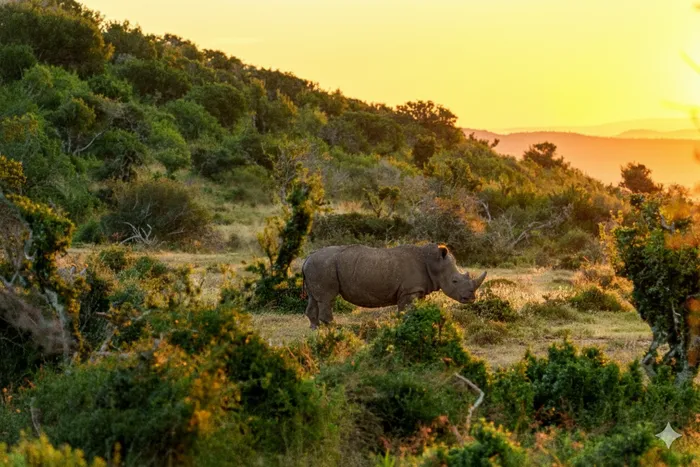
Restoring thicket improves soil resilience, provides fodder for large mammals during droughts, and creates safe habitats for species such as black rhinos and African elephants.
Image: Todd Brown/UNEP
South Africa's subtropical thicket, one of the nation’s most biodiverse yet often overlooked ecosystems, is at the heart of this restorative movement. The Thicket Restoration initiative encompasses over 60 projects across the Eastern Cape, highlighted by a vision to rehabilitate a staggering 800,000 hectares by 2030, using practices such as the planting of Portulacaria afra, commonly known as spekboom.
The restoration of this native thicket promises numerous environmental benefits. It enhances soil resilience, enhances carbon storage, and provides critical fodder storage for large mammals during droughts. This is especially significant considering the region recently endured its worst drought in a century, drastically impacting agricultural and wildlife resources.
Importantly, the thicket restoration initiative does not just serve ecological purposes; it is also a boon for local communities. By promoting an inclusive and gender-sensitive green economy, the initiative is expected to create over 1,000 rural jobs and indirectly benefit approximately two million people through improved ecosystem services. “The efforts that have been put into spekboom restoration will benefit future generations. We are banking for the long term,” remarked Luyanda Luthuli, a landscape practitioner with Living Lands, one of the partner organisations. “I am excited and hopeful for the future and for seeing the fruits of our labour towards restoring ecosystems, restoring resilience.”

In Australia, a nationwide initiative is restoring critically endangered native oyster and mussel habitats along the southern coastline.
Image: Todd Brown/ UNEP
The recognition of South Africa’s thicket restoration is part of a broader movement that includes significant projects in Australia and Canada. In Australia, the Reef Builder programme works to restore critically endangered shellfish reefs, while in Canada, the Respectful Returns initiative focuses on reviving damaged rivers essential for salmon populations. Together, these initiatives illustrate a global realisation that ecosystem restoration is crucial for climate resilience and biodiversity.
Following UNEA-7, the initiative will continue to raise awareness about the necessity of restoring ecosystems to foster resilience for both people and nature. The newly recognised World Restoration Flagships add to an expanding portfolio that already includes 27 initiatives recognised since 2022, collectively restoring over 18 million hectares of diverse ecosystems worldwide, with an ambitious goal of restoring a total of more than 68 million hectares in the coming years.
As the international community turns its gaze towards sustainable ecological practices, initiatives like South Africa's thicket restoration stand as a beacon of hope and a model for collaborative conservation efforts that not only heal the environment, but also uplift local communities.
IOS