
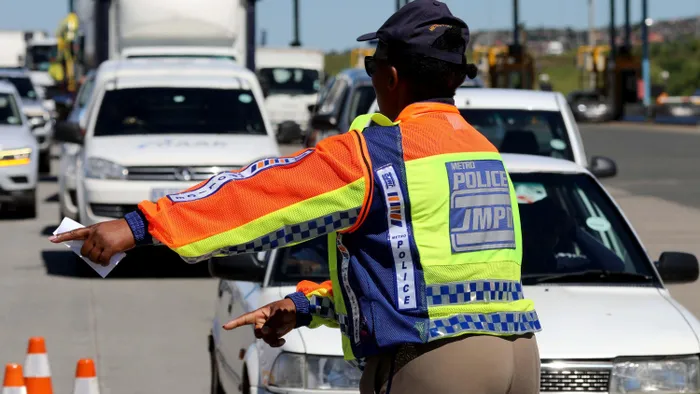
The AARTO system will decriminalise minor traffic infringements.
Image: Timothy Bernard / Independent Media
BAD drivers won’t be able to hide, some might have their licences scrapped and others compelled to undergo “rehab” when a slew of traffic changes come into effect next year.
Traffic authorities say that under the new system, any infringements against a motorist’s name will be entered into an online traffic offences register, where drivers can check their own records. Law enforcement officers will also have instant access to the system during roadside stops.
Collen Msibi from the Department of Transport says it’s just one of many initiatives aimed at improving safety on the country’s roads.
“It's basically a register if you want to see the history of your traffic fines. It doesn't mean that certain people will make it to the list and others won't, everybody will be on that. If you've committed a traffic infringement, you will appear on the system. Everything will be on one database,” said Msibi.
These measures fall under the ambit of AARTO, the Administrative Adjudication of Road Traffic Offences. The system, which will standardise how infringements are dealt with nationally, is already running in Tshwane and Johannesburg; the rest of the country will go live in July.
“AARTO means that we are decriminalising the traffic offences system…you won't be arrested, but you'll be blocked from renewing your licence or disc,” Msibi explained.
He said there are several steps in the new system. Firstly, paying a traffic fine within the first 32 days gives motorists a 50% discount. After that period, the full fine must be paid.
“So what we are envisaging with AARTO is that we'll introduce a tribunal. Instead of going to court, you'll go to the tribunal if you've got any dispute,” Msibi said.
The third stage is an “admin mark” against your name.
“In other words, you are blocked. You cannot transact whatsoever until you pay all your fines,” he explained.
The fourth stage is the demerit system.
“We give you 15 points, and once you've exhausted all your 15 points, you've passed your threshold and we suspend your licence for three months,” Msibi said.
Once a licence has been suspended three times, the motorist is considered a “habitual offender.” The licence is scrapped, and the driver must reapply and participate in a rehabilitation programme.
“It's an educational programme to orientate motorists on what they shouldn’t be doing on the road. It’s a soft landing, where we counsel you on the issues that landed you there and assist you to take your licence again,” said Msibi.
He also warned that the Department of Transport anticipates some motorists might try to bribe officers to avoid losing their licences.
“Once people realise that repeated offences could cost them their licences, some will be willing to ‘empty their bank accounts’ to stop points being deducted, to make traffic officers look the other way,” said Msibi.
The issue is real.
“Last Easter and December, there were quite a huge number of people arrested for attempting to bribe traffic officers. For us, it’s also a change of culture within law enforcement. We’re not saying the rotten potatoes aren’t there, but there are people who are serious about their jobs and will arrest those trying to bribe. With officers enforcing the law, we believe we’re making progress,” he added.
AARTO was first introduced in 1998 and is intended to promote road safety, discourage traffic law violations and introduce a national demerit‑point system for offenders. It was set to go live at the start of this month, however, there have been several delays in implementing the system but a new government notice says it will kick into effect on 1 July next year. Reasons offered include questions around the readiness of municipalities to implement the system.
Meanwhile, traffic authorities have stepped up surveillance on the country’s roads as the December holiday season begins. Drivers with outstanding fines have been warned to pay up or face consequences — including possible jail time if they have outstanding court warrants.
Currently, there are 32 million unpaid fines in South Africa, running into billions of rands, according to FINES SA, a company that assists motorists with fine payments. Co-founder Barry Berman said national and municipal systems now flag outstanding fines during routine eNaTIS transactions and at roadblocks.
“In many cases, motorists only realise they have unpaid fines when stopped at roadblocks, risking unexpected licence blocks, penalties, and disruptions to travel plans,” he said.“Even ahead of the full AARTO rollout, real-time data integration means your driving record follows you everywhere. This is why we strongly encourage drivers to check regularly for outstanding fines and settle them.”
EThekwini Municipality said failure to pay fines has a major impact on revenue collection, although the total outstanding cannot be precisely calculated.
“Fines are issued daily, and some are still being processed. Values fluctuate as new fines are generated, existing fines processed, and payments made,” said spokesperson Gugu Sisilana.“Non-payment undermines road safety initiatives and negatively impacts the Municipality’s revenue collection efforts. We encourage motorists to settle outstanding fines promptly to avoid further penalties and support safer, law-abiding road usage.”