
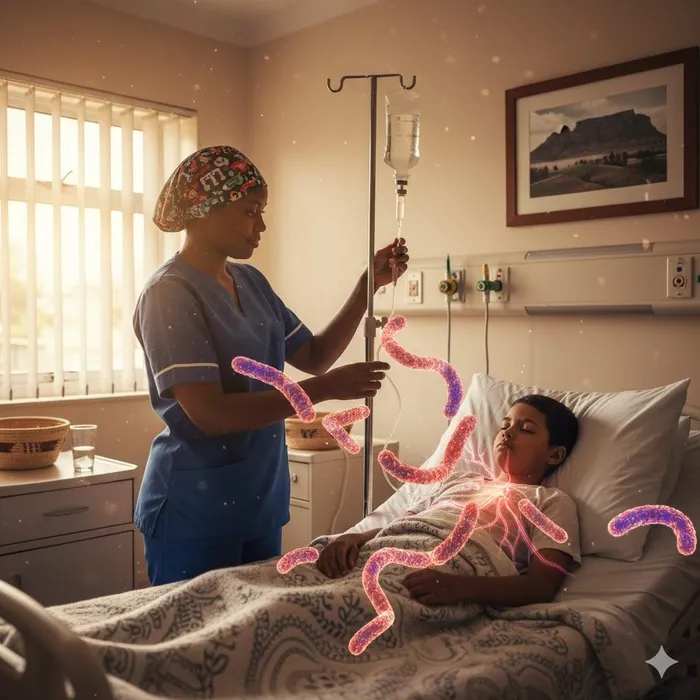
Funding and programme cuts by the U.S. Agency for International Development (USAID) threaten essential health and gender equality programmes across Africa, but the continent is actively seeking alternative solutions, including rethinking domestic financing for healthcare.
Image: Gemini
African governments and civil society groups are collaborating across political lines to speed up efforts to reduce reliance on development aid and take back national leadership over their health systems. This push follows abrupt funding and programme cuts by the U.S. Agency for International Development (USAID) in February.
According to Christabel Netondo, Senior Associate for Youth Engagement at Women Deliver, the US Government enacted a funding freeze and subsequent cancellation of a high percentage of USAID grants earlier this year. While a recent deal with Kenya will provide $1.6 billion over five years, the wider impact of global funding withdrawals continues to threaten essential health and gender equality programmes across the continent.
African actors are actively seeking alternative solutions, as shown by recent policy changes. "In Kenya, new legislation introduced for the Social Health Insurance Fund, replacing the National Health Insurance Fund, is designed to provide broader access to healthcare services and products," Netondo noted. "It shows how governments are coming together to rethink domestic financing for healthcare."
Netondo pointed out that for decades, global multilateral systems like the United Nations have provided the roadmap for national agendas through frameworks such as the Sustainable Development Goals 2030. However, she believes the systems themselves need reform.
“We cannot overlook the fact that some of these ratified global frameworks have adopted practices of colonialism and continue to be enabled by the same institutions that perpetuate inequalities, power divisions, and deprioritisation of national agendas on development,” Netondo said.
Against a backdrop of shrinking civic space, rising anti-rights rhetoric, and declining donor funding, African feminist movements and youth leaders are showing renewed determination.
This determination was evident during the African Regional Convening, hosted by Sonke Gender Justice in Nairobi, Kenya, in November. As a lead-up to Women Deliver 2026, the event gathered over 200 advocates, policymakers, feminist leaders, and grassroots organisations to advance Africa-led solutions for gender equality and sexual and reproductive health and rights.
The Convening was part of a global consultation spearheaded by Women Deliver to co-create a Feminist Playbook. Launched at UNGA in September, the Playbook aims to instigate a movement to unite countries and regions, press for accountability from those in power, and ultimately examine the systems that have failed girls and women in order to build new structures that place them at the centre. More than 250 people have contributed through 15 regional consultations so far.
Netondo sees "real hope in the way African actors are responding, with committed players finding alternative solutions."
In addition to African governments re-examining national budgetary allocation for essential sectors, the Africa Centres for Disease Control and Prevention is being looked at to double its efforts in spearheading the continent's public health agenda.
African philanthropy and alternative financing mechanisms are also playing a growing role. Netondo highlighted that the East Africa Philanthropy Network, through its annual conference, has been convening actors such as trusts, foundations, grantmakers, and non-grantmakers to discuss the gap "and what needs to be done within our systems”.
“It is very possible to fill these gaps, since the conversations are geared towards rebuilding the sovereignty of African systems and institutions by their governments and their people," Netondo said. This is being pursued while also seeking alternative funding through a blend of multilateral grants and concessional loans to national governments.
(Registrations are now open for Women Deliver 2026. For more information visit womendeliver.org/wd2026)
IOS