
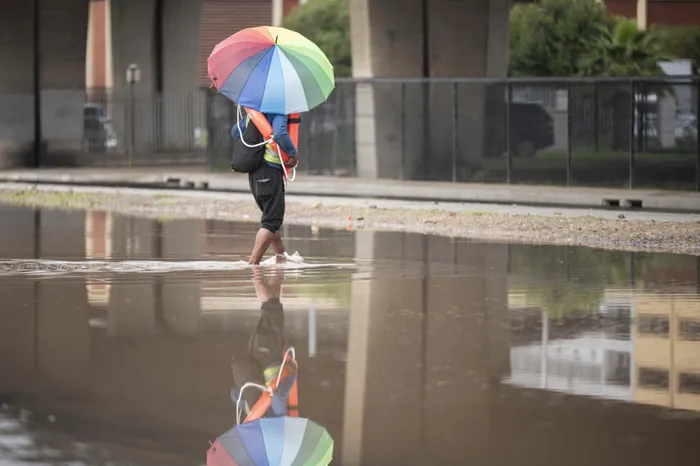
The weather service warns holidaymakers to monitor forecasts as the festive period could be punctuated by heavy downpours.
Image: Armand Hough/Independent Newspapers
As the festive season approaches, many South Africans are set to flock to their favourite beaches and mountain retreats. However, the South African Weather Service (SAWS) has issued a timely warning to holidaymakers to stay vigilant regarding weather conditions, as predictions of constant rainfall may dampen holiday spirits.
During a media briefing in Pretoria on Thursday, senior weather forecaster Jaqueline Modika explained the ramifications of the anticipated La Niña effect on local weather patterns. This climate phenomenon is expected to usher in a particularly wet holiday season, impacting rainfall distributions and temperature fluctuations throughout the country.
“The forecast indicates a transition toward a weak La Niña state, which is expected to influence rainfall and temperature patterns across the country,” Modika said. She added that La Niña occurs when the waters in the central and eastern Pacific Ocean cool below average, resulting in altered global wind and weather patterns.
“This cooling typically brings above-normal summer rainfall to the north-eastern parts of South Africa, including regions such as Gauteng, Limpopo, Mpumalanga, KwaZulu-Natal, parts of North West, and Free State,” she added. Climate models suggest that central and eastern South Africa will experience increased rainfall, particularly in areas receiving summer rain.
Modika said these wetter-than-usual conditions are not only expected to persist throughout the festive season, but are also likely to continue into mid-to-late summer. During this period, SAWS anticipates partly cloudy conditions alongside warm-to-cool temperatures for much of the country over Christmas and New Year.
“Isolated to scattered showers and thundershowers are expected primarily in the central and eastern regions of South Africa,” she noted, instilling caution in holidaymakers seeking sun-drenched getaways.
Asked whether holidaymakers would experience a washout or enjoy themselves at the coast, meteorologist Lehlohonolo Thobela responded, “It’s a beautiful question, but we can’t predict enjoyment. However, holidaymakers should prepare for rainy weather, especially along the eastern coast and adjacent interiors, such as several areas in the Eastern Cape.”
Thobela urged caution, expressing concerns about potential hazards resulting from severe weather. “There’s a risk not only from rainfall but also damaging winds and other weather phenomena,” he said. “With high and low temperatures, health risks may arise. Therefore, while I hope everyone enjoys the festivities, I encourage them to stay informed and keep an eye on weather conditions.”
The briefing came amid reports of several significant weather events that have unfolded from mid-spring into summer, including heavy rains that have led to severe flooding in the KwaZulu-Natal midlands and loss of life and infrastructure damage.
“These incidents have underscored a year marked by immense loss, including devastating rainfall and flooding incidents across the Eastern Cape, where more than 100 lives were tragically lost,” Modika said, referencing communities severely affected by adverse weather, such as Dicoligny near Mthatha.
IOS