
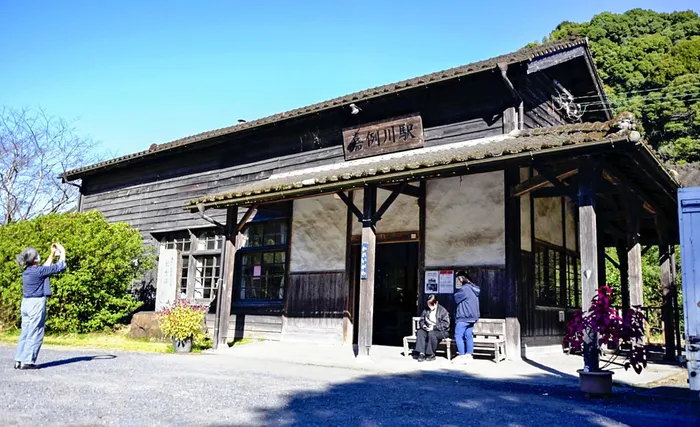
At Kareigawa Station in Kirishima, a local family has been preparing the ekiben for over 20 years. It won the Kyushu Ekiben Grand Prix this spring.
Image: Washington Post
DESPITE not serving any trains since August, when torrential rain devastated southern Kyushu, a station in Kagoshima Prefecture on the JR Hisatsu Line in Japan still sees customers line up to buy its specialty ekiben boxed meals.
At Kareigawa Station in Kirishima, a local family has been preparing the ekiben for over 20 years. Filled with simple, local delicacies, the ekiben won the JR Kyushu-sponsored Kyushu Ekiben Grand Prix for the first time in 15 years this spring.
With the area devastated by natural disasters, the family is working hard to revitalize the local community, encouraged by the long line of fans who drive to the station especially for the ekiben.
Shortly after 10 a.m. on Nov. 3, the last day of three consecutive holidays, rental cars and large motorcycles began arriving at the station. Despite being about an hour's drive from Kagoshima City, the vehicles' license plates indicated they had traveled from outside the prefecture.
At the entrance of the wooden station building, built over 120 years ago, about a dozen people instantly formed a line.
What they were eager to buy was the branded "Hyakunen no Tabi Monogatari Kareigawa" (100-year-long story of travel at Kareigawa Station) ekiben, priced at 1,800 yen and sold exclusively on weekends and national holidays.
The ekiben serves up rice cooked with shiitake mushrooms and bamboo sprouts; a type of sweet potato tempura called "gane" in Kagoshima dialect; and daikon radish that has been julienned and simmered in dashi.
Without meat and fish, the ekiben appears plain, but it makes use of a lot of locally farmed produce, giving it a nostalgic feel.
About 110 meal boxes sold out in only an hour. The station also sees many repeat customers. A 44-year-old company employee from Fukuyama, Hiroshima Prefecture, said, "I love the simple flavors that you can't find in other ekiben. Once you get a taste, you'll never forget it."
Travelers 100 years ago
Inspired by the station's history, Hyakunen no Tabi Monogatari ekiben was conceived in February 2004 following an ekiben competition organized by a local tourist association to commemorate the launch of the Hyato-no-Kaze tourist train on the Hisatsu Line, coinciding with the partial opening of the Kyushu Shinkansen.
Mayumi Yamada, 68, a homemaker and occasional ready-made food vendor at that time, came up with the ekiben.
Among the more luxurious bentos made by chefs from famous inns taking part in the competition, the comparatively simple bento, which Yamada said she "created with the image of a traveler eating it 100 years ago," struck a chord with the judges. The decision to begin selling it came the following month.
However, with permission to sell within the station building itself not granted for some time, initial sales were sluggish.
Things changed in June of that same year. Yamada presented one unsold ekiben to cabin attendants of the Hayato-no-Kaze train as it happened to arrive at the station and, two days later, Kyushu Railway Company (JR Kyushu) reached out and asked about selling the ekiben on board the luxury train.
It turned out that the cabin attendants had been so impressed by its taste that they approached the company's head office about selling the ekiben on board the train.
Yuka Ikeda, 51, was one of them. "The taste, aroma, and appearance - all of it fit perfectly with the train's atmosphere. I was able to confidently recommend it to our passengers," she recalled.
Every week since, Yamada, her 76-year-old husband Fumiaki and her eldest daughter Kayo Imabeppu, 43, have stood in a small cooking facility set up on the grounds of their Kirishima home, cooking the ekiben from dawn and continuing to deliver the same flavors.
From 2008 to 2010, the ekiben won first place for three consecutive years in a ranking mainly decided by fan vote. Since then, the ekiben's popularity has soared. Fans flock by either train or car to the unmanned station at the foot of the Kirishima Mountains.
Unbeaten by disaster
Unfortunately, the JR Hisatsu Line has been hit by a series of disasters.
In July 2020, heavy rains in the Kyushu region closed a northern section of the line between Yatsushiro Station in Yatsushiro, Kumamoto Prefecture, and Yoshimatsu Station in Yusui, Kagoshima Prefecture.
Due to the damage, the services of the Hayato-no-Kaze train were suspended and finally discontinued in March 2022.
To make matters worse, further torrential rain damage forced a closure between Yoshimatsu Station and Hayato Station in Kirishima, on which Kareigawa Station is located, with no service resumption in sight.
Despite the incidents, Yamada has never thought about quitting. "Though a station usually exists for trains, we have customers who come here [by car or other means] just to buy my ekiben," she said.
This spring, the Hyakunen no Tabi Monogatari brand came out on top again for the first time in 15 years in the ranking.
Yamada said she is reinvigorated each time she comes across the smiles and words of encouragement of her customers.
JR Kyushu has predicted that it will be difficult to restore train services by the end of this year, and so, for the time being, Yamada's ekiben will continue to be sold at a station where no trains arrive.
“I want to keep making tasty ekiben and revitalize our local community for those who are waiting for the day when they can travel to Kareigawa by train,” Yamada said.