Public spaces under fire: no one is safe
Public safety
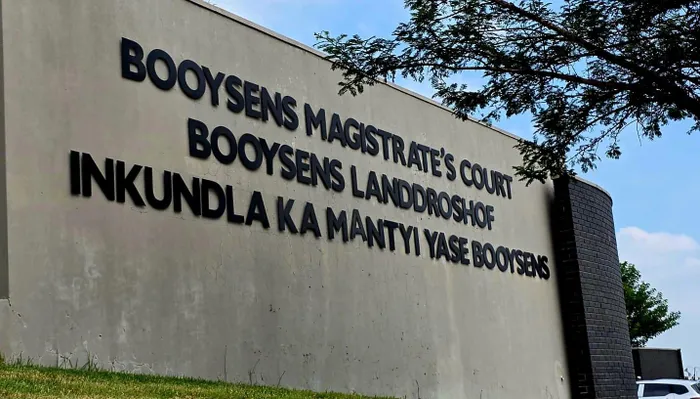
At least five people were shot, and two were killed outside of Booysens Magistrate's Court on Tuesday (20 January 2026).
Image: Independent Newspapers
BULLETS, gangs and fear have overrun South Africa’s public institutions, leaving citizens terrified in the very spaces where they should be safe.
This week, gunfire erupted in broad daylight outside the Booysens Magistrate’s Court in Gauteng, leaving two people dead. In another incident, two teachers were killed at Ntabankulu Primary School in the Eastern Cape. And As courts, hospitals and schools turn into battlegrounds, South Africans are increasingly asking who will keep them safe, if not the state.
“Without any doubt, the buck stops with the government,” said Prof André Duvenhage, political analyst at North-West University. He said democracy itself was beginning to fracture under the weight of persistent violence and institutional failure.
“We have instability at the grassroots level and we are building a democracy on top of it, and that is the reason why democracy, in a way, is falling apart.”
Duvenhage said South Africa was showing the characteristics of a failing state, with high levels of political instability pointing to what he described as “statelessness — or hell on earth”.
“The first job of a state is to create order, and that is not the case in South Africa. We are a weakening state with mafia characteristics, and political assassinations are part of that. South Africa is collapsing into a mafia state where you cannot differentiate clearly between the political elite of the day and the criminal elite,” he said.
Duvenhage said the commissions of inquiry held over the years had laid bare the depth of state capture. “And state capture is a typical example of a mafia state, and some of it resembles the patterns we have seen where the criminal justice system is fundamentally falling apart,” he said.
The warnings come amid a string of violent attacks at public institutions.
Following the court shooting, the Public Servants Association (PSA), which represents court employees nationally, said it had recorded a significant increase in shootings and killings in and around courts in recent months. The union warned that the attacks threatened not only court staff and civilians, but the rule of law itself.
It said the Booysens shooting was a grim reminder that courts were increasingly unsafe institutions.
“The Department of Justice and Constitutional Development is quick to condemn such incidents and promise to upgrade court security. Despite this, incidents are continuing unabated. It’s ironic and tragic that courts that are meant to uphold justice and be safe spaces have become places of violence and harm,” the PSA said.
The union said simply beefing up security would not end the attacks.
“Government must ensure that the law is being upheld by bringing perpetrators to book, successfully prosecuting them and securing appropriate sentences to deter such attacks. The PSA calls on law enforcement agencies to ensure that perpetrators of this incident and all other outstanding similar incidents are held accountable.”
The Law Society of South Africa (LSSA) said the attack was “a direct affront to the rule of law and the administration of justice”.
Its president Nkosana Mvundlela said courts must remain safe spaces where legal practitioners, litigants, court officials and members of the public can access justice without fear or intimidation. The organisation called on authorities to urgently assess and reinforce security infrastructure at court buildings and surrounding precincts, including parking areas and access points. This, it said, must include increased visible policing, improved access control and stronger coordination between court security and the South African Police Service.
“The safety of legal practitioners and court users is not negotiable. The justice system cannot function effectively in an environment where violence threatens those tasked with upholding the law. We urge the government to prioritise the protection of judicial institutions and all who serve within them,” Mvundlela said.
Chairperson of the Gauteng Portfolio Committee on Community Safety, Dr Bandile Masuku, said the committee was “deeply concerned by the apparent escalation in organised and brazen criminal activity targeting public institutions, including courts and other state facilities that should be safe spaces for both officials and members of the public”.
He warned that the attacks, carried out in broad daylight, showed “a worrying level of audacity and a clear disregard for the rule of law”.
Violence at state institutions has become increasingly common.
Last year, a KwaZulu-Natal doctor and his companion were shot by a security guard at Rietvlei Hospital in Umzimkhulu. The province has also experienced a wave of violence at schools.
In Verulam, two Grade 8 pupils allegedly stabbed a 17-year-old Grade 10 pupil from Trenance Park Secondary School in the neck with a kitchen knife. In Chatsworth, five pupils were stabbed during a soccer match at Glenover Secondary School. Four pupils were suspended, and another fight later broke out between parents and learners.
“It’s a national crisis,” said Nomusa Cembi from the teachers’ union Sadtu.
She said the incidents were deeply unsettling and blamed lax security measures at schools. Cembi said repeated calls for the government to strengthen school security had been ignored, and when guards were deployed, they were often ill-equipped and untrained.
“They have security personnel standing at the gate with no resources except a sjambok and a register to record the people going in and out,” she said.
While some schools had the means to hire private security, Cembi said the majority of government schools were no-fee institutions where parents could not afford such measures.
“We’ve long been calling for the department to ensure that qualified personnel are hired in our schools, that they are properly resourced, and that schools have proper fencing and equipment, including metal detectors, to detect if people are armed,” she said.
The National Teachers’ Union also condemned the violence and called for urgent security upgrades.
“Violence has no place in our places of learning, and we will not rest until our educators can teach without fear,” the union said.
Cosatu spokesperson Matthew Parks said the violence engulfing courts, hospitals and schools was not isolated, but part of a broader national pattern.
“We are a violent country. I think we underestimated in 1994 how violent a country we are… Weapons have become easily accessible, and criminals are used to committing horrifically violent crimes,” Parks said.
He said frontline workers were paying the price; trauma levels are high, many police officers struggle with PTSD as well as teachers too and there’s a high level of burnout, fatigue and demoralisation.”
Parks said responsibility for safety was shared between the state and society.
“It’s the employer, the state, the police, the judiciary, correctional services, but also, as a society, we’re responsible as parents,” he said.
“Correctional services has got to do much better to rehabilitate people, instead of just becoming a university, a holiday home or a drug den for criminals. The police must arrest criminals, the judiciary must ensure they are convicted, and government must invest properly in the institutions meant to protect us.”
Despite the stark challenges, some activists emphasise that solutions are possible if communities and authorities work together.
Anti-crime activist and Crime Watch host on eTV and eNCA, Yusuf Abramjee said that the safety of government institutions has become increasingly critical. “While private security personnel are often present, protocols are inconsistently applied, and lax implementation can undermine public confidence and create vulnerabilities.”
He emphasised the role of communities alongside the authorities in combating the problem. “Communities are vital stakeholders. Proactive reporting of suspicious activity can serve as an early warning system and help prevent threats from escalating,” said Abramjee.
He said that learning from successful international models is part of the solution. “By studying safety frameworks abroad and adapting them to South Africa’s context, institutions can develop practical, effective strategies to enhance security,” he said.
At the time of going to print comment from SAPS, Department of Justice, Department of Health, Department of Basic Education the Human Right Commission was still outstanding.