
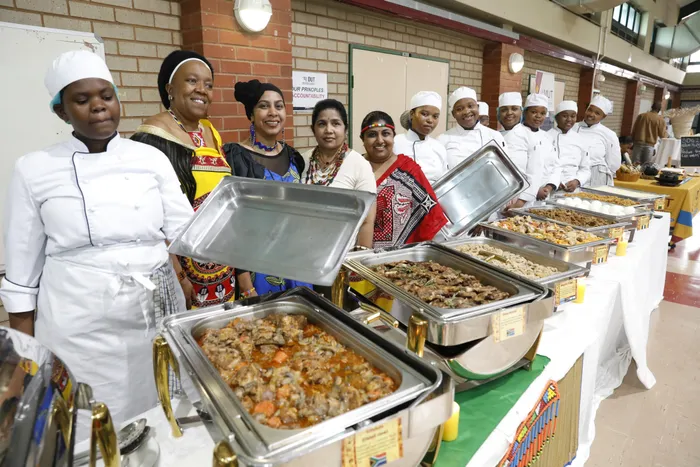
Students and lecturers from DUT Hospitality and Tourism department with meals prepared by second year catering management students at their Annual African Food Festival. A new report says the hospitality sector is struggling with staffing shortages and rising operational costs.
Image: Doctor Ngcobo/Independent Newspapers
The hospitality sector in South Africa is caught in a precarious balancing act, grappling with a myriad of challenges that threaten its recovery and future sustainability. According to the inaugural Hospitality Asset Management Company (HAMAC) South African Hoteliers Report, the industry is under severe strain, wrestling with staffing shortages, soaring operational costs, and a lack of adequate support from both government and sector bodies.
The report says that 77% of hoteliers view human capital as their most significant obstacle to business sustainability. This concern is further compounded by the fact that 58% of those surveyed indicated their profitability has either stagnated or declined in the past five years, despite the glimmer of post-COVID demand recovery. The findings stem from a recent survey carried out by HAMAC, a hotel asset management and hospitality consulting firm headquartered in South Africa, in partnership with Tourism Update.
The insights gathered from hospitality executives and managers reveal a sector trapped between the promise of revival and the harsh reality of operational limits. Rising costs are a central concern, with operational margins squeezed by soaring labour costs (37%), utilities – chiefly electricity (34%) – and food expenses (29%). Additionally, almost 30% of hoteliers cited regulatory red tape as a significant operational hurdle, encumbering their ability to adapt through pricing strategies or efficiencies.
The report flagged an alarming skills gap, with close to 70% of respondents expressing dissatisfaction with newly recruited graduates' competencies. This raises red flags regarding the long-term readiness of the hospitality workforce, creating an urgent necessity for targeted training and development initiatives.
Capital investment has also taken a hit, as over half of the respondents (54%) admitted to deferring essential upgrades and improvements due to funding constraints. This delay not only stifles growth but also curbs competitiveness in an industry keen on investing in its facilities and services.
Despite these daunting challenges, there are flashes of optimism within the sector. Nearly half (46%) of hoteliers indicated a commitment to prioritising workforce development if obstacles like soaring utility costs were addressed. Furthermore, 77% expressed an active pursuit of new technologies aimed at streamlining operations – an effort which points toward a strategic pivot to efficiency and enhanced guest experiences.
However, a significant trust deficit lingers within the industry. A concerning 70% of hoteliers communicated a lack of confidence in the effectiveness of SA Tourism and the Tourism Grading Council of South Africa (TGCSA). Sentiments towards the Federated Hospitality Association of South Africa (FEDHASA) were evenly divided, underscoring apprehensions about advocacy efforts and sector representation.

Anton Gillis is CEO of HAMAC (Hospitality Asset Management Company).
Image: Supplied
Anton Gillis, CEO of HAMAC, said: “The findings confirm what many hoteliers experience daily: recovery on paper is not the same as recovery in practice. The challenges facing the sector are largely systemic rather than strategic. Without meaningful intervention, these pressures will continue to erode resilience and limit growth.”
In light of these findings, HAMAC is advocating for urgent, co-ordinated action from government and industry stakeholders. Key recommendations include enhanced reliability of essential services, streamlined regulatory frameworks, and reduced administrative burdens to empower operators in managing sustainable businesses.
“Hospitality must be treated as strategic economic infrastructure,” Gillis emphasises. “The sector not only creates jobs but also drives regional development and supports local economies. To stay competitive, it requires supportive structures and proactive collaboration.”
The report concludes that South Africa remains a world-class tourist destination, yet the hospitality sector's capacity to realise its potential hinges on collective efforts in skills development, infrastructure reform, targeted investment, and strategic planning.
IOS