
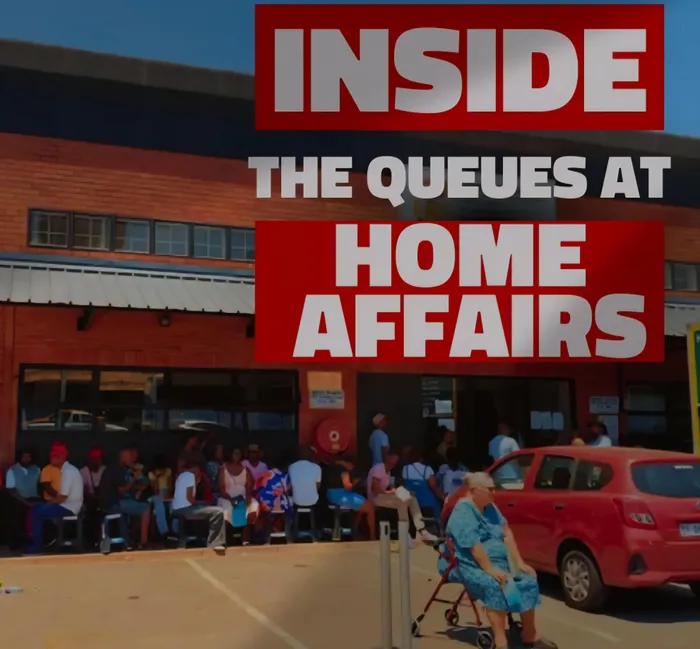
In the sticky summer heat, hundreds of applicants stood in long lines outside various Home Affairs branches, waiting for documents.
Image: XOLILE MTEMBU/IOL
Hurry up and wait — that is the reality at several Home Affairs offices.
Travelling from far and wide with little to no money, many people arrive even before the sun is up, hoping to be helped.
But some walk away empty-handed after standing in snaking queues for hours, as systems all too often go offline and online bookings show no available slots.
Offices also become so chock-a-block that not everyone can be helped in a single day.
And while Home Affairs political head Leon Schreiber has been cast as the man sent in to steady what had for years been described as a sinking ship, by putting more and more services online and roping in banks to make things easier for applicants, many are still being left behind.
That is because for those in rural and poorer communities, the move online means little, with data being too expensive and access to technology limited.
Visiting nine branches across the country over the past fortnight, an IOL team observed lengthy lines, with applicants, some as old as 82, waiting most of the day in the hot sun for basic services such as identity documents, passports, and birth certificates.
For many of those queueing, going without a birth certificate or ID can mean the difference between accessing essential government services like SASSA grants and schooling, and optional leisure-related services such as passports.
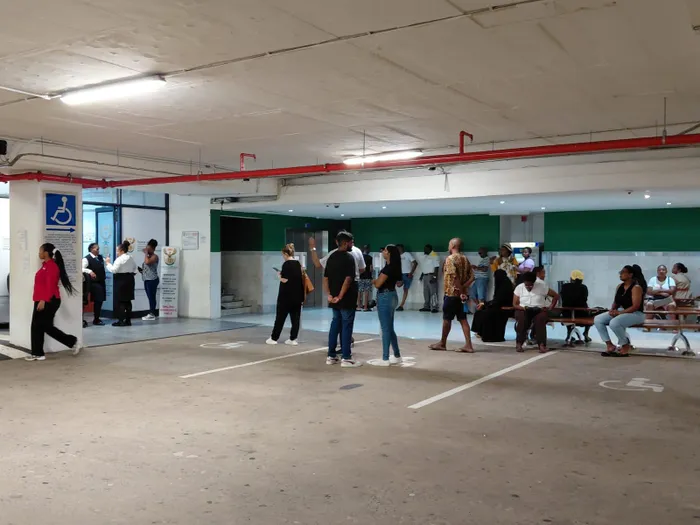
Applicants wait inside the Home Affairs office at the Pavilion Shopping Centre in Durban
Image: XOLILE MTEMBU/IOL
In Durban, the struggle was impossible to miss.
In the sticky summer heat, hundreds of applicants stood in long lines outside various Home Affairs branches, waiting for documents.
At the Umgeni Road office, the reality on the ground clashed sharply with promises made when the Branch Appointment Booking System (Babs) was introduced in 2022 to reduce overcrowding.
Babs is an online booking system that allows people to pre-book a time to apply for IDs and passports before visiting a Home Affairs office.
As temperatures climbed to about 32°C, pregnant women, children, and the elderly leaned against brick walls for shade as the line barely moved.
Bantu Mzobe, of Umlazi, said he had applied for a smart ID and passport on January 15 and expected a simple collection process.
“It appears to be bad today,” the 32-year-old told IOL.
“I was told when I came to collect, I would not have to stand in lines, but when I arrived here three hours ago, there were at least 50 people in front of me, not to mention those inside the building.
“I do not know whether it is the system, the workers not doing their jobs, or whether they are short-staffed.”
Mzobe works in Gauteng and was visiting KwaZulu-Natal while on leave.
A woman who asked not to be named said she first applied for her smart ID in 2024 and had since been sent from office to office.
“I went there at 8am,” she said.
“Now it is about 1pm, so it has been five hours trying to finally put an end to the back and forth and get my ID.
“I honestly do not see the difference in this new system they are boasting about.”
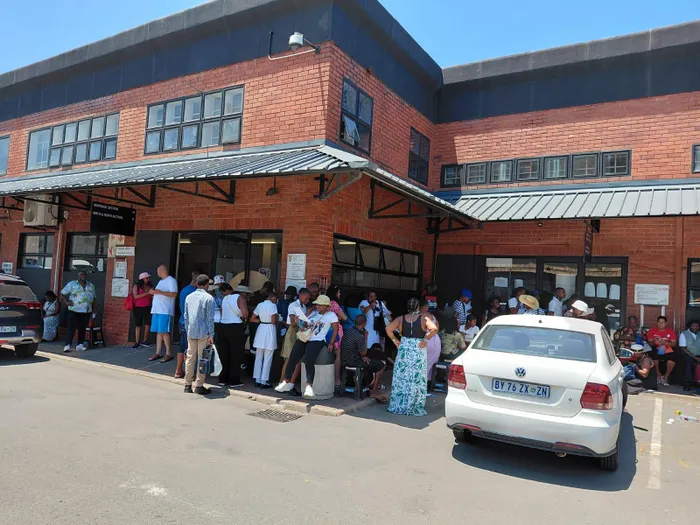
Throngs of people queue outside the Umgeni Road Home Affairs office in Durban, where long lines have become a daily reality as people wait for basic services such as IDs, passports and birth certificates
Image: XOLILE MTEMBU/IOL
At the Home Affairs office at the Pavilion Shopping Centre in Durban, conditions had been cooler and better ventilated, but queues still wound through the space.
Nokulunga Shabane, 31, said she had been told to collect her ID on Wednesday between noon and 1pm.
After 2pm, she had still been waiting.
“It is my first time here,” she said, adding she did not know how the system worked.
“But it is unfair for them to call me for an appointment when they knew they would not be ready,” she said.
Not everyone shared the same experience.
Newlywed pensioner Sihle Cele from Cornubia, north of Durban said he was impressed with the service he received.
“I came to get my marriage certificate … it was all surprisingly quick,” he said.
“This office appears to be working up to par, unlike before.
“No one will sweat until they faint due to illnesses such as diabetes and high blood pressure.”
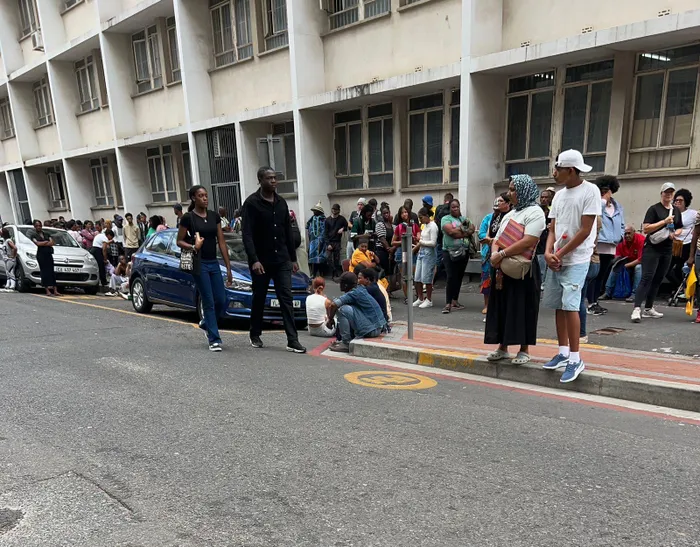
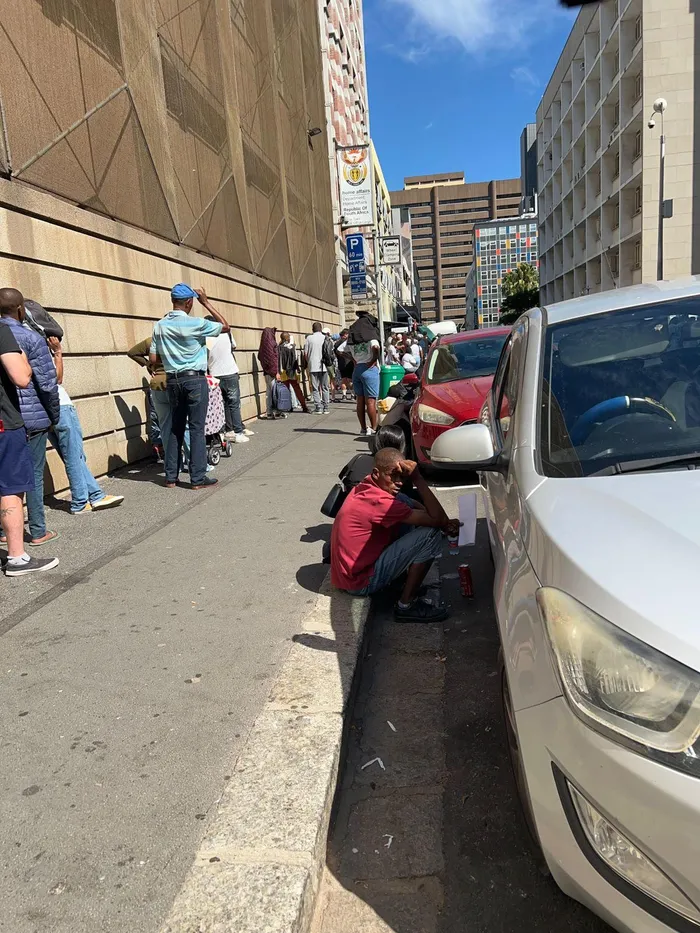
Long queues stretch outside the Cape Town Home Affairs office as applicants wait on the pavement
Image: WENDY DONDOLO/IOL
In Cape Town, long queues had already formed by the time officials opened their doors.
Separate lines stretched outside the building for ID applications, passport applications, and collections.
Some applicants said they had been waiting since the early hours of the morning, while others arrived before sunrise only to find dozens already ahead of them.
Several said they were unable to secure online appointments.
“When I try to book online, it just says no slots found every time,” said Nomvula April, who stood in the ID application queue.
“So, what choice do we have? We just come and stand.”
Another man said the booking system had not eased pressure.
“They say we must book, but there are no slots,” he said.
“Then when you come here, you still wait the whole day.”
Outside the office, the long queues have also created an informal economy.
Sbusiso, who is often seen outside Home Affairs, said he now makes a living by queueing for others.
“I get here at 1am,” he said.
“People pay me R150 to hold a spot for them ... we also hire chairs for R10 because people stand here for hours."
Some applicants said they had been waiting since the early hours of the morning, while others arrived before sunrise only to find dozens already ahead of them.
Image: WENDY DONDOLO/IOL
Thando Sikole said paying was sometimes the only option.
“I had to pay for a spot because I can’t afford to lose a whole day at work,” he said.
“If you come late, you won’t be helped.”
Phumlani Thuso, who had visited the Somerset West Home Affairs office on Tuesday, had described his experience as a sheer nightmare.
“It was extremely hot," he said.
"People were queuing outside in the heat, with some not sure of what their next move was supposed to be, while others stood or sat in the wrong queues.”
Thuso said he had started trying to book an appointment in June and had only succeeded seven months later.
He said his frustrations had stretched back several years, beginning in January 2019 when he had tried to apply online for a smart ID card.
“I could only complete step two of the five-step process and could not move to the document upload stage,” he said.
“I stopped and hoped the incomplete application would be deleted, but it never was."
He said everything had been held back due to the incomplete application.
A viral video surfaced last month depicting an incident at the Tygervalley branch.
In the footage, an elderly woman was allegedly forcibly pushed out of the premises, despite her claims that she had secured an appointment through Babs.
She was reportedly kicked during the altercation.
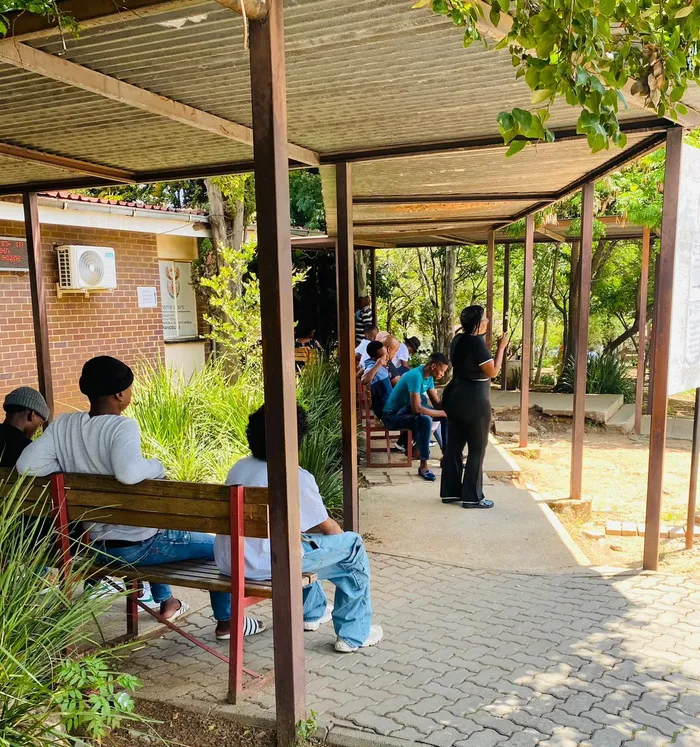
Another long day at Home Affairs: applicants queue outside the Randburg branch, hoping to be helped before closing time after hours of waiting
Image: SIMON MAJADIBODU/IOL
In Gauteng, the same frustrations played out.
George Misaveni Madzhabula, of Diepsloot, arrived at the Randburg Home Affairs office hoping to replace the ID he lost in 2017.
Instead, the 30-year-old man spent hours waiting.
“I lost my ID while I was busy shopping,” the father of a 14-year-old boy said.
“Since then, life has been very difficult.
“I can’t get a job because every time I apply, they ask for an ID.
"Almost everything I do involves an ID.”
Madzhabula said he left home at 6am using the R46 given to him by his sister.
By early afternoon, he gave up and went home without help.
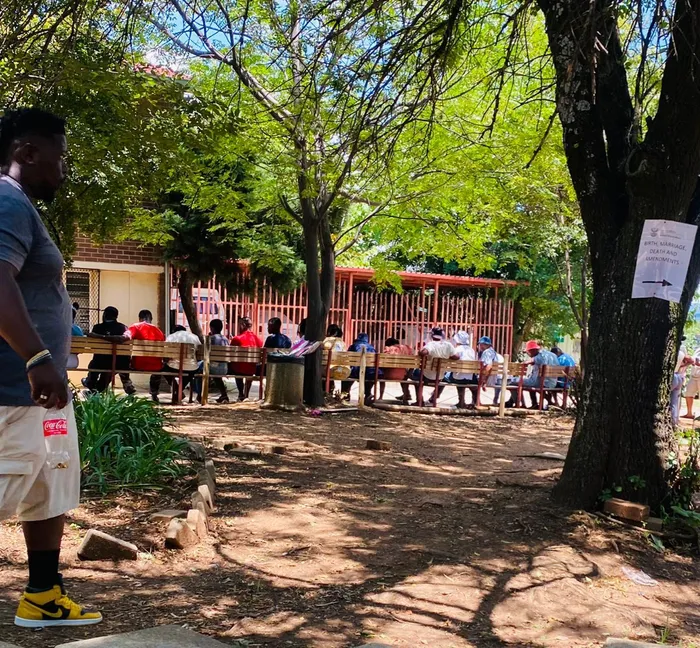
In Gauteng, the same frustrations played out with people waiting for hours in line.
Image: SIMON MAJADIBODU/IOL
A Douglasdale woman accompanied her son to change his green barcoded ID to a smart ID, described a similar ordeal.
Douglasdale is between Fourways and Bryanston.
She arrived at the Home Affairs office at 6.30am after months of trying to secure an online booking.
“Even when you try to book for weeks or months in advance, there are no dates,” she said.
“People who booked online were helped first ... we had to wait all day.”
She described the service as slow and inefficient.
“The queue was very long, some people even left without being assisted because of how slow it was,” she said.
“They only take a few people every hour.”
She also alleged officials demanded bribes to jump the queue.
“Someone paid R200 to be helped in November,” she said.
“I do not have that kind of money because we have to travel and also buy food ... it is very stressful.”
Despite the delays, she and her son were eventually assisted at about 2.30pm.
From young to old, applicants said the experience had been frustrating.
Lindani Lefoka, 17, a grade 10 learner, also of Diepsloot, described his first ID application as “horrible”.
“I thought because I am still a learner I would be assisted quickly,” he said.
“Though the queue was moving slowly, I expected we would leave faster.”
His mother, Vuyokazi Lefoka, 48, said the pace of service was frustrating.
“The queue was very long and some people even left without being assisted,” she said.
“They are working very slowly."
Despite the frustrations, some applicants were eventually helped.
Grade 12 pupil Jenniffer Malatji arrived at 11am and received her smart ID shortly after 1.20pm.
“The queue was long when I arrived and I was at the back, and the system went down a few times,” the Riverside View, Fourways resident said.
“But the service was moving.
"I would not say it was that bad, considering what people usually say about Home Affairs.”
In Limpopo, some Home Affairs branches had been in such a shabby state that Parliament’s home affairs portfolio committee had visited the province on Wednesday to see for itself.
The committee had visited the Polokwane Large Office and the Lebowakgomo offices.
Severe staff shortages affected the offices, with some branches reportedly operating at only about 40% staff capacity.
“A few learners who arrived at the offices at 7am were served by 1pm, meaning they lost a full day of learning due to technological challenges,” committee chair Mosa Chabane said.
Chabane said multitasking had seemingly become a norm.
"The incapacity results in poor service delivery, which is symptomised by long queues, low staff morale, and risk of burnout."
In the Eastern Cape, the committee had, at the end of 2025, conducted unannounced visits to Home Affairs offices in Gqeberha and Komani.
The visits had exposed systemic failures, including chronic IT problems.
In Komani, the biometric movement control system had been offline for a week, bringing immigration services to a complete halt.
The committee had also found the department had not procured new computers for its offices since 2022, forcing officials in Gqeberha to share the few working units available.
The Komani office had reported a 33% staff shortage, while the Gqeberha office had visibly unoccupied workstations despite long queues, the committee said.
Statistics showed the problems at Home Affairs had been long-standing.
According to Stats SA, 932,138 births had been registered in 2023.
About 91% of those births had been registered in the same year they occurred.
The remaining registrations had been recorded as late registrations from previous years.
About 4.4m South Africans aged 16 and older had never been issued with either a green barcoded ID book or a smart ID card.
This statistic was disclosed by Schreiber in response to a parliamentary question about how many South Africans did not have identity documents.
Questions were sent to the Department of Home Affairs, but no response had been received by the time of publication.
IOL