
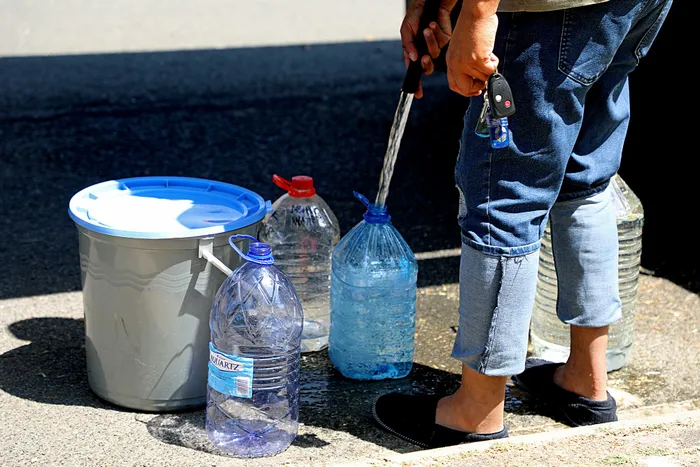
Nowhere is the infrastructure maintenance crisis more acutely felt than in the water sector. South Africa is on the brink of a water catastrophe, driven by aging infrastructure, rampant leakage, and poor municipal management, all exacerbated by climate-induced drought.
Image: File/ Timothy Bernard/ Independent Newspapers
As South Africa braces for President Cyril Ramaphosa’s upcoming State of the Nation Address, concerns are mounting over the deepening national infrastructure maintenance crisis. Consulting Engineers South Africa (CESA) has called for immediate and focused attention on the issue, highlighting a grim reality that affects every South African, from everyday citizens to large businesses and government entities.
Speaking at the annual media address in Sandton, Dr. Vishal Haripersad, the newly elected President of CESA, said the nation’s crumbling infrastructure is no longer an abstract concern confined to policy discussions; it is a daily struggle that South Africans must endure. “What we are facing should be recognised for what it is: a national infrastructure maintenance crisis,” he stated emphatically.
The organisation acknowledges the government's commitment to invest over R1 trillion into public infrastructure over the next three years. However, Haripersad cautioned that mere funding will not be enough to rejuvenate the nation’s asset base. “Long-standing structural issues must be addressed to reverse the decline,” he warned, indicating that financial input must be coupled with systemic reform.
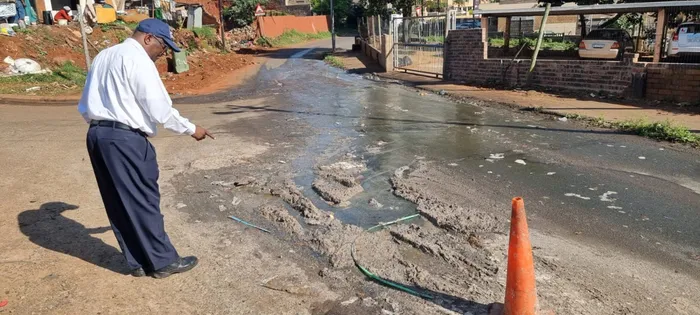
An official from the eThekwini Department of Water and Sanitation inspects a overflowing wastewater pipe leak.
Image: File
CESA underscored alarming findings from the National Planning Commission, revealing a troubling trend of declining GDP per capita growth, a staggering unemployment rate of 33.9% — with youth unemployment surging beyond 45% — and persistently low levels of public and private investment. These statistics paint a stark picture of job creation constraints and highlight the pressing need for investment in infrastructure.
The looming consequences of years of underinvestment are becoming increasingly apparent, especially in the growing maintenance backlog plaguing public infrastructure, said CESA. For instance, Public Works and Infrastructure Minister Dean Macpherson estimates that the maintenance backlog currently sits at R30 billion, impacting over 56,000 state-owned properties.
Nowhere is the crisis more acutely felt than in the water sector. Haripersad revealed that a staggering R400 billion is required to rehabilitate South Africa’s beleaguered water and sanitation systems. “For many communities, the impact is already clear — not because water does not exist, but because ageing infrastructure can no longer deliver it reliably,” he lamented.
The situation has been further exacerbated by recent natural disasters that starkly illustrate the limitations of a reactive approach to infrastructure management. The recent flooding in Limpopo and Mpumalanga, alongside widespread wildfires in various provinces, serve as a stark reminder of the urgent need for proactive risk assessments, robust maintenance, and enhanced infrastructure resilience in response to climate change.
In light of these pressing challenges, Haripersad introduced a guiding theme for his presidency: “If Not Engineers, then Who? Reclaiming Our Purpose, Securing Our Future.” Drawing inspiration from the African philosophy of Ubuntu, he reinforced that engineering extends beyond technical expertise; it demands a shared responsibility towards society.
The shortage of engineering professionals in South Africa is another critical challenge, with approximately one engineer for every 3,100 people — this is woefully inadequate compared to ratios in developed nations. The Engineering Council of South Africa estimates that the country is short of over 60,000 qualified engineers. Haripersad labelled this crisis not merely a policy failure but a failure of collective will, calling for a renewed commitment to investing in STEM education, mentorship, and structured professional development.
CESA also raised alarms concerning procurement systems that favour the lowest upfront costs over quality, longevity, and social benefit. This “price-only” mentality, warned Haripersad, jeopardises both vital infrastructure and the communities they serve, compelling professionals into unsustainable procurement practices just to stay afloat.
Restoring public confidence demands intense scrutiny of integrity and governance within infrastructure delivery. Issues of corruption related to procurement, weak oversight, and ineffective enforcement must be addressed, according to CESA. “Restoration of trust requires ethical conduct, transparency, enforcement, and improved site safety,” Haripersad said.
The organisation also urged that engineers be given a significant voice in decision-making processes across government and public institutions. “If we are serious about infrastructure delivery, governance, and ensuring value for money, then engineers cannot remain on the margins,” he insisted.
“As a nation, we must decide whether we are ready to stand for accountability, build capability, deliver real value, and uphold integrity,” he concluded solemnly. “Our collective future depends on it.”
IOS