
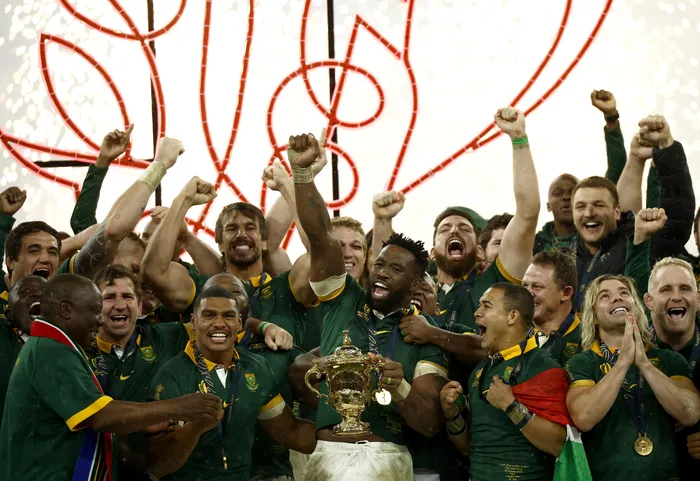
The Springboks will take on the All Blacks in three Tests in The Greatest Rivalry Tour, a series which could see South Africa’s tourism sector emerging as the real winner, if it plays its cards right.
Image: AFP | File
In a historic reunion, the New Zealand All Blacks are set to return to South Africa in 2026 for a traditional rugby Test series, marking 30 years since they last graced the nation’s pitches. This long-awaited encounter, dubbed The Greatest Rivalry Tour, promises an electrifying atmosphere for rugby fans both at home and in New Zealand. The tour includes not only three Test matches but also a series of exciting provincial clashes against prominent South African teams such as the Stormers, Sharks, Bulls, and Lions.
The implications of this tour extend far beyond the sport itself. The potential economic windfall for the South African tourism sector is significant, igniting enthusiasm in both formal and informal tourism circles. Rugby fans travel fervently, and with this tour on the horizon, expectations are high for a surge in tourism revenue.
As Professor Esmarie Myburgh from the North-West University's Tourism Research in Economics, Environs and Society (TREES) highlights, sport tourism is a booming industry, with predictions of 17.5% growth between 2023 and 2030. This sector currently accounts for around 10% of global tourism expenditure, underlining its potential as an economic driver in South Africa.

Prof. Esmarie Myburgh from the Tourism Research in Economics, Environs and Society (TREES) unit at the North-West University (NWU).
Image: Supplied
“Sport tourism can address several challenges in South Africa’s leisure tourism sector, particularly by reducing seasonality and spreading tourism benefits more evenly,” says Myburgh. Unlike traditional leisure tourism concentrated in peak seasons, events like The Greatest Rivalry Tour can generate consistent economic activity throughout the year, often revitalising small towns along the way.
A report from South African Tourism titled Sport Tourism Insights reveals that the country hosted an impressive 1,000 sporting events last year, drawing over 12 million attendees and generating a substantial R8.11 billion in spending. With the eyes of the world on South Africa during this tour, these figures are only poised to grow.
“Sport tourism not only creates one-off visits; many attendees return to explore South Africa for leisure travel with family and friends,” she notes. This phenomena highlights sport tourism's role as a gateway, broadening the tourism economy beyond the immediate event.
The benefits ripple through the economy as sport tourism boosts spending on accommodation, transport, food, and local attractions. Major events hold the power to stimulate local economies and support job creation, while even smaller competitions can leave a positive impact on communities.
Myburgh adds that the social aspects brought by sport tourism cannot be overlooked. Events foster national pride and bring people together across cultural divides — an aspect essential for social cohesion in a diverse country like South Africa.
However, challenges loom. South Africa's existing infrastructure needs urgent elevation. Although the country has state-of-the-art World Cup venues, neglected facilities deter potential visitors. “Many facilities have not been adequately maintained, limiting their appeal,” she cautions.
The economic impact of sports tourism is often contingent on the popularity of various sport codes. Rugby, with its formidable brand power, is an exception; yet, government support can be inconsistent, favouring large urban centres and established sports while sidelining broader regions.
As The Greatest Rivalry Tour approaches, South Africa has a pivotal opportunity to redefine its approach to sports tourism. By investing in infrastructure, ensuring inclusive benefits, and capitalising on the international spotlight, the nation can steer towards a future where sports tourism becomes a cornerstone of its economic tapestry.
In the end, as the final whistle blows on The Greatest Rivalry Tour, South Africa could emerge victorious — not just with the trophy, but with a reinvigorated tourism sector that thrives long after the last game is played.
IOS