
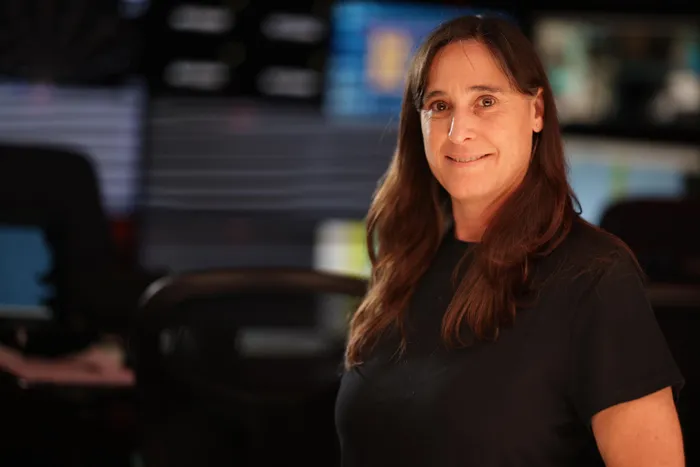
Dr Lara Atkinson, biodiversity scientist at the NRF-SAEON Egagasini Node, has been honoured for her work in offshore benthic research and marine taxonomy over the past 15 years by having a a new sponge species named after her.
Image: Supplied
In a significant breakthrough for marine science, the South African Environmental Observation Network (NRF-SAEON) and the Department of Forestry, Fisheries and the Environment (DFFE) have unveiled the formal description of a new sponge species, Latrunculia (Latrunculia) atkinsonae. This new species has been named in honour of Dr Lara Atkinson, a leading Biodiversity Scientist at the NRF-SAEON Egagasini Node. The description is part of a broader analysis, published in January 2026 in the Journal of the Marine Biological Association of the United Kingdom, which details four new sponge species previously unknown to science and native to the Namaqua eco-region.
The study also recognised the contributions of other prominent figures in marine biology, with additional newly discovered species named after Professor Mark J. Gibbons from the University of the Western Cape, and Liesl Jansen of the DFFE’s Oceans and Coasts Research unit. The naming of these species not only pays tribute to individual contributions, but also highlights the rich marine biodiversity of the Namaqua region where they were collected.
The extensive research was spearheaded by Dr Toufiek Samaai from DFFE’s Oceans and Coasts unit, alongside Dr Robyn Payne of Anchor Environmental Consultants. Their work involved collecting specimens through comprehensive offshore benthic monitoring surveys, employing a combination of detailed morphological analysis and the innovative technique of DNA barcoding. This rigorous approach led to the unveiling of previously hidden sponge diversity within the continental shelf of the Benguela ecosystem.
Highlighting the importance of collaboration in scientific research, Samaai remarked on the essential role of partnerships between organisations like the DFFE, environmental consultants, and academic institutions in enhancing knowledge of Southern Africa’s marine biodiversity. “South Africa is facing a critical shortage of trained marine taxonomists; without such expertise, we cannot accurately represent our rich biodiversity,” he stated.
For Atkinson, the honour of having a sponge species named after her is a reflection of her significant contributions to offshore benthic research and marine taxonomy over the last 15 years. She remarked, “We know there are many species still waiting to be discovered, highlighting the necessity of ongoing monitoring. This is crucial for South Africa’s biodiversity inventory.”
This latest research marks a pivotal step in identifying and preserving marine species, emphasising the necessity of sustained, government-supported scientific efforts and cross-border collaboration in marine studies.
IOS