
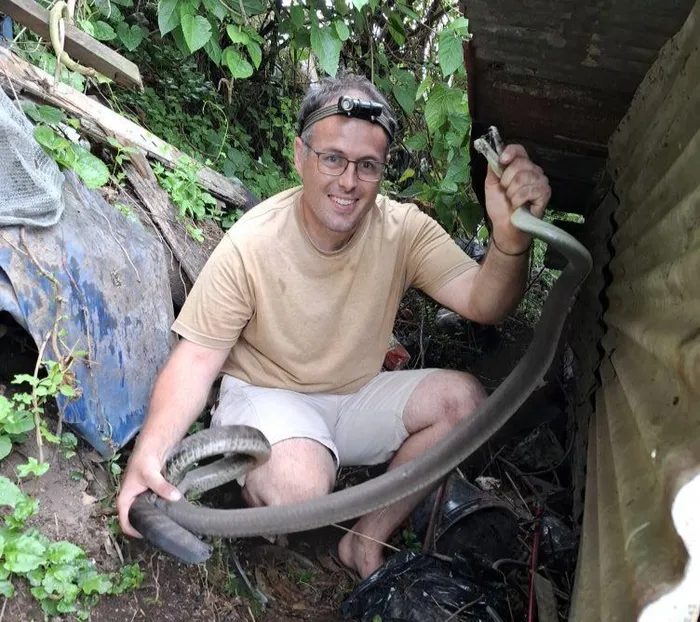
Snake rescuer and conservationist Nick Evans with a 2.5 rescued from the Nirvana Hills area in Durban.
Image: Supplied
In the lush, sprawling suburbs and rural communities of KwaZulu-Natal, a quiet, crucial battle is being waged against fear, misconception, and the resulting brutal deaths of one of the region’s most misunderstood creatures: snakes.
Leading the charge is Nick Evans, a dedicated conservationist and snake rescuer, whose journey over the past 11 years has been as tough and winding as the reptiles he saves.
Evans, who recently celebrated a milestone of 100,000 followers on his educational social media page, isn’t just focused on removal; his primary goal is to promote enlightenment.
For Evans, every rescue is a teaching moment, a chance to turn a heart-stopping encounter into a lesson in how to coexist.
“Snake removals and relocations are important work, but it isn't enough to help the public nor snakes,” Evans says, reflecting on his initial motivation. “The aim of this page is to be educational. A bit entertaining, sure. But its main focus is to educate followers.”
When Evans started his work over a decade ago, he quickly realised that simply moving a snake from one place to another was a temporary fix. The underlying problem was chronic fear and ignorance, often rooted in generations of deeply held myths.
This is why his approach shifted from being a pure removal service to a full-time educational mission.
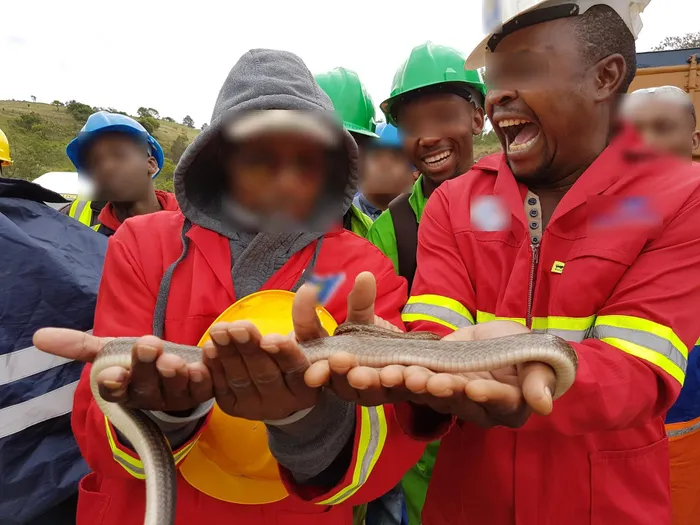
Snake rescuer and conservationist Nick Evans used his brown house snake, which he had owned for almost a decade and was more than 20 years old, to educate communities and help people conquer their fears.
Image: Supplied
Evans’ philosophy is simple: “The main message I try to convey to the public about snakes is that they are not out to get you. Snakes are absolutely terrified of us… even the notorious Black Mamba… and just want to be left alone.”
This message is delivered everywhere — from community halls and radio interviews to his successful reality show, Snake Season, and across his booming social media platforms.
Evans recounts moments that demonstrate that his work is sinking in, often in the most unexpected ways.
“I have had many people come up to me, at random places... to tell me how they're a lot less scared, or not scared at all of snakes,” he shares.
A particularly rewarding moment involved a former attendee of one of his talks: “I remember one call, where a man who attended one of my talks was keeping people from killing a python while he called and waited for me. That was great to see.”
His educational success is often measured in small victories: residents who call for ID confirmation instead of grabbing a hoe, or who are willing to leave harmless brown house snakes alone in the garden.
While he doesn't expect everyone to lose their fear completely — acknowledging that some people have a genuine phobia — his objective is to “just want them to understand snakes better, so that they don't panic”.
Durban is a melting pot of cultures, each with its own stories and beliefs about snakes, and Evans understands that a one-size-fits-all approach won't work. His educational strategy adapts to the audience, especially when addressing cultural narratives.
“When I speak to groups of people of the isiZulu culture, particularly in rural areas, I like to discuss the many myths and beliefs that they have,” he explains.
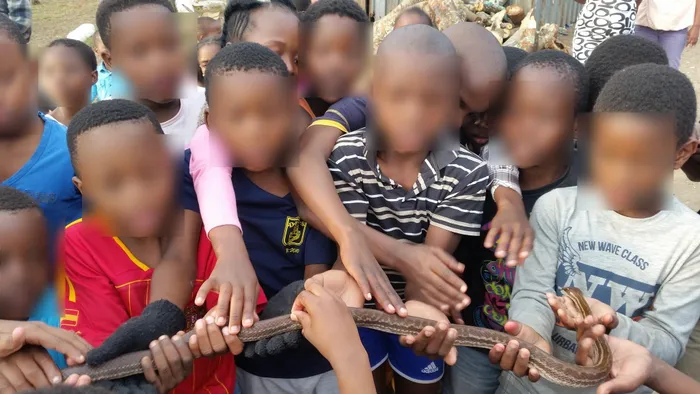
Conservationist Nick Evans leverages his cherished brown house snake, a trusted companion for almost 10 years and over 20 years old, to educate communities and help people face their fears.
Image: Supplied
Rather than dismiss these beliefs, Evans engages with them. “I like to hear what they have to share, as I learn about new myths/beliefs, learning why people are scared of snakes. I try to discuss where the stories come from, the context, and why we don't need to be afraid.”
He tackles common misconceptions head-on: the belief that snakes are aggressive, that repellents like Jeye’s Fluid work (which they do not), and the pervasive myth that snakes are never alone.
“None of this is true. Snakes live alone, only coming together in mating season,” he states firmly.
In the 11 years he has been working, Evans said he has observed a noticeable change in the way people respond to snakes in many communities, but in a few other communities where he and his friends have helped for years, the lack of change is “disheartening”.
“In general, there's been change. Residents know to call me or another snake remover, rather than simply kill the snake.”
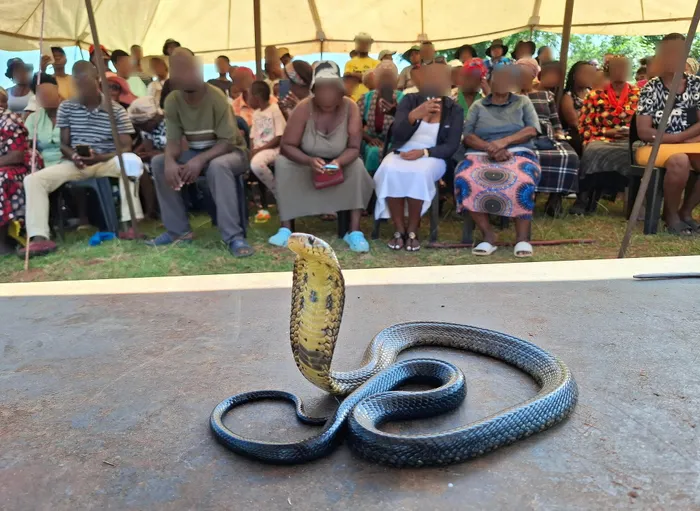
Nick Evans educates a community in Northern KZN about the Forest Cobra, a common venomous snake in the region. Through engaging discussions and demonstrations, he aims to dispel myths and promote understanding of these fascinating creatures.
Image: Supplied
Despite the triumphs, the road has been incredibly taxing, and Evans is candid about the toll his conservation work takes, admitting the journey has been tough both “financially and mentally”.
“Currently, I feel burnt out,” he confesses, highlighting the financial strain of helping the less fortunate for free and the emotional fatigue of dealing with rude people and constant exposure to cruelty.
“Financial worries and depression are the hardest to deal with... Conservation is a tough field of work.”
Yet, he finds the resilience to continue by reminding himself of a simple mantra: “Never Quit.”
Evans said he focuses on the positive aspects that sustain him, like working with his wife, veterinarian Dr Carla Goede, and engaging in vital research projects, such as reptile surveys in areas marked for development.
These surveys, which aim to find protected or endangered species to keep natural areas protected, are not only crucial for the ecosystem but also for his own mental well-being, he says.
“It gives me the opportunity to spend more time out in the bush, which is extremely important for my mental health,” he notes.
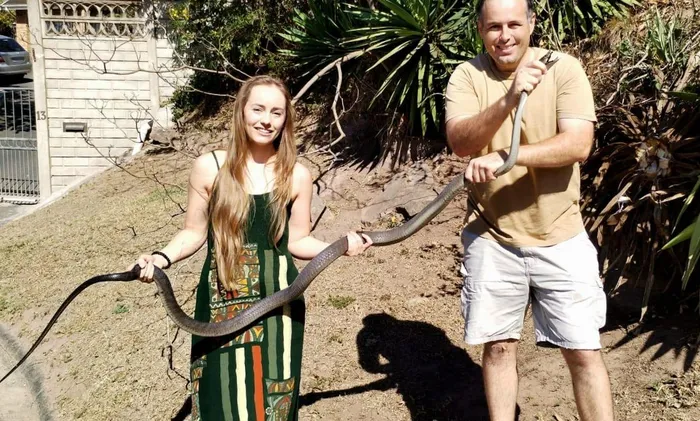
Veterinarian Dr Carla Goede and husband, Nick Evans, with a more than 2.5-metre long Black Mamba rescued from a property in Queensburgh, Durban.
Image: Supplied
Beyond the immediate goal of saving a snake from being killed, Evans has set his sights on a lasting legacy for Durban’s ecosystem.
He hopes his “numerous research projects leave scientists/conservationists with a better understanding of Durban's snake population and how to manage them”.
He also hopes his work will help reduce conflict between people, pets, and snakes, and raise awareness about how pollution, especially in rivers, is affecting reptiles and other animals.
Most importantly, he hopes the impact multiplies: “I also hope that those I've educated, educate their families and friends about snakes.”
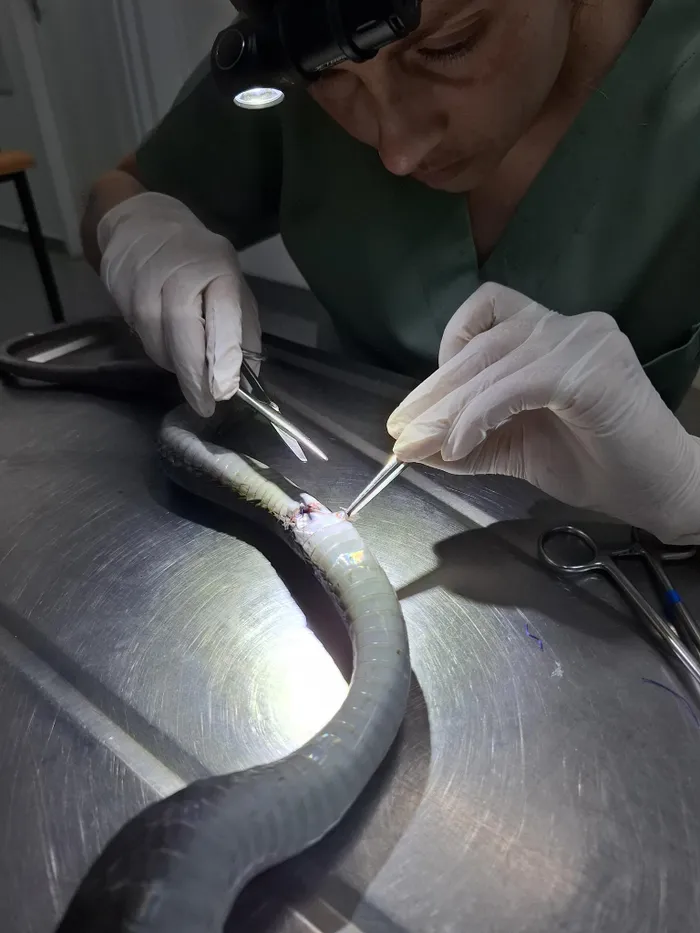
An injured Black Mamba receives urgent care.
Image: Supplied
As his platform grows, reaching over 100,000 followers, Evans sees it as an amplifier for this important message.
“It means more people see my articles/posts, so hopefully, that means more open-minded readers can be educated.”
He includes content on all misunderstood animals — frogs and vultures included — driven by a soft spot for creatures “which are killed because of that”.
For anyone encountering a snake, Evans offers a vital final piece of advice — the one lesson that could prevent the majority of bites in the region: “Please DO NOT pick up snakes, even if you want to help them... This is how most bites occur in Durban, and incidents usually involve the small, ‘innocent-looking’ Stiletto Snake.”
Evans’ journey shows that conservation is as much about changing human hearts and minds as it is about saving animals.
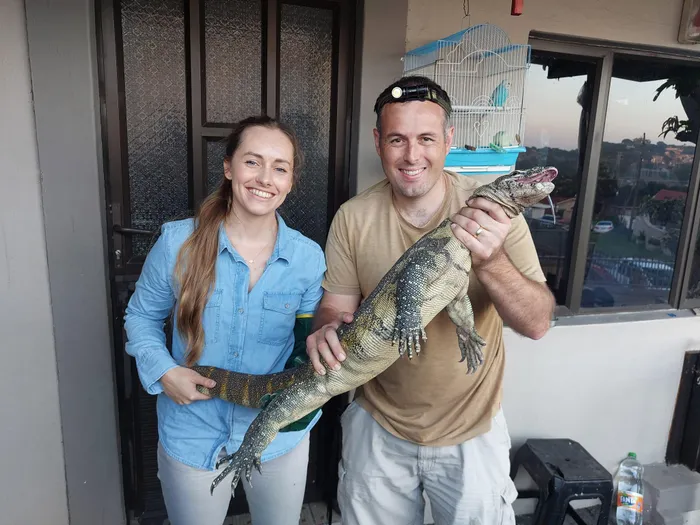
Dr Carla Goede and Nick Evans celebrate a successful rescue with this monitor lizard, reflecting their shared passion for wildlife conservation and their ongoing efforts to protect the diverse species in our environment.
Image: Supplied
By turning fear into a flicker of fascination, Evans is not only rescuing snakes but is teaching an entire community how to share their space with the misunderstood and ultimately essential wildlife of KwaZulu-Natal.
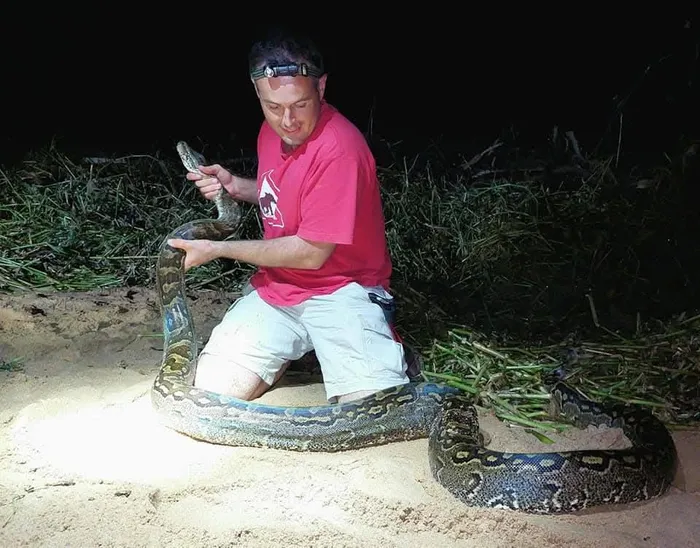
Nick Evans holds a large Southern African Python displaced by the April 2022 floods, found on the beach after being washed downriver into the ocean.
Image: Supplied
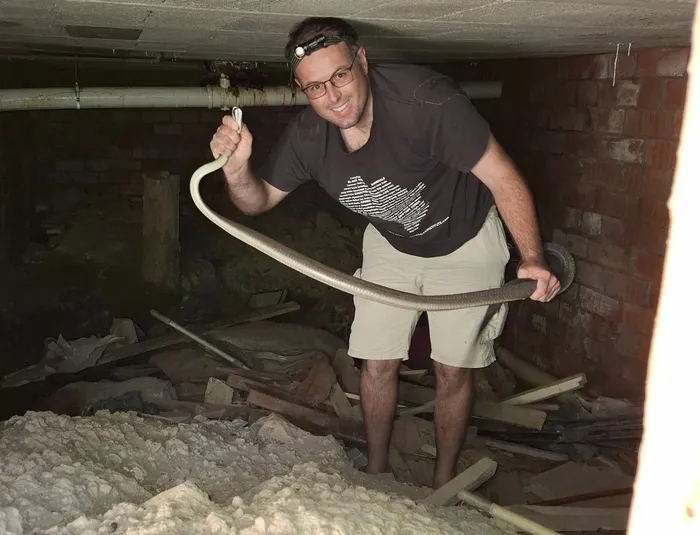
Nick Evans navigates the cramped space under a storage building in Westville to safely rescue a Black Mamba, demonstrating the commitment required in wildlife conservation.
Image: Supplied
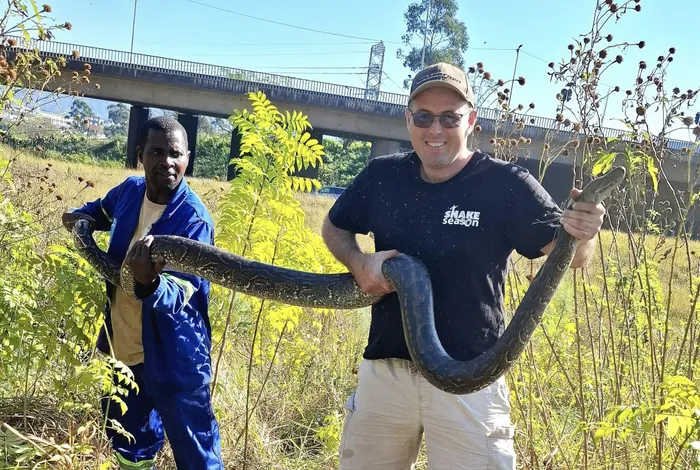
The local municipality reached out to Nick Evans for assistance in rescuing a large python found in a patch of bush next to the M19.
Image: Supplied
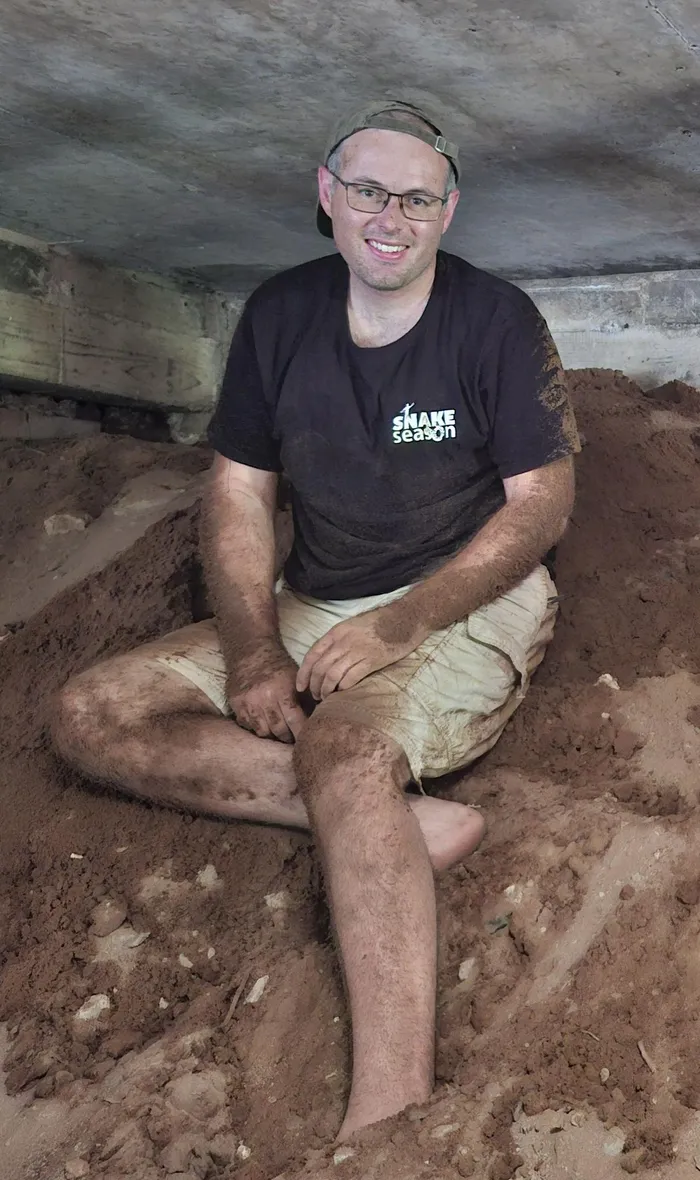
Snake rescuer Nick Evans is pictured after digging under a driveway with his wife, veterinarian Dr Carla Goede. They were on the hunt for python eggs, only to discover that they were still with the mother, who had already been captured. This job demands a lot of manual labour and dedication to ensure the safety of these incredible creatures.
Image: Supplied
Have thoughts on this topic or other subjects you’d like us to explore? Want to share your experiences? Reach out to me at karen.singh@inl.co.za – I’d love to hear from you!