
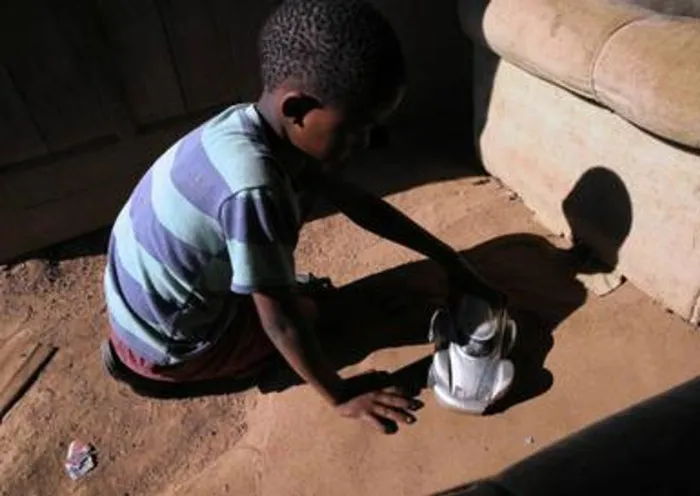
Ahead of the Budget Speech, experts are calling for the Child Support Grant to be increased to at least the food poverty line (R855/month), phased over two to three years, to combat malnutrition and stunting in children.
Image: Picture: Independent Media
In a stirring address during the recent State of the Nation Address (SONA), President Cyril Ramaphosa highlighted a pressing issue: more than a quarter of South African children under five are currently stunted, a condition that poses significant risks to their health and learning capabilities. This alarming statistic has raised red flags among health advocates and nutritional experts nationwide. Ramaphosa declared a commitment to eradicate child stunting by 2030 and to combat malnutrition among young children, with a particular focus on the pivotal first 1,000 days of a child’s life — an essential phase spanning from conception to a child's second birthday.
The President outlined the government’s plan to bolster existing initiatives such as the Child Support Grant (CSG), aiming to provide targeted interventions that ensure pregnant women and low birth-weight infants receive optimal nutrition during this crucial development period. The announcement has been broadly welcomed, signalling a renewed focus on an issue that has traditionally been sidelined.
Nutritional experts have applauded the President's remarks, emphasising that child stunting must remain a key component on the national agenda. They also urge that this new campaign be adequately reflected in the upcoming national budget due to be presented by Finance Minister Enoch Godongwana on February 25. “Commitment to nutrition outcomes such as stunting is not new. Yet, around 15 years after the establishment of the Tshwane Declaration of Support for Breastfeeding in 2011, South Africa still sees inadequate exclusive breastfeeding rates among infants,” noted Professor Christine Taljaard-Krugell, a registered dietitian at North-West University (NWU).
The history of South Africa's nutritional policies reveals a gap between aspiration and execution. While the National Food and Nutrition Security Plan (2018–2023) was launched with clear objectives, it fell short due to poor implementation, co-ordination issues, and insufficient resource allocation. “The renewed emphasis on stunting is both refreshing and welcome. However, we must see this commitment translated into meaningful action,” adds Taljaard-Krugell.
Professor Waldo Krugell, an economist at NWU, echoes these concerns, suggesting that the best-case scenario would involve Minister Godongwana using part of the commodity tax windfall to meaningfully invest in nutrition initiatives. “We need genuine ambition and strategic focus on the Budget for 2025/26,” Krugell stated, advocating for a pilot initiative of a Maternal Support Grant, which could transition into the CSG upon birth registration. Simplifying the documentation process and enabling hospital-based birth registration could help bridge the CSG take-up gap.
In their proposals, both experts advocate several measures to enhance child nutrition, including:
As we look towards the future, both short-term victories and enduring progress will hinge on collaborative action and a firm commitment to political accountability. While optimism wafts through the air following President Ramaphosa's vows — and a generation of children awaits the fruits of these promises — the critical task ahead lies in transforming intention into tangible results.
IOS