
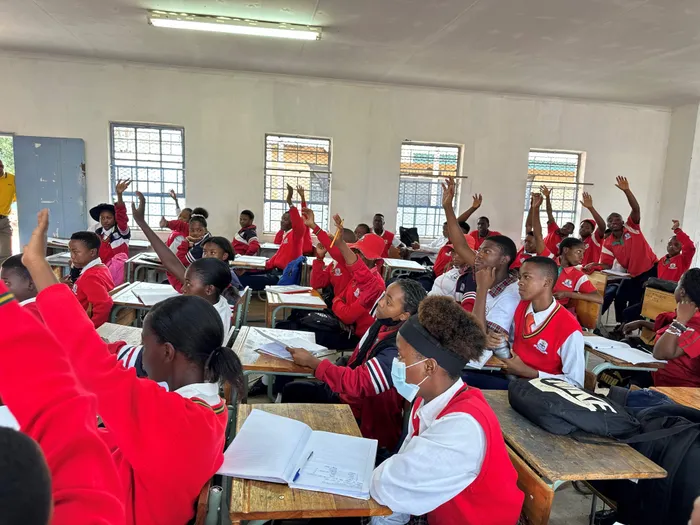
Pupils respond during a financial literacy lesson delivered by facilitators for the Safer South Africa Foundation (SSAF) and the Banking Association South Africa (BASA). The organisations say teaching young people practical money skills early in life is critical to break cycles of debt and poor financial decisions.
Image: Supplied
As South Africa observes Global Money Week (GMW), the Safer South Africa Foundation (SSAF) and the Banking Association South Africa (BASA) are sounding the alarm on the urgent need for enhanced financial literacy among young pupils. This initiative aims to equip the youth with essential skills to avert potentially detrimental financial habits that could follow them into adulthood.
The call for increased financial education comes at a precarious time, with many families grappling with economic constraints. Riah Phiyega, CEO of SSAF, highlighted that limited resources often force families to make hasty financial decisions, underscoring the necessity for financial education. “We’ve been working with schools in low-income communities since 2019 and have observed that learners have limited exposure to everyday financial concepts that can shape life outcomes, such as budgeting, saving and debt,” Phiyega remarked at the commencement of GMW.
A concerning trend has emerged among students — impulsive buying, cycles of informal debt, and a growing fixation on “status spending”. Many older pupils, influenced by social media and peer expectations, prioritise branded items instead of focusing on savings. With a lack of understanding of the true cost of borrowing and a growing acceptance of “buy now, pay later” schemes, these young individuals risk developing poor financial habits that could result in lasting repercussions.
SSAF’s pivotal role during GMW is amplified by its collaboration with BASA, established through a Memorandum of Understanding in 2019. Their joint StarSaver Programme has already impacted the lives of 21,760 youths by delivering crucial financial education to pupils at 118 high schools and extending the initiative to out-of-school youth. “In the economic reality many families face today, we cannot afford to leave young people to learn these lessons the hard way,” Phiyega stressed.
The training is delivered by professionals from various banking institutions, including First National Bank, Nedbank, Absa, Old Mutual, and Ithala Bank, actively engaging pupils in discussions about responsible financial decision-making and the importance of both short- and long-term saving. Through this initiative, SSAF seeks to tackle youth-related financial harm and crime that stem from unstable money practices.
This year’s GMW theme, “Smart Money Talks,” aims to cultivate responsible financial behaviours from an early age, encouraging long-term resilience and diminishing vulnerability to harmful financial choices. As Phiyega put it, “Financial literacy is not only about rands and cents; it is about dignity, choices, and a safer future.”
IOS