

Texting shortcuts have become part of the social media lexicon., reshaping communication as we know it.
Image: Sora
As digital communication continues to evolve, so too does the language we use to interact with one another. A recent analysis of Google search data for the first three months of 2026 by Unscramblerer.com has unveiled South Africa's most popular texting acronyms, shedding light on how social media and technology are reshaping the way we communicate.
Leading the pack is "TBH," which boasts a staggering 22,100 monthly searches. Short for "to be honest," this abbreviation encapsulates a growing trend where honesty and frankness dominate online dialogues. Close behind is "SMH" (21,900 searches) meaning "shake my head," a response often employed to convey disbelief or disapproval, showcasing how quickly acronyms can adopt contextually rich meanings.
The exploration of texting culture doesn’t stop there. Acronyms such as "PMO" (21,400 searches), which has shifted in meaning from "put me on" to the more recent interpretation of "p-sses me off," underscore the ever-changing lexicon of texting that reflects societal sentiments and nuances. Similarly, other popular abbreviations include "POV" (19,700 searches), a trendy way of conveying perspective, and "ETA" (17,400 searches), exemplifying our fast-paced lives where timing matters.
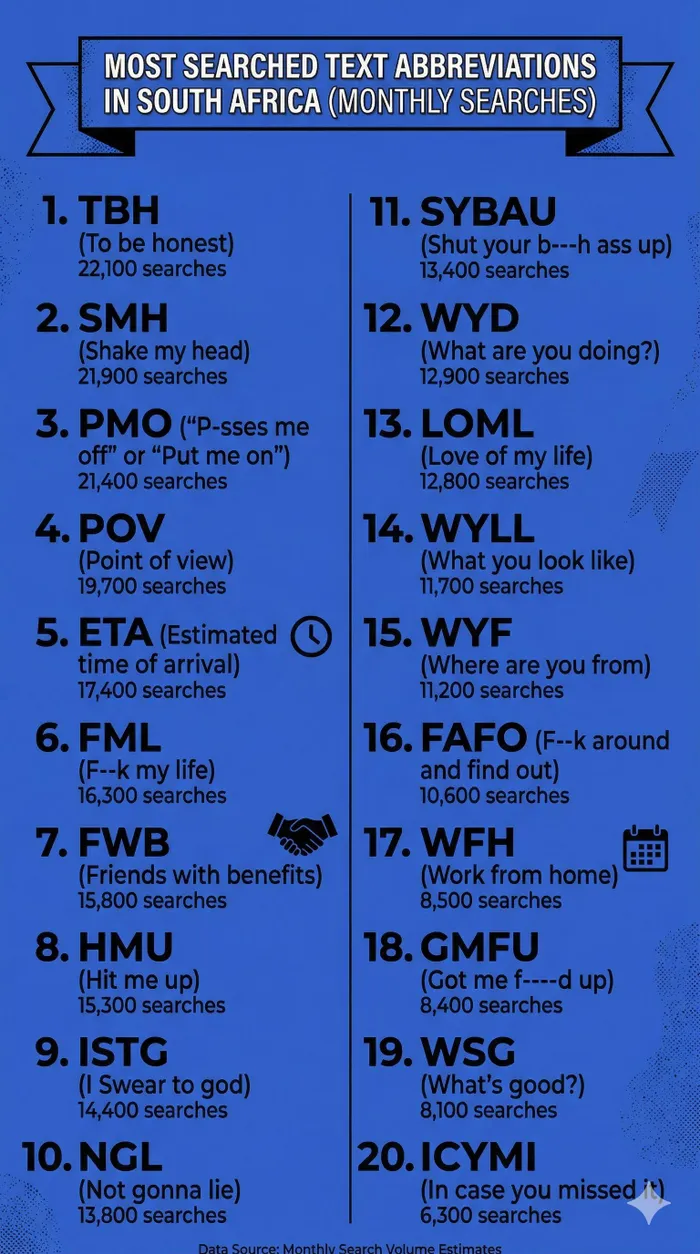
Unscramblerer.com's list of the most searched texting acronyms in South Africa.
Image: Gemini
In further analysis, acronyms such as "FML" (16,300 searches), expressing feelings of frustration with "f--k my life," and "FWB" (15,800 searches) for "friends with benefits," reveal how texting both reflects and influences contemporary relationships and attitudes. The acronym "HMU" (15,300 searches), meaning "hit me up," demonstrates a casual invitation to engage, while "ISTG" (14,400 searches) — "I swear to God" — signals a deep emotional investment in the conversation.
Research insights from Unscramblerer.com emphasise the fluidity and contextual dependence of acronyms, indicating that their meanings can vary widely based on community usage. This continual evolution makes it crucial for users to be aware of their social context. “The meaning of an acronym can change depending on the community it is used in,” Unscramblerer.com spokesperson Randoh Sallihall suggested, stressing that effective communication often requires navigating this ever-shifting landscape.
An interesting finding from a 2024 study published in the Journal of Experimental Psychology indicates that reliance on acronyms may signal lower effort and sincerity, potentially leading to a decrease in engagement, said Sallihall. This is an important consideration in maintaining meaningful conversations across digital platforms. The trend reveals a delicate balance; while acronyms offer a trendy shorthand, they might inhibit connection if overused.
A deep dive into the search data also reveals that terms such as "WYD" (12,900 searches) - "what are you doing?" - and "LOML" (12,800 searches) - "love of my life" - respectively demonstrate a deep engagement in personal communication, while phrases like "FAFO" (10,600 searches) - "f--k around and find out" - and "WFH" (8,500 searches) - "work from home" - reflect societal attitudes amid modern work practices.
As the landscape of digital communication continues to change, the rise of these acronyms signals not only the creativity inherent in texting culture, but also the inherent challenges of maintaining clarity and connection in our increasingly digital lives.
IOS