
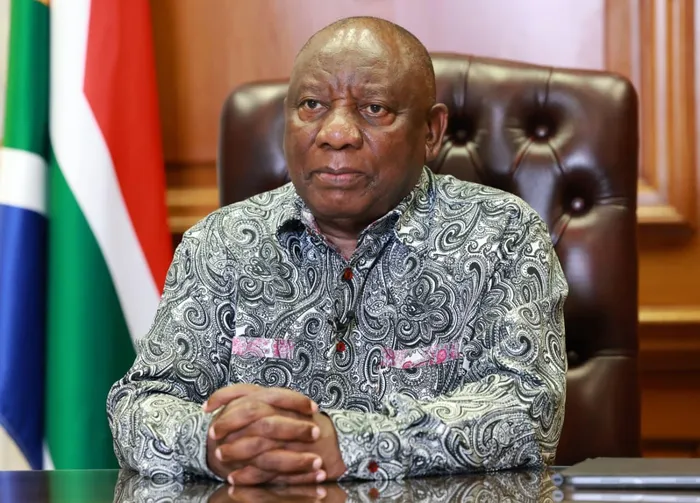
President Cyril Ramaphosa has signed the the Public Service Amendment Act (PSAA) into law, meaning the power to appoint senior officials and make operational decisions within government departments will no longer rest with the President, Cabinet Ministers, or provincial Members of Executive Councils, but with the heads of those departments themselves.
Image: GCIS
In a pivotal moment for South African governance, President Cyril Ramaphosa has officially signed into law the Public Service Amendment Act (PSAA), 2025, heralding the most significant reform to the country’s political administration in three decades. The important legislation was assented to on March 26 and published in the Government Gazette on April 1.
The New South Institute (NSI) says the PSAA stands as a transformative piece of legislation, reshaping the relationship between political offices and the public administration in South Africa. For the first time since the dawn of democracy in 1994, the responsibility for appointing senior officials and managing day-to-day operations within government departments is transferred from the President, Cabinet Ministers, and provincial Members of Executive Councils to the heads of those departments themselves. While this change may seem technical, its implications are profound and far-reaching, the institute says.
Political interference has been a notorious barrier to effective governance in South Africa, often leading to administrative dysfunction, service delivery delays, and rampant corruption. By establishing a clear demarcation between policymakers and implementers, the PSAA lays the groundwork for an autonomous public service that prioritises adherence to the Constitution and the welfare of citizens over transient political interests, the NSI says. As the country navigates its long-standing aspirations of becoming a developmental state, this new architecture provides it with the essential framework to begin realising that dream.
The road to the enactment of the PSAA has been marked by diligent research, policy development, parliamentary discourse, and a coalition of support across the spectrum — from government and academia to civil society and organised labour.
Among these organisations was the NSI, which was central in crafting the arguments supporting the reform, and engaging with various stakeholders to translate empirical evidence into a robust policy framework. Ivor Chipkin, Executive Director of the NSI, remarked: “This is a historic day, not for any single organisation, but for South Africa. For thirty years, we have struggled with a public service where political authority reached too deeply into administrative life. The PSAA changes that. The hard work of implementation now begins, and we are committed to supporting it.”
The NSI says the success of the landmark legislation has been a collective achievement. Decisive legislative leadership by the Portfolio Committee on Public Service and Administration ensured rigorous scrutiny of the bill, enhancing its durability and efficacy before its journey to the President’s desk.
The expertise of the Department of Public Service and Administration and the Public Service Commission also played a crucial role, facilitating a smoother implementation process, the NSI said. The academic community provided valuable insights, including contributions from Professor Mashupye Maserumule and the South African Association of Public Administration and Management, which effectively anchored the reform within broader scholarly contexts of state capability and governance.
Furthermore, organisations like the Congress of South African Trade Unions (COSATU) ensured the legislation reflected the lived experiences and needs of both public servants and the communities they serve.
This reform carries implications that extend beyond South Africa's borders, the NSI said. The nation’s transition to democracy in 1994 was celebrated worldwide, but the path to a solid democracy requires ongoing institutional development — an endeavour that is often laborious and goes unrecognised.
As democratic institutions face pressures around the globe and public trust in governments dwindles, South Africa’s approach demonstrates that democracies can reform from within, leveraging evidence-based practices, deliberation, and coalition-building, the institute said.
The NSI committed itself to fostering successful implementation of the legislation and continuing its advocacy for a transparent, accountable South African state.
IOS