

As the traditional notion of a university degree as the only ticket to success fades, South African school leavers are embracing new educational models.
Image: Pexels / Olia Danilevich
For decades, the message was clear for South African students: finish matric, go to university, and earn a degree. This traditional pathway has long been viewed as the golden ticket to success. However, today's school leavers face a dramatically different landscape, where that route is fraught with financial and environmental obstacles that make securing a university education increasingly difficult.
The soaring cost of university fees, coupled with additional expenses such as accommodation, transport, and relocation, has forced many families to reconsider the feasibility of higher education. According to Estelle van der Westhuizen, Sales and Marketing Manager at Chartall Business College, "Funds are one of the biggest challenges. Many students simply cannot afford university fees." Even with government-imposed caps, public universities are increasing tuition fees beyond 4% for 2026, with annual costs for undergraduate programmes ranging from R62,000 to over R110,000, making the traditional university model untenable for many families.
Moreover, academic performance influences the landscape of opportunity. As van der Westhuizen notes, pupils often make subject choices in Grade 10 based on expectations rather than their true interests. This can result in disillusionment by matriculation when they find their chosen path no longer feels right or viable. Research from Stellenbosch University indicates that even with adequate qualifications, many matriculants are unable to secure spots in public universities, illustrating the urgent need for alternative pathways.
Faced with restricted options, young South Africans are now discovering a more flexible educational model. Instead of immediately committing to a three-year degree, they can explore a range of shorter, practical options like higher certificates, vocational courses, and micro-credentials.
Leigh-Ann Revill, Principal and CEO of Chartall Business College, explains, "These programmes allow learners to start building qualifications in smaller, manageable steps. All learning has value. If you study something now because that is what you can afford, that knowledge does not disappear; over time it can contribute to a full qualification." This concept, known as stackable learning, facilitates the accumulation of credits that can eventually lead to larger qualifications.
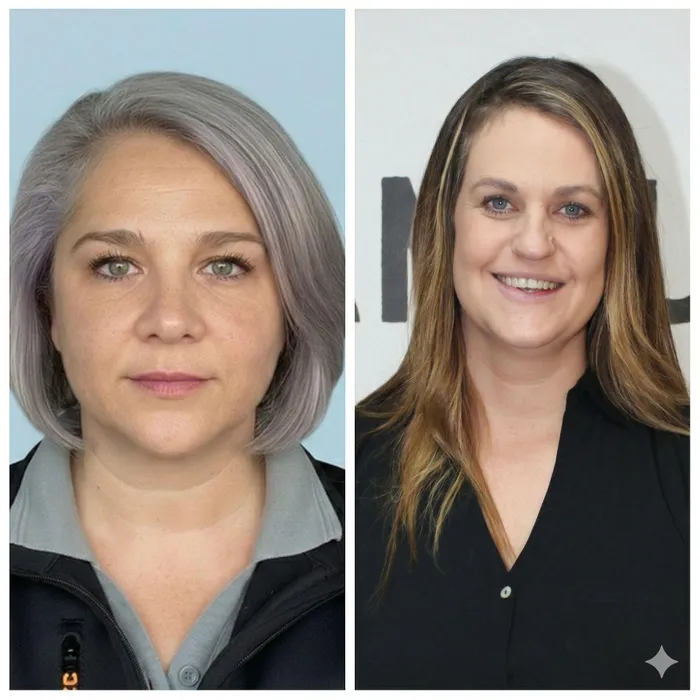
Estelle van der Westhuizen, Sales and Marketing Manager at Chartall Business College, and Principal and CEO Leigh-Ann Revill.
Image: Supplied/Gemini
Innovative institutions are also seeking to ease the financial burden by introducing more creative payment models. "We have introduced a subscription-style model where students pay a small monthly amount while they study," states van der Westhuizen. This approach allows students to pause their studies due to unforeseen circumstances and resume without losing their progress, effectively dismantling the pressure of hefty upfront fees.
Moreover, part-time study options that accommodate working students are rapidly gaining popularity. "Many people cannot afford to study full time," points out Revill, who emphasises the value of applying academic knowledge in real-world scenarios. Such vocational programmes often link directly to specific careers, enabling students to gain work experience while advancing their education, fulfilling a dual role that accelerates career readiness.
The key takeaway for learners, parents, and educators alike is that university is no longer the only route to career success. As Revill succinctly puts it, “There are more options than just going straight into a three-year degree. You can start with a one-year certificate, get a job, earn an income, and keep studying as you go.”
IOS