
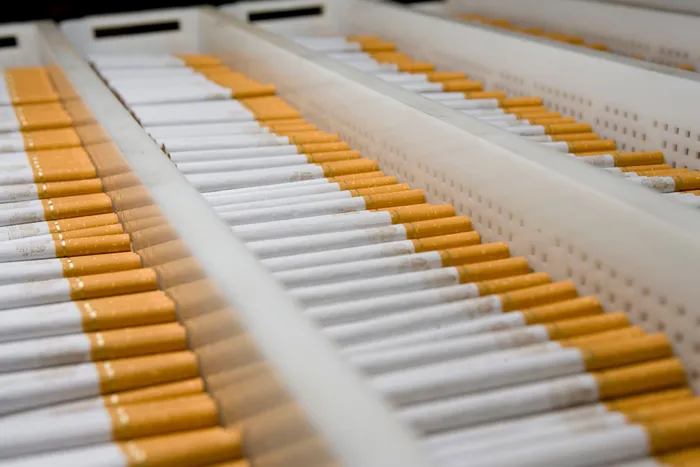
New research reveals that more than half of all cigarettes sold in South Africa are unregulated products, raising alarming public health and financial concerns.
Image: Supplied
A study by the University of Cape Town’s Research Unit on the Economics of Excisable Products (REEP) reveals that more than half of all cigarettes sold in the South African market are likely illicit. Published in the journal Tobacco Control, the findings indicate that illicit trade poses severe threats not only to public health but also to government tax revenues.
Using data from the 2021 Global Adult Tobacco Survey, the research identified that approximately 60% of cigarettes sold in South Africa in 2021 were likely sourced from illegal markets. This alarming statistic reflects a massive surge in illicit trade, which had already begun to escalate before the COVID-19 pandemic. Prior to the government-imposed cigarette sales ban in 2020, illicit cigarettes held around 30% of the market share. The ban subsequently caused that figure to climb dramatically to an estimated 60% — a ratio that has shown no significant decrease in the aftermath of the restrictions.
“This research identifies a substantial structural shift in the South African cigarette market,” said Mxolisi Zondi, the first author of the paper and a researcher at REEP. He elaborated that in the early 2000s, British American Tobacco (BAT) dominated with over 90% of the market share. However, by 2021, that dominance had dwindled to 33%, while Polaris Manufacturing, previously known as Gold Leaf Tobacco Corporation, emerged as a major competitor with a market share rivalling BAT.
Notably, the study delves into specific brands and producers tied to illicit trade. Alarmingly, it discovered that over 80% of cigarettes produced by local manufacturers were sold at price points that indicated minimal or no tax had been paid. These illicit products are primarily distributed via informal retail channels, particularly within spaza shops that cater to local communities.
The research also sheds light on striking social patterns associated with illicit cigarette use. It found that consumption was highest among individuals from low-income backgrounds, those with lower levels of education, and heavier smokers. This suggests that cheaper and untaxed cigarettes are disproportionately favoured by the more vulnerable demographics of society, exacerbating health inequalities.
In light of these findings, the study urges the South African government to take urgent and decisive action to safeguard the national tobacco supply chain. The research offers specific insights indicating where the government can focus its efforts to combat the rising tide of illicit cigarette trade effectively.
IOS