
Joshua Petersen's fight for accessibility and justice after a brutal school stabbing leaves him paralysed and fighting against systemic barriers.
Image: Karen Singh/Independent Media
When Joshua Petersen, now 18, set out for Westridge High School in January 2025, he was ready to begin his final year of studying Mechanical Engineering.
Today, his world is measured in the few square metres of his living space, a cruel irony for a young man whose future once involved the movement and precision of machinery.
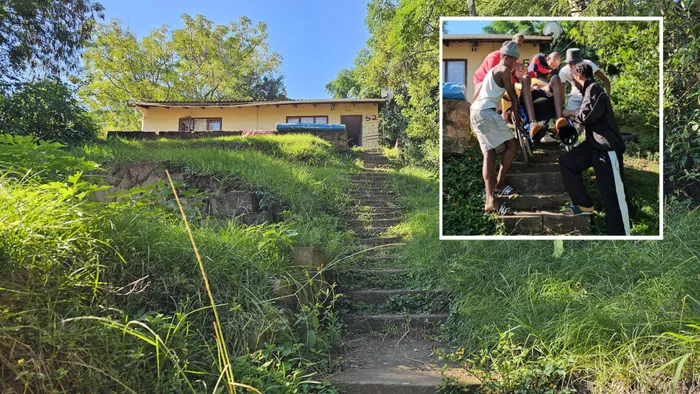
Paralysed from the neck down after a brutal stabbing by a fellow pupil, Joshua is not only trapped in a quadriplegic body but also effectively imprisoned within his own home, perched precariously atop a steep bank in Mariannheights next to Mariannridge west of Durban.
The attack, which occurred during a school break, began over a trivial dispute. “I was coming from the tuck shop,” Joshua recounts, detailing the chaos.
A boy stopped him and accused him of stepping on his shoes. “He pulled me out of the line and he says that I (stepped on) him.” Joshua apologised, attempting to defuse the situation, but the boy returned moments later, this time wielding a knife.
Joshua’s friend, Jordan McEnderry, instinctively intervened. “Jordan just grabbed him and threw him to one side,” Joshua says. But the attacker’s friends swarmed, pulling Jordan away.
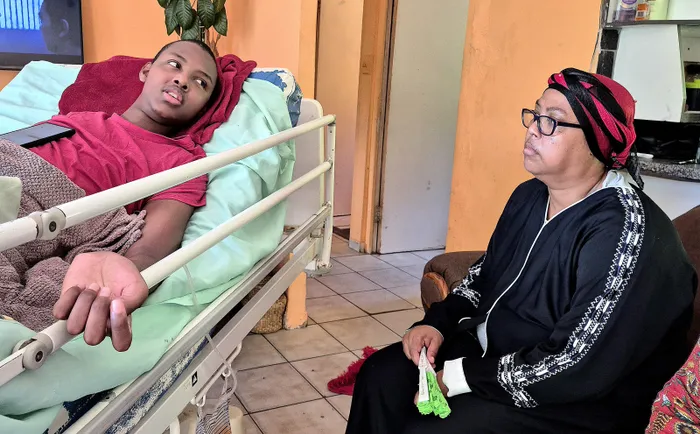
Joshua and his mother Bernadette share a moment in their lounge, now transformed into Joshua's room, as they navigate the challenges of life after tragedy in Mariannheights.
Image: Sibonelo Ngcobo/Independent Media
Joshua was stabbed twice, once in the chest and then, as he turned to check on a teacher who had tried to intervene and fallen, a second time in the neck, damaging his spinal cord.
“That time, I didn’t notice he stabbed me. It was a bit numb,” Joshua recalls. The numbness quickly gave way to a devastating paralysis.
More than a year later, the physical and emotional scars are profound. Joshua cannot move his limbs and operates his phone with his mouth.
Yet, the trauma is not confined to his body. At night, his nightmares are so vivid he screams in Zulu, a language he doesn't speak. “I was screaming and saying, ‘don’t stab me,’ ‘I’m sorry’,” he says, recounting the horror that still grips him.
His mother, Bernadette Petersen, sits vigil, her nursing aid experience now focused solely on her son.
“Every day is a struggle,” she says, detailing the meticulous care involved in his survival, catheter changes, turning him to prevent bedsores, and rigorous physiotherapy exercises.
But the biggest obstacle is the structure of their life itself: the family home. It is situated at the top of a formidable incline, accessible only by multiple flights of uneven, collapsing stairs. “The steps need work,” Joshua states simply, underscoring the severity of the structural decay.
This inaccessibility has created an impossible barrier to his rehabilitation and life. Joshua needs ongoing physiotherapy appointments among other necessary appointments, but leaving the property requires the strength of approximately seven people - a team of neighbours and friends - to manually carry him and his wheelchair down the treacherous slope.
“It takes about seven boys to carry me with the wheelchair, and I can't balance on my own,” Joshua says.
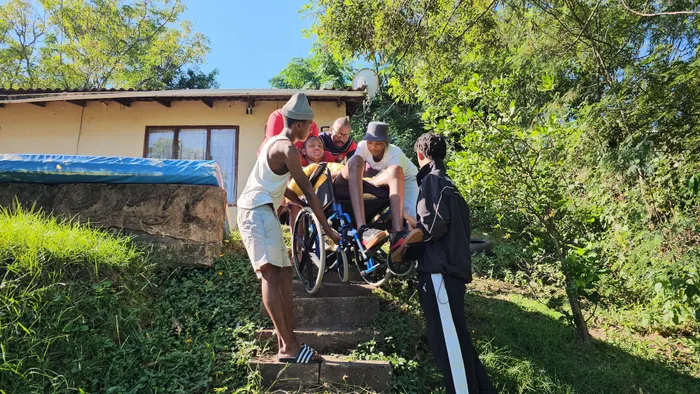
Carrying Joshua Petersen, 18, down the treacherous stairs poses a life-threatening risk, highlighting the urgent need for accessible solutions to ensure his safety.
Image: Karen Singh/Independent Media
Bernadette speaks of the heartbreaking choice they face. “He says Mummy I’m totally scared of going down so we are missing out on physio.”
Joshua clarifies his fear: “I told my mother I can't because if I fall, it's bad, I’ll break more… If I fall, injuring my neck could be fatal because I was just informed recently… that if my main membrane snaps, I could die.”
The consequences of this isolation are compounding as Joshua is missing out on a vital donation, an electric wheelchair, because a requirement for receiving it is physiotherapy attendance. “If he doesn’t go for physio, he isn’t going to get the wheelchair. That’s the requirement to get it,” Bernadette explains.
“I feel trapped because I can't leave my yard, I can’t go out because of the position that I’m in,” Joshua admits. “The only thing I can do is sit here in the yard and just look, because going out is a problem.”
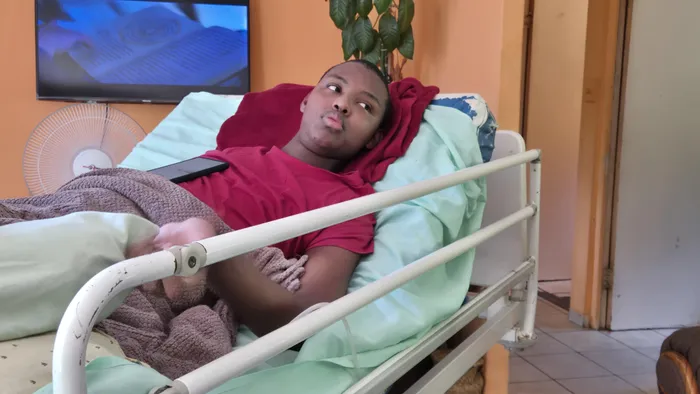
Joshua Petersen's journey reflects the harsh realities of violence, disability, and the fight for justice and accessibility.
Image: Sibonelo Ngcobo/Independent Media
The family's trauma was recently exacerbated by the justice system. The boy who stabbed Joshua received a five-year sentence for attempted murder at a youth correctional centre.
Joshua said his parents were informed by the court that his attacker had 'anger issues' and was granted family counselling.
“His family is getting family counselling and mine isn't. I’m the one that’s injured. I’m the one that can’t move anymore, and he’s walking, he’s able-bodied and he is getting counselling. There’s nothing wrong with him. He doesn’t have any problems. I’m the one with problems.”
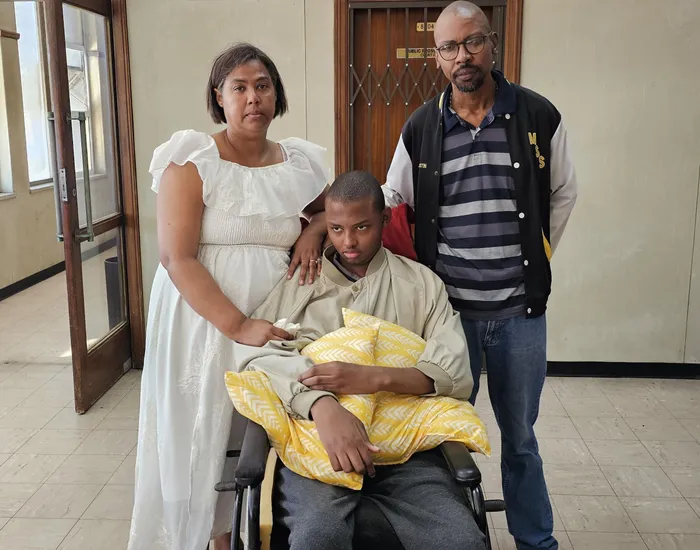
Joshua Petersen stands with his parents, Bernadette and Trevor, outside the courtroom at the Durban Regional Court, united in their grief and anger after the five-year sentence for the boy who left him paralysed.
Image: Karen Singh/Independent Media
Bernadette expresses the family's deep-seated frustration with the school and the government, stating the sentence “amounted to a painful injustice.”
Accountability must extend beyond the individual perpetrator; the Department of Education and the Minister of Education need to be involved, she said.
“They must take responsibility. They must find ways for him to go to the hospital, because I have to hire an Uber. They must find ways of getting his medication and his catheters… They must come and see how he is suffering after all this. It's a year, and none of them have come and nothing has moved forward.”
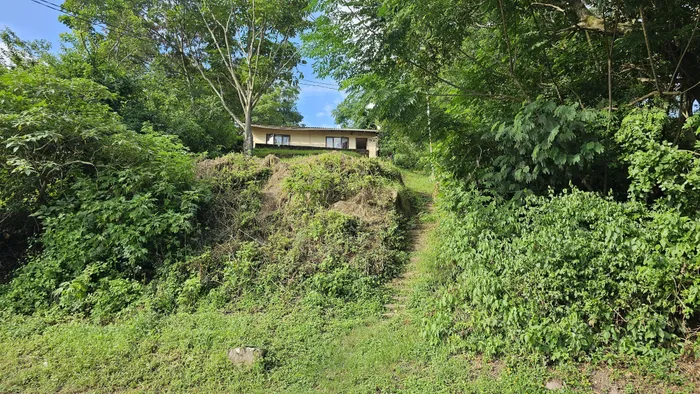
The hazardous stairs to Joshua Petersen's home pose a constant danger, reflecting the broader issues of neglect and inaccessibility faced by individuals with disabilities.
Image: Karen Singh/Independent Media
The Petersens are now appealing for assistance to build an accessible dwelling at the bottom of their property, closer to the road, a project that requires a donor to help them adapt their life to Joshua’s condition.
Until then, the promising Mechanical Engineering student remains captive, by his paralysis, by the indifference of the system, and by the collapsing steps of the home he can no longer safely leave.
When a child is left permanently disabled after a horrific act of violence at school, the emotional and physical trauma is only the beginning.
The legal reality, according to Personal Injury Specialist Kirstie Haslam, is that families are often left navigating a complex legal maze while simultaneously dealing with catastrophic care needs.
“The short answer is: it depends on whether the Department breached its legal duty of care,” Haslam says, clarifying the initial question of government liability.
She explains that South African law is clear: “Public schools and by extension the Department of Education owe learners a duty to take reasonable steps to ensure their safety while under school supervision.”
The burden of proof rests on demonstrating negligence. “If it can be shown that the school failed to take reasonable measures to prevent foreseeable harm – for example; inadequate supervision, failure to act on known risks, poor security controls or ignoring prior incidents of violence, then the Department could be held liable for damages.”
For a young man whose promising future has been cruelly interrupted by paralysis, a civil damages claim is, in Haslam’s view, the only realistic path to survival.
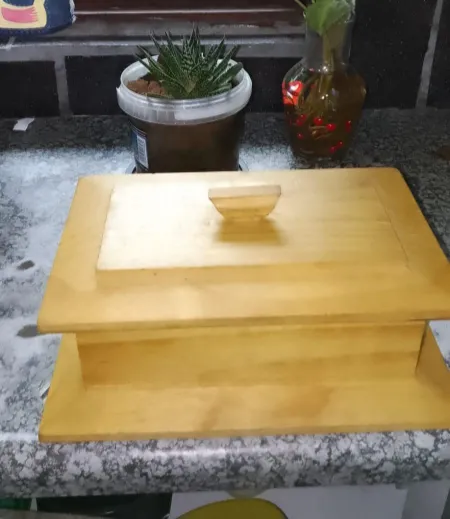
This jewellery box, made by Joshua at Westridge in 2023, represents not just his creativity and talent, but also the dreams and aspirations that were shattered by violence.
Image: Supplied
This is not merely about past medical bills. A successful claim can encompass loss of earning capacity, general damages for pain, suffering and loss of quality of life, and critically, the cost of assistive devices, rehabilitation and long-term care.
“Without a civil claim, there is almost no realistic pathway to securing the level of care and financial support this young man will require for the rest of his life,” she said.
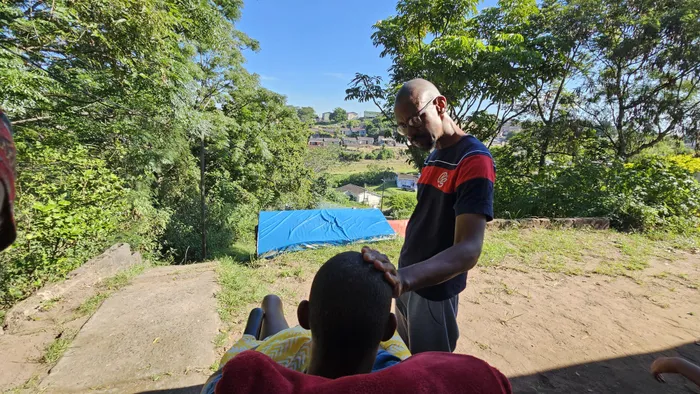
Joshua Petersen's world is reduced to a view from his front door, a stark reminder of the freedom he once had and the barriers that now keep him captive.
Image: Karen Singh/Independent Media
She is adamant that these claims transcend mere financial payouts. “From a legal perspective, these claims are not about ‘payouts,’ they are about restoring dignity and ensuring survival.”
Her final piece of advice is a stark call to action for the family: “If you do nothing, the financial burden sits with you for life. If you pursue a claim successfully, you can shift that burden back to the institution that failed in its duty.”
The KZN Department of Education did not respond to repeated requests for comment.
To help Joshua's family make their home more accessible and ensure he can leave for his appointments safely, please contact Bernadette at 084 462 5241.
Have thoughts on this topic or other subjects you’d like us to explore? Want to share your experiences? Reach out to me at karen.singh@inl.co.za