
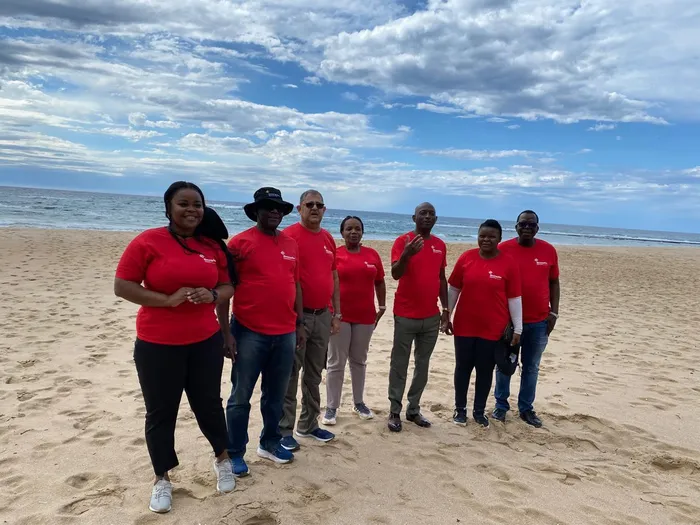
The Deputy Minister of Forestry, Fisheries and the Environment, Narend Singh, third from left, on an induction and oversight engagement with the iSimangaliso Wetland Park Authority.
Image: Supplied
The iconic iSimangaliso Wetland Park, a testament to South Africa's rich biodiversity and natural heritage, is on the cusp of a transformative journey thanks to a recent strategic induction led by the Deputy Minister of Forestry, Fisheries and the Environment, Narend Singh. Over a three-day period from May 5 to 7, stakeholders convened in St Lucia to discuss critical governance and conservation strategies aimed at repositioning the World Heritage Site as a sustainable tourism and investment destination.
The induction programme attracted key players from the department, the newly appointed board of the iSimangaliso Wetland Park Authority, management, and Ezemvelo KZN Wildlife — the authority responsible for conservation operations within the park. The meeting marked a significant step in discussing the long-term governance, conservation sustainability, and economic viability of iSimangaliso.
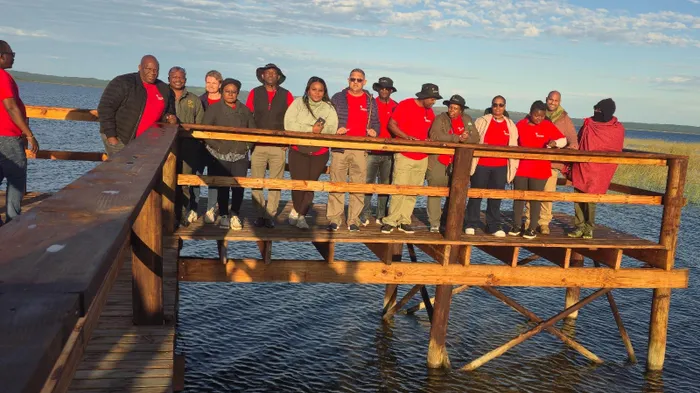
Narend Singh, Deputy Minister of Forestry, Fisheries and the Environment, centre, in sunglasses, conducted site visits as part of an oversight engagement with the newly appointed Board of iSimangaliso Wetland Park Authority.
Image: Supplied
During the sessions, Singh asked: “What are we doing with this asset, and how do we ensure that it delivers on conservation, tourism growth, economic sustainability, and meaningful community development?” His emphasis on the critical nature of these discussions underscored the importance of iSimangaliso not only as a natural wonder, but as an economic engine for local communities and a model for sustainable development.
Integral to the discussions were the themes of strengthening conservation management, enhancing governance arrangements, and exploring innovative avenues to boost tourism infrastructure and revenue generation. The potential for public-private partnerships, community engagement, and long-term investment strategies was also tabled as part of a comprehensive approach to governance reform.
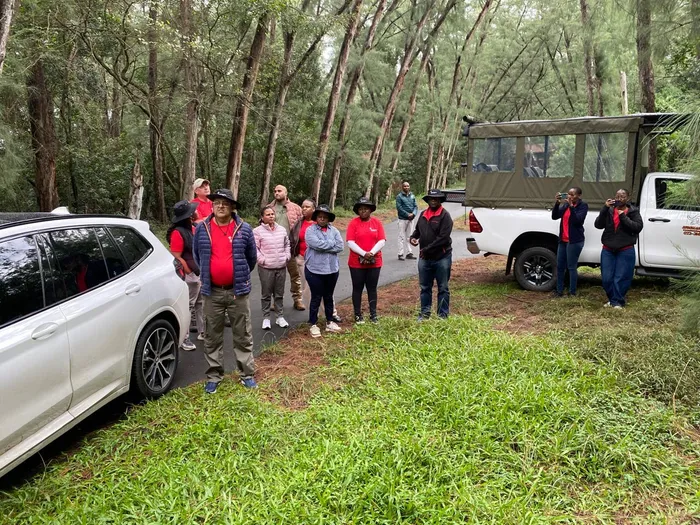
Narend Singh, front left, Deputy Minister of Forestry, Fisheries and the Environment, says the health of the iSimangaliso Wetland Park is inherently linked to the economic vitality and well-being of its surrounding communities.
Image: Supplied
Singh said safeguarding the park's World Heritage status is a non-negotiable priority. He called for future developments to align with the ecological integrity and biodiversity standards that secured iSimangaliso's global recognition. “The future sustainability of iSimangaliso cannot rely solely on state funding,” he cautioned. The Deputy Minister urged a shift in thinking regarding tourism infrastructure and community benefit sharing, highlighting a need to unlock novel economic strategies that resonate with local contexts.
The board was tasked with developing a long-term economic strategy aimed at phased infrastructure development, tourism and investment opportunities, and stronger destination marketing. This strategy is expected to invigorate community participation in tourism-linked economic activities, thus ensuring that local populations reap the benefits of the region's natural wealth.
As part of the induction programme, the group undertook oversight visits to various operational and tourism sites within the park, including Eastern Shores, Cape Vidal Resort, Bhangazi Bush Lodge, Charters Creek Lodge, and the St Lucia Estuary. These site visits were essential in understanding the challenges faced on the ground as well as the opportunities for enhancing the visitor experience.
Singh and the board also engaged with commercial and small-scale farmers regarding concerns about vegetation overgrowth and sediment blockages affecting agricultural activities on the Msunduzi and Mfolozi Flats. Together, they committed to collaborative interventions that strike a balance between environmental preservation and socio-economic needs, focusing on scientific assessments, vegetation clearing, hydrographic monitoring, and stakeholder coordination.
The collaborative effort between the department, iSimangaliso’s board, and various stakeholders signals a renewed commitment to reinforcing governance systems, protecting the park's ecological integrity, and elevating iSimangaliso as a leading global conservation and tourism destination. “Conservation and development cannot exist separately,” Singh said, reinforcing that the health of the park is inherently linked to the economic vitality and well-being of its surrounding communities.
IOS