
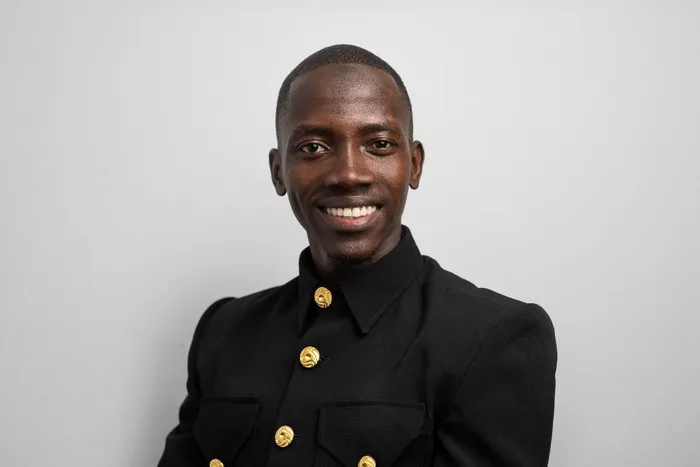
UCT postgraduate student Muhammed Coker has secured a McCall MacBain Scholarship, which will enable him to pursue a Master of Science in Agricultural Economics at McGill University, Canada.
Image: Supplied
In a monumental stride towards shaping impactful leaders, Muhammed Coker, a postgraduate from the University of Cape Town (UCT), has been honoured with the esteemed McCall MacBain Scholarship. This accomplishment not only represents a personal achievement for Coker but marks a significant milestone for young individuals from underrepresented backgrounds, as he embarks on his journey to pursue a Master of Science in Agricultural Economics at McGill University in Canada later this year.
Coker's recent accolade follows a rigorous international selection process, which saw him stand out among a cohort of budding leaders committed to making a tangible difference in their communities. The $40,000 (667 000) scholarship he received is recognised globally for fostering talent and leadership, and for Coker, it is symbolic of the possibilities that lie ahead for many young South Africans.
“Receiving this award is deeply emotional for me because it represents more than personal success,” Coker reflected. “It symbolises possibility for every young person from an underrepresented background who has ever wondered whether their dreams are valid.”
His transformative journey at UCT, where he completed a Postgraduate Diploma in Management and Entrepreneurship as a Mandela Rhodes Foundation scholar, fundamentally reshaped his understanding of leadership. Coker noted that his time at UCT taught him the importance of collaboration and vulnerability.
“One of the biggest things I learned at UCT was that leadership is deeply rooted in collaboration and vulnerability. I arrived thinking impact was mostly about individual excellence and hard work, but UCT taught me the power of diverse perspectives, difficult conversations, and learning from people whose experiences are very different from my own,” he said.
A pivotal experience for Coker was his involvement in “Unipay,” a student-led initiative that successfully connected students with short-term job opportunities to alleviate their financial burdens. “What made the experience so powerful for me was realising how many students quietly carry the burden of financial stress while trying to pursue their education,” he said.
This initiative not only refined his leadership vision but also reinforced his belief in a more empathetic, teamwork-oriented approach, centred around service-driven leadership.
Beyond his academic pursuits, Coker's commitment to social impact influences his entrepreneurial ventures as well. He founded the Agro Incubation Hub, a platform designed to support youth and women smallholder farmers in adopting sustainable agricultural practices. Through this project, he has actively facilitated business development and enhanced financial literacy among aspiring farmers.
Reflecting on his UCT journey, Coker described the university as a formative ground that challenged him intellectually, socially, and personally. “It pushed me to believe that my story and experiences also belong in global conversations,” he said, emphasising the confidence and sense of purpose he gained during his studies.
Looking towards his future at McGill University, he aims to delve into how smallholder farmers interact with agricultural technologies and food security programmes, particularly in resource-constrained and climate-affected contexts. “I carry this opportunity not only for myself, but for many people whose hopes are tied to my journey,” he said.
For current and future postgraduate students, Coker's message resonates with encouragement and self-belief. “You don’t need everything figured out. Courage is often more important than confidence – you just need to believe that your voice, your work, and your dreams matter.”
He added, “I come from a humble family background, and there were many moments where I questioned whether I truly belonged in these spaces. Sometimes, the very experiences that make you doubt yourself are the same experiences that make your story powerful.”
IOS