
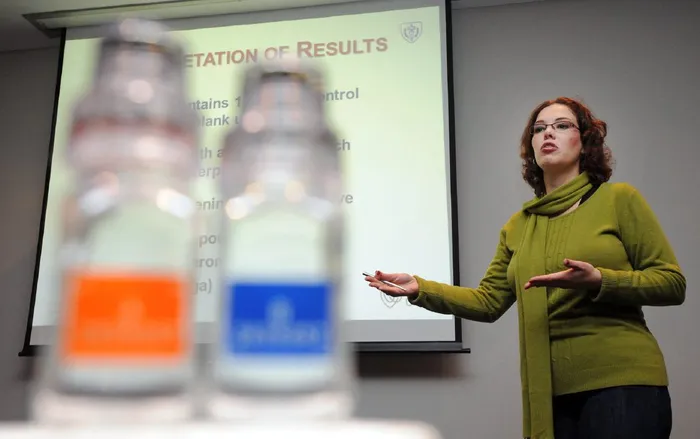
Ebeth Grobbelaar, Deputy Director of the South African Doping Control Laboratory, speaks to the media at a press briefing in this file picture. Safer sport comes under the spotlight at the upcoming Safe Sport International Conference, featuring global leaders and groundbreaking discussions.
Image: David Ritchie
The University of Cape Town (UCT) is set to become a pivotal venue for international sport welfare discussions as it prepares to host the 6th Safe Sport International Conference from May 25 to 27. The event promises to be a major milestone in the global safe sport movement, bringing together delegates from 87 countries, marking it as the most internationally representative gathering to date.
Themed "Moving safeguarding from intention to implementation," Safe Sport 2026 will feature a distinguished line-up of speakers from organisations such as the Fédération Internationale de Football Association (FIFA), World Rugby, World Athletics, and the International Olympic Committee (IOC). Additional contributions will come from key global entities including UNESCO, the South African Sports Confederation and Olympic Committee, the World Anti-Doping Agency, and the Confederation of African Football.
Set in the New Lecture Theatre, the conference aims to foster collaboration among researchers, policymakers, athletes, educators, safeguarding practitioners, and sport leaders dedicated to enhancing athlete welfare and strengthening safer sport systems worldwide. The carefully curated programme spans three interconnected days — Africa Day, Global Day, and Research Day — addressing a spectrum of topics including community practice, athlete voice, governance, law, research, and international standards.
Associate Professor David Maralack, Head of Department at the School of Management Studies at UCT, highlighted the importance of inclusivity in developing safer sports environments. "Safer sport is not built by one discipline, one organisation or one country alone. It depends on shared responsibility, deeper understanding, and stronger systems," he said. Hosting the conference at UCT places African scholarship and lived experience at the forefront of this important dialogue, challenging the historical dominance of perspectives shaped elsewhere.
Supported by UNESCO South Africa, whose efforts resonate with advancing education, human rights, and safe sport environments, the conference will make strides toward placing African leadership at the centre of global safeguarding conversations. UCT's commitment to the event is further exemplified through the contributions of local voices like Maralack, who combines local insights with international discussions on safeguarding in the sports landscape.
As part of the initiative, UCT's School of Management Studies is set to launch a Safe Sports Research Hub. This hub aims not only to advance scholarship in safe sport practices but also to ensure that these practices are studied, measured, and continuously improved through world-class research and training. Maralack noted, "This global conference offers the ideal platform to deepen academic contributions, forge new research collaborations, and cement UCT's role in building the global and African safe sport evidence base."
In addition to broadening the discussion on safeguarding implementation, the conference agenda will cover crucial aspects such as athlete welfare, governance, education, integrity in sport, and institutional accountability. Coinciding with Africa Day, the event promises to not only address pressing issues in sport but also to underscore Africa's role in shaping the future of athletics and athlete safety globally.
IOS