
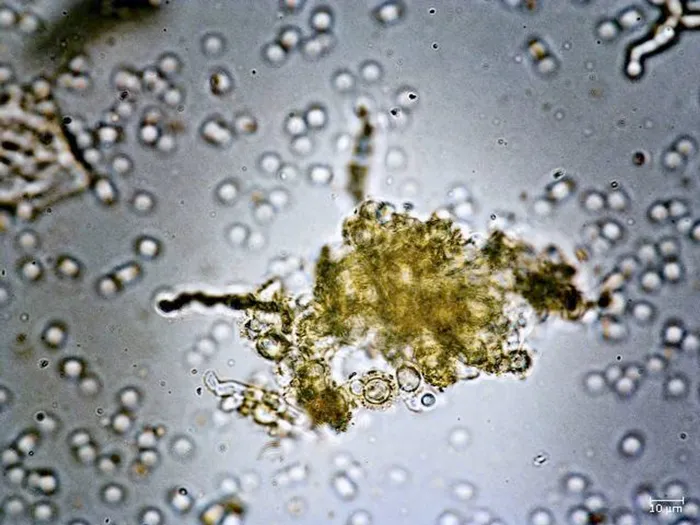
South Africa is poised to lead the global challenge to decode the enigmas of fungi with South Africa’s leading mycologist, Professor Cobus Visagie, to embark on a groundbreaking quest to decode this vital yet overlooked kingdom of life.
Image: File
Amidst the turbulent tides of climate change and escalating public health needs, South Africa is poised to take the helm of an innovative global initiative aimed at decoding the fundamental yet enigmatic world of fungi. At the forefront of this endeavour is Professor Cobus Visagie, an esteemed mycologist from the Forestry and Agriculture Biotechnology Institute (FABI) at the University of Pretoria, who is set to unravel the complexities of a kingdom that plays a critical role in sustaining life on Earth.
Fungi, often overshadowed by their more glamorous botanical cousins, underpin essential processes that support biodiversity and human existence. They are integral to organic matter decomposition and nutrient cycling, as well as the production of crucial medicines and food items such as leavened bread and beer. Despite their importance, a staggering number of fungal species remain largely unidentified and misunderstood — an estimated 2.5 million fungi exist globally, with South Africa housing a remarkable 200,000 species, yet only about 155,000 have been classified so far.
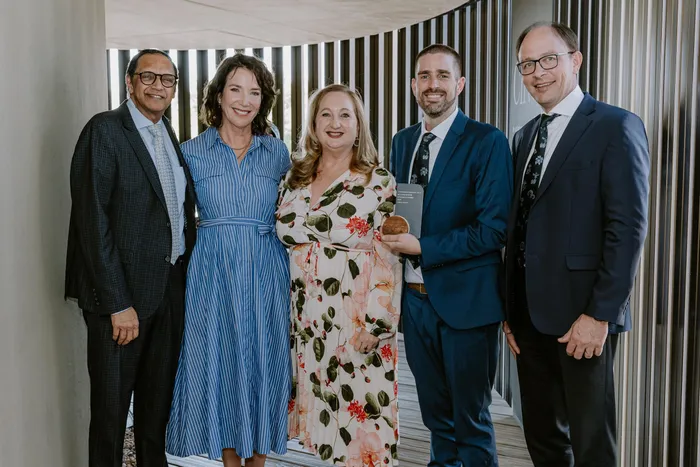
University of Pretoria Vice-Principal: Research, Innovation and Postgraduate Education Prof. Sunil Maharaj, Oppenheimer Memorial Trust (OMT) chairperson Rebecca Oppenheimer, OMT CEO Tracey Webster, associate professor at the University of Pretoria’s Forestry and Agricultural Biotechnology Institute (FABI) Prof. Cobus Visagie, and FABI director Prof. Bernard Slippers at the ceremony announcing Prof. Visagie as the recipient of the 2026 New Frontiers Research Award.
Image: Supplied
To address this glaring knowledge gap, the Oppenheimer Memorial Trust (OMT) has awarded its prestigious New Frontiers Research Award to Professor Visagie, providing R1.5 million annually over five years, amounting to R7.5 million in total. This funding will support an ambitious project titled “Mapping Unseen Fungi Across South Africa” (MUFASA), which intends to locate, culture, describe, name, and catalogue hundreds of novel fungal species. The findings will create invaluable resources for researchers worldwide, propelling forward advancements in multiple disciplines.
“We’re on the cusp of technological changes that allow biodiversity discovery to be quicker and more effective,” Professor Visagie explains. “If we don’t seize this opportunity now, South Africa and Africa will be sidelined in global research efforts.” His vision for MUFASA extends beyond mere classification; it aims to illuminate fungi's potential in developing novel therapeutics, enhancing agricultural biocontrol measures, and generating sustainable food alternatives.
The MUFASA project will also ally with ongoing initiatives at FABI, including a Horizon Europe Marie Skłodowska-Curie Actions staff exchange grant that investigates fungi's role in bioeconomies, and the Wellcome Trust's CryptoADAPT project, focusing on addressing the public health threat posed by the deadly fungal pathogen Cryptococcus, linked to a growing number of immunocompromised individuals worldwide.
Professor Sunil Maharaj, Vice-Principal for Research at the University of Pretoria, expressed his excitement over the significant recognition of Professor Visagie’s work. “With our unique biodiversity and exceptional expertise in mycology, coupled with new technological advancements and funding from OMT, we are positioned to make substantial contributions to global biodiversity knowledge,” he remarked.
MUFASA’s methodology combines traditional scientific practices — such as culturing and DNA barcoding — with cutting-edge techniques like metabarcoding and bioinformatics. This innovative approach allows researchers to identify multiple species from a single sample, expanding our understanding of these complex ecosystems. Moreover, MUFASA will implement a citizen science component, engaging pupils from all nine provinces to participate in sample collection — an effort that not only enhances fieldwork, but also promotes awareness of fungi's vital contributions to our environment.

Prof. Cobus Visagie (back, right), associate professor at the University of Pretoria’s Forestry and Agricultural Biotechnology Institute (FABI), with the FABI team and his family at the announcement of his 2026 New Frontiers Research Award.
Image: Supplied
“Imagine the potential that lies within the strains we’ve yet to discover,” said Visagie. “Our goal is to build a comprehensive resource that enables understanding and harnessing fungi's benefits while also confronting pathogens.”
Rebecca Oppenheimer, chairperson of OMT, commented on the far-reaching implications of Visagie’s research. “His work holds promise across health care, sustainable agriculture, and environmental conservation, making it imperative for South Africa to champion this research.”
IOS