
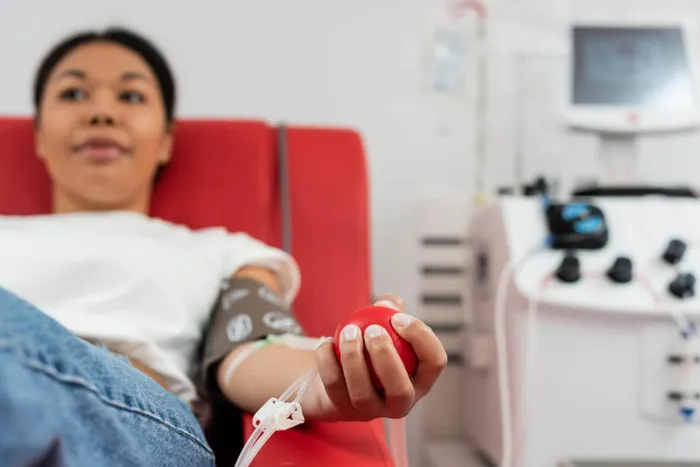
National Blood Donor Month reminds us that blood donation is about more than just generosity. It speaks to readiness, community, and the understanding that healthcare depends on people supporting one another.
Image: Supplied
“Blood donation is one of the clearest ways people can make a direct difference in someone else’s life,” says Murray Hewlett, CEO of Affinity Health, as South Africa celebrates Blood Donor Month in June. This statement encapsulates the profound impact a single act of kindness can have on the lives of countless individuals in need of crucial medical care.
When we discuss blood donation, it is easy to fall into abstract concepts; however, each pint collected represents a vital lifeline for real people facing extraordinary challenges, said Hewlett. It could be a mother suffering from severe bleeding during childbirth, a child undergoing chemotherapy, or an adult involved in a severe car accident. For those living with blood disorders, regular transfusions are not just lifelines; they are essential for maintaining a semblance of normality in their lives.
The World Health Organization (WHO) highlights the critical role blood and its products play in healthcare — ranging from trauma and surgical procedures to maternity care and serious disease management. Importantly, the WHO emphasises that blood cannot be manufactured; rather, every transfusion relies on altruism — the willingness of people to donate.
Many people may not realise the life-saving potential emerging from a single blood donation. Blood can be separated into components: red cells, plasma, and platelets, meaning that one donation could potentially save multiple lives. A single donation can help save up to three lives, illustrating the immense value each person brings to the donor pool.
Not only is donated blood critical for emergencies, but it is also vital for planned surgeries, ongoing cancer treatment, care for premature infants, and the management of chronic medical conditions. The need is not limited to crisis situations; demands for blood are constant, as hospitals must maintain a reliable supply for routine and urgent needs alike.
The South African National Blood Service (SANBS) highlights the urgency of blood donations, aiming to collect an average of 3,500 units daily to meet national demands. Despite the pressing necessity, only one in approximately 140 individuals donates regularly, creating significant pressure on a limited donor base.
This disparity underscores why regular donations are essential; a sustainable blood supply cannot depend solely on emergency drives or last-minute efforts. Continuous support from donors throughout the year is crucial to ensure an adequate reserve.
Another important factor in maintaining blood supplies is the shelf life. According to SANBS, a unit of blood can only be stored for 42 days, making the continual replenishment of blood supplies necessary. The Western Cape Blood Service has set a target of ensuring a five-day stock level for each blood group, illustrating just how vital it is to manage the availability of this precious resource meticulously.
While all blood groups play a role, certain types are especially critical in emergencies. The WCBS notes that O-negative blood is the universal donor type and can be transfused to recipients across all blood groups, making it especially sought-after in critical situations. Nonetheless, a balanced supply across all blood groups is essential; concentrating on one type could inadvertently lead to shortages elsewhere, emphasising the need for every eligible donor to contribute.
Many misconceptions surround blood donation, but the reality is that the requirements are often more straightforward than one might think. Potential donors generally need to be:
Before donating, a thorough screening process — including a questionnaire, interview, and health checks — ensures the safety of both donors and recipients alike.
National Blood Donor Month serves as a reminder that blood donation is not merely an act of generosity, but a testament to community spirit, preparedness, and interdependence in healthcare, says Hewlett. The question “Who needs your blood?” reveals a simple truth: more lives depend on it than most realise.
IOS