
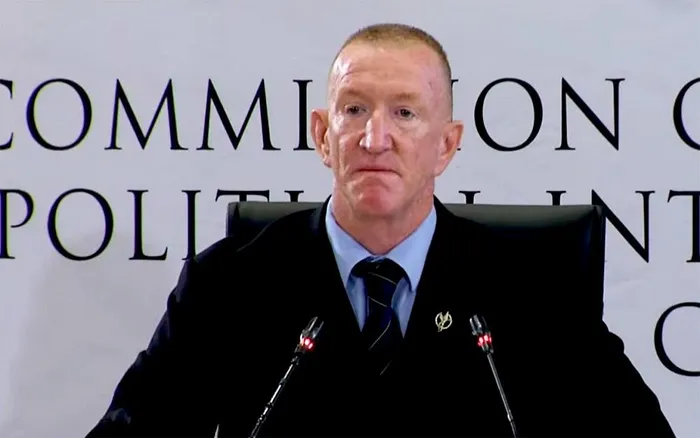
Warrant Officer Karl Sander, a senior Hawks investigator, took a polygraph test over missing cocaine exhibits even though he was on leave at the time.
Image: File
The Madlanga Commission of Inquiry heard on Tuesday that polygraph tests of KwaZulu-Natal Hawks officers regarding the R200 million cocaine theft in 2021 were thrown out after the examiner made “serious errors”.
The 541kg cocaine bricks, seized by the Hawks from a container at Durban Harbour in June 2021, were stolen from the Hawks Port Shepstone storage facility during a burglary in November 2021.
Warrant Officer Karl Sander, a senior KZN Hawks investigator, testified that he was among the officers polygraphed over the missing cocaine exhibits.
He told the commission on Monday that he underwent the test despite being on leave when the Hawks storage facility was burgled.
The commission evidence submitted on monday showed that he had failed the test, but Sander said he was seeing the results for the first time.
However, on Tuesday the commission received an email from the KZN Forensic Science Laboratory’s polygraph section commander, clarifying the test in question.
Evidence leader Advocate Lee Segeels-Ncube read out an email stating the tests were conducted by Captain Nel and that all polygraph tests go through two quality reviews.
The first is a technical review done during the test after charts are generated.
According to the email, during this review, Sander’s results showed “deception indicated” and that that result was communicated to him during the post-test interview.
“Later during the administrative review process the reviewer went through all documents and found that the polygraph examiner had made serious errors during the polygraph examination process. And non-conformance was opened and investigated against the polygraph examiner. The test was considered invalid so that the examinee was not prejudiced by the errors of the polygraph examiner,” Segeels-Ncube said, reading the email.
The commission was told that the polygraph examiner was subsequently stopped from conducting any further polygraph examinations.
After the email was read, Sander, who was exonerated by it, broke down in tears with a sigh of relief.
He testified that several officers were sent for polygraphs over the theft, but KwaZulu-Natal Hawks head Major-General Lesetja Senona was not tested despite being present when the cocaine was booked into storage after the June 2021 bust.
Senona is expected to testify on Friday to face further questions from the commission on why he did not take the polygraph test.
He previously testified that he had never taken a polygraph test but had no objection to undergoing it.
Sander also testified that Hawks seniors did not treat staff impartially while an investigation against them was underway.
He told the commission he was charged for failing to disclose that he was a director of shooting clubs that included other police officers.
He also said he was then moved from the narcotics unit to support services for “stepping on the toes” of officials allegedly linked to drug dealing.
Sander said: "In short - I am just going to say - maybe I became a thorn in their side because I was interfering with their supply chain. For the supply chain to work correctly you need a corrupt policeman. You need a corrupt customs official; you need a corrupt policeman - then your system flows."
On Tuesday Sander told the commission he knew of a woman at the provincial office who was arrested with a brigadier for extortion or corruption.
“What then transpired was that that person was released on bail. The person came back to work and nothing happened,” he said.
He said the staff was not happy about what happened and one of them lodged a complaint but that individual was “victimised straightaway”.
“The whistleblower has since been moved to a totally different environment within the DPCI (Directorate for Priority Crime Investigation). As we speak, the other person (the woman) is still at work. There is no impartial behavior towards employees when there is no investigation against them,” Sander said.
rapula.moatshe@inl.co.za