
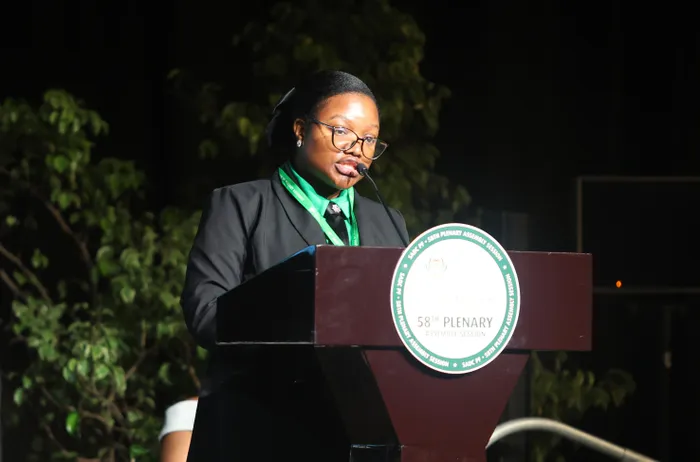
Princess Mojapelo emphasises the urgent need for youth involvement in climate action.
Image: Tumi Pakkies/ Independent Newspapers
At the forefront of the climate crisis that threatens our future, young representatives in Southern Africa are stepping up to innovate and advocate for change.
During the 58th Plenary Assembly of the SADC Parliamentary Forum, where delegates examined climate change’s impact on women and youth, Princess Mojapelo - representing the Southern African Youth Parliament from South Africa - emphasised that climate change is not a distant problem.
She highlighted that it is a pressing challenge that affects over 240 million young Africans daily. From food security to education disruptions, the impacts of climate change are felt intensely, particularly across the Southern African Development Community (SADC) region.
Mojapelo said: “Yet even in this crisis, young people are leading from reforesting landscapes to innovating with digital climbing tools from Mauritius to Malawi, from Seychelles to Zimbabwe, youth across SADC are demonstrating courage, creativity, and resilience.”
She said that over 400 young people gathered in Johannesburg at the 4th SADC Youth Forum in 2022, where the idea of the SADC Youth Climate Change Envoy was conceived. This idea, she said, is now a tangible reality. The envoy has successfully initiated the youth negotiator programme, organised the inaugural conference of youth preceding the conference of the parties, and is amplifying the perspectives of SADC youth on international stages, such as the Africa Climate Week in Nairobi.
“This is why we welcome the thoughtful and urgent theme of this 58th Plenary Assembly, because climate change is neither gender neutral nor generation blind; it hits women and young people hardest, but we remain the champions of innovation and adaptation,” Mojapelo said.
She said the assembly already approved the establishment of the SADC PF Youth Caucus. They eagerly anticipate its full implementation because it will strengthen youth coordination, expand legislative contributions, and establish a permanent home for the Southern African Youth Parliament within this forum.
She also said they look to their parliaments for bold, accountable, transformative leadership. Leadership that prepares the region, not for the world we once knew, but for the world we are entering.
“As the youth of Southern Africa, we stand before you with one unwavering message: We are not leaders in waiting. We are leaders in motion. Ready to contribute, eager to lead, determined to shape a future defined by shared purpose, dignity, and opportunity for all. And as you rise into that future, we carry a principle that has guided youth movements across generations. There is nothing for us without us,” Mojapelo said.
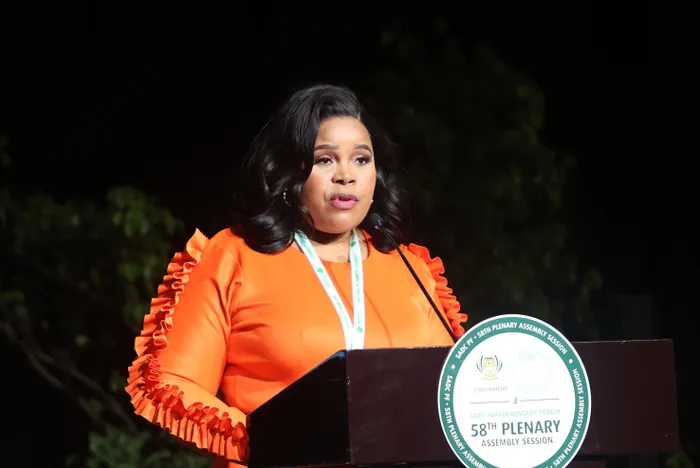
Dr Linda Nxumalo highlights the impact of climate change on rural women during the SADC PF assembly.
Image: Tumi Pakkies/ Independent Newspapers
Regional Women’s Parliamentary Caucus’ from Eswatini Dr Linda Nxumalo said: “Climate change worsens women’s vulnerability, especially for rural women who face the impact of environmental shocks that disrupt food systems, displace communities, and threaten livelihoods.
“We must prioritise climate-smart legislation that protects women, livelihoods, and positions them as agents of environmental resilience, strengthening the legal and policy frameworks necessary to combat digital violence and cybercrime, ensuring that women and girls are safeguarded online as much as offline and close to the digital gender gap through fair access to education, connectivity, and digital skills training.”
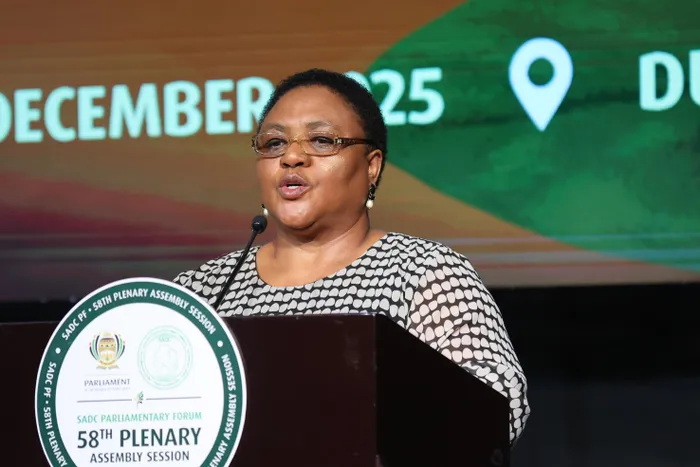
Speaker of Parliament Thoko Didiza addresses the urgent realities of climate change in Southern Africa
Image: Tumi Pakkies/ Independent Newspapers
Parliamentary Speaker Thoko Didiza said the Plenary Assembly convenes at a critical moment when climate change is no longer an abstract threat. Instead, its tangible effects are becoming lived realities that shape the daily lives of millions across Southern Africa.
She said that in their adaptation and mitigation strategies, they must consider the livelihoods of youth and women in general.
“Our region is experiencing more frequent and intense cyclones, floods and droughts. We’re seeing rising temperatures and water scarcity. Millions of our people are affected by food insecurity and growing threats to public health, livelihoods, and infrastructure,” Didiza said.
thobeka.ngema@inl.co.za