
Human rights lawyers and activists, led by the Eswatini Litigation Centre, asked the court to block the deal because it bypassed parliament and its terms were kept secret.
Image: Sora AI
An Eswatini court has thrown out a lawsuit alleging the kingdom secretly struck an unconstitutional deal with US President Donald Trump to take in third‑country deportees, according to a ruling seen by AFP Wednesday.
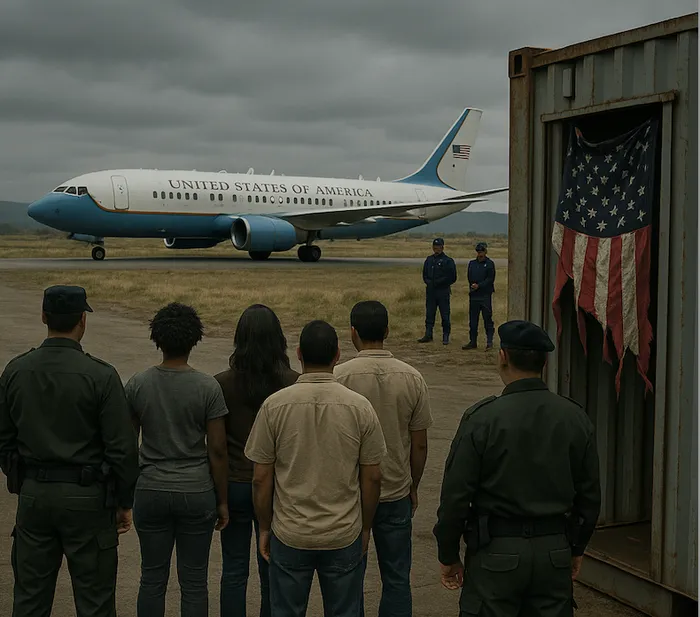
The challenge followed the July arrival of a first group of deportees on a US military aircraft under the Trump administration's sweeping crackdown on migration.
Human rights lawyers and activists, led by the Eswatini Litigation Centre, asked the court to block the deal because it bypassed parliament and its terms were kept secret.
But a three-judge bench High Court dismissed their application, ruling that they did not have a direct interest in the matter.
"There was no need to deal with the other legal issues raised in the matter," said the ruling dated February 3 and seen by AFP Wednesday. "The application is therefore dismissed."
At least 15 deportees, some described by the United States as "barbaric" criminals, are being held in solitary confinement in a maximum-security prison.
The tiny kingdom initially said the agreement was based solely on its good relations with Washington, but in November acknowledged it had received more than $5 million from the United States.
Eswatini, an absolute monarchy ruled by King Mswati III and long accused by critics of repression, has said the deportees pose no threat to the country of 1.3 million people.
Lawyers involved in the case said they did not know the condition of the deportees because they had not been granted access to them.
A document revealed by Human Rights Watch in September and seen by AFP said Eswatini agreed to take 160 deportees in exchange for funds to "build its border and migration management capacity".
More deportees are likely to arrive this year, according to correctional service officials.
AFP