
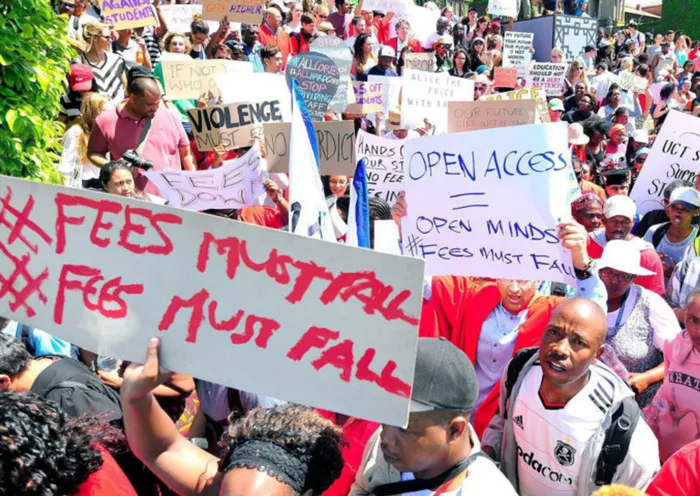
The National Student Financial Aid Scheme says it has approved more than 609,000 funding applications for the 2026 academic year after processing a record number of submissions ahead of schedule.
Image: HENK KRUGER/FILE
The National Student Financial Aid Scheme (NSFAS) says it has processed all 2026 funding applications ahead of the start of the academic year, approving 609,653 applications and rejecting 49,538 after a rigorous review process.
NSFAS board chairperson Dr Mugwena Maluleke said the scheme had met its commitment to finalise all applications by December 31, 2025.
Speaking from Pretoria on Tuesday morning, Maluleke said: “We received a record 893,847 applications, a testament to the scale and importance of our mission,” he said.
Of these, 593,981 applications (66.45%) were from female applicants, while 299,866 (33.55%) were submitted by male applicants.
He said applications included 520,545 from SASSA beneficiaries and 2,551 from students with disabilities.
To date, 218,043 applications remain incomplete due to outstanding documents, 16,862 have been cancelled, and 49,538 rejected.
First-time entry students accounted for 766,232 applications, while 125,157 came from senior students.
“In terms of age distribution, we received 428,632 applications from teenagers, 417,823 from individuals in their twenties, 42,186 from those in their thirties, 4,585 from individuals in their forties, and 621 from applicants aged fifty and above,” Maluleke said.
Maluleke said all universities were required to submit 2025 academic results by December 15, 2025, a deadline that most institutions met.
“This submission is critical for NSFAS to verify academic eligibility and release funding statuses for continuing students before registration begins,” he said.
He added that institutions facing challenges were advised to contact their assigned NSFAS administrators.
Maluleke urged universities have to upload 2026 admission lists to the NSFAS portal as early as possible.
“Early submission enables NSFAS to begin student validations and prioritise funding-eligibility processing,” Maluleke said.
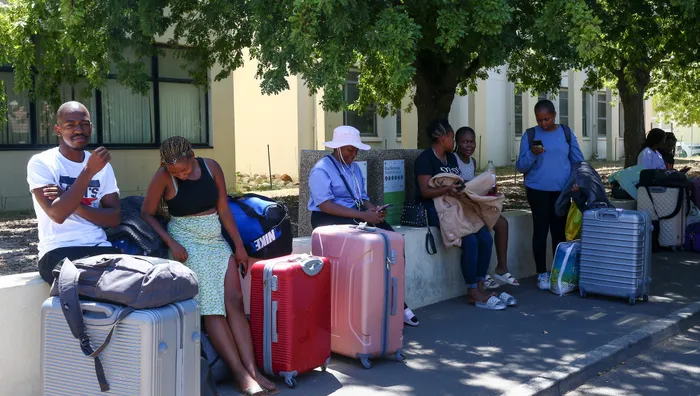
NSFAS says it met its deadline to finalise all 2026 funding applications by the end of December, approving over 609,000 students and rejecting nearly 50,000 following a rigorous review process.
Image: Leon Lestrade/Independent Newspapers
All 2026 funding decisions, he said, were completed by December 31, 2025.
“The initial release for first-time entering students took place on December 15, 2025, and universities are now able to access funding lists,” he said.
University-led allowance distribution will continue throughout 2026, with institutions required to submit monthly remittance returns.
“Equally important is that accommodation allowances for students in private accommodation will be paid directly to accredited providers, who must enter into legitimate agreements with student occupants,” Maluleke said.
He said NSFAS is implementing a transitional framework towards a more centralised and transparent accommodation system.
“All accommodation dates - including opening, closing, move-in and move-out periods - will be intrinsically aligned with the academic calendar to prevent students from being stranded,” he said.
He said the accommodation portal is being upgraded to allow students to apply, track applications, accept offers and log maintenance issues on a single platform.
“Furthermore, the portal will be integrated with institutional student management systems to facilitate automatic verification of student registration and NSFAS eligibility,” he added.
On February 1, 2026, NSFAS will make an upfront payment covering the full book allowance and one month of meal, accommodation, personal care and travel allowances.
“Universities will be responsible for ensuring correct disbursement to eligible students,” Maluleke said.
Addressing challenges at TVET colleges, Maluleke said NSFAS would provide advance tuition payments to support cash flow at the start of the academic year.
“The upfront payment will be calculated at 20% of each college’s 2025 tuition allocation,” he said, adding that all subsequent payments would depend on verified registration data.
TVET students will continue to receive allowances directly into their personal bank accounts. “Payments will not be made to third-party or institutional accounts,” Maluleke said.
Maluleke said the appeals process for 2026 had been streamlined.
“The appeals window opens immediately as application outcomes are communicated. Students must submit all supporting documentation within 30 days of their outcome notification,” he said.
simon.majadibodu@iol.co.za
IOL News