
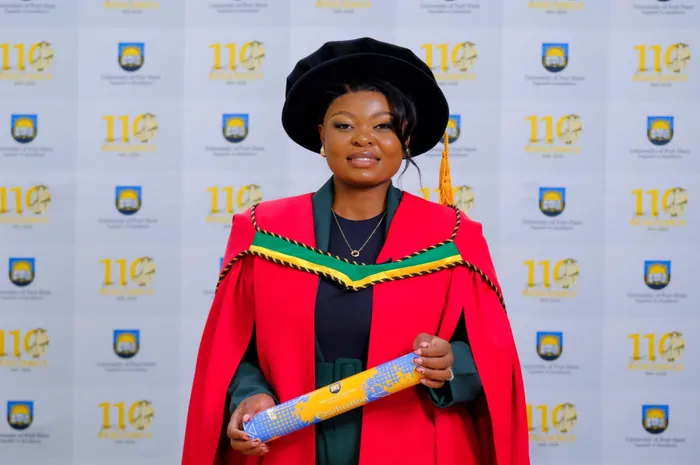
At 27, Peddie's Dr Owetu Zamisa becomes UFH’s youngest PhD graduate.
Image: UFH
Dr Owetu Zamisa, 27, from Peddie in the Eastern Cape, has been awarded a Doctor of Philosophy in Agricultural Economics by the University of Fort Hare (UFH) during its 2026 Autumn Graduation this week.
She is the youngest PhD graduate this year after completing a decade-long academic journey at the institution where her passion for rural development and agriculture first took root.
Her research places beekeeping at the centre of rural economic transformation in the province, showing how an often-overlooked activity can become a meaningful income source for small-scale farmers.
"Beekeeping is a sector with great potential, especially in areas where opportunities are limited, but it is often overlooked," she said.
Her doctoral study explored how education, market access and cooperative structures can turn beekeeping into a sustainable commercial enterprise for rural communities.
Zamisa's path at UFH began in 2016, when she enrolled for her BSc in Agricultural Economics before progressing through Honours and Masters.
She now works as a lecturer in the Faculty of Science and Agriculture.
Her research, conducted with 300 small-scale beekeepers across rural Eastern Cape communities, combined complex econometric modelling with real-world fieldwork that often took her into remote and challenging areas.
Despite logistical difficulties and cultural beliefs surrounding bees in some communities, she remained committed to the work.
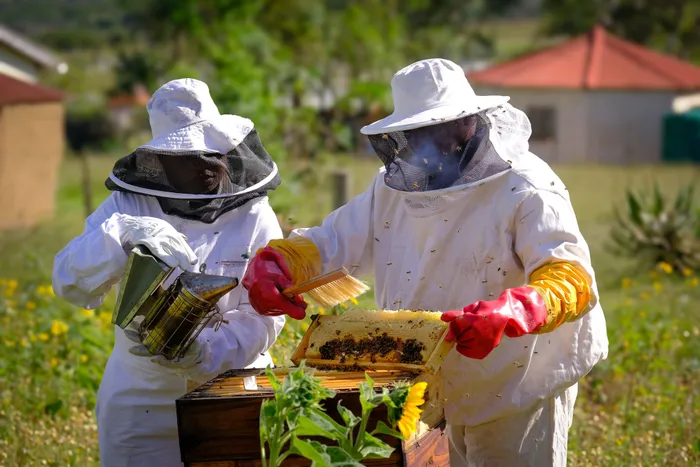
At just 27, Dr Owetu Zamisa from Peddie has become the youngest PhD graduate in the University of Fort Hare’s 2026 Autumn Graduation cohort.
Image: UFH
"Her research, conducted with 300 small-scale beekeepers across rural Eastern Cape communities, combined complex econometric modelling with real-world fieldwork that often took her into remote and challenging areas."
Despite logistical difficulties and cultural beliefs surrounding bees in some communities, she remained committed to the work.
Beyond its academic contribution, her study has already had a tangible impact on communities. One beekeeper, Luthango Stamper, described how the research helped transform their operation.
"Through her research, we got to understand what we can actually make out of beekeeping," he said. "She helped us see how honey moves in the market and how we can position ourselves for formal markets like supermarkets."
Zamisa credits much of her academic success to her supervisor, Prof Amon Taruvinga, and acknowledges the personal challenges she endured along the way, including the loss of close family members during her studies.
Sharing in the excitement of her graduation is her proud mother, Nompumelelo Zamisa.
"Owetu is the pride of the family, she is the first to graduate and now she is an academic doctor. I witnessed her struggles and now I am witnessing her successes. She has truly elevated the family's name."
IOL News