
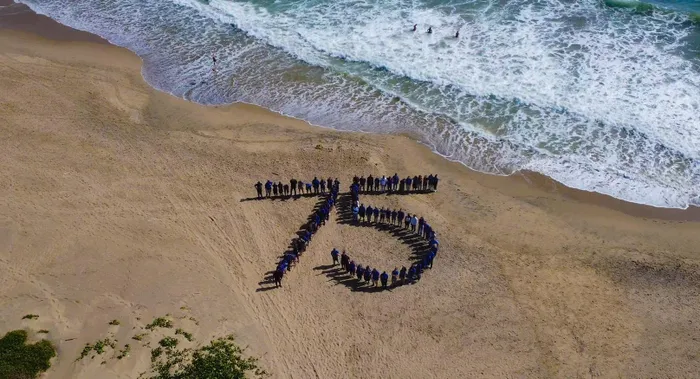
A number of the South African Association for Marine Biological Research (Saambr) staff gathered on uShaka’s Beach to have some fun while highlighting Saambr’s 75th anniversary. On January 30, 1951, something truly remarkable happened when Saambr was formally registered as Saambr. Seventy-five years later, Saambr staff remain committed to a deep belief that understanding the ocean is the first step to protecting it.
Image: Saambr
Seventy-five years ago, a bold idea took root on the KwaZulu-Natal coastline: a vision where science, education, and conservation, all funded by a sea-loving public, could safeguard our oceans.
On January 30, 1951, that vision became a reality with the formal registration of the South African Association for Marine Biological Research (Saambr).
From tackling shark concerns to pioneering a public aquarium, the organisation has been making waves ever since, evolving from a small group of marine scientists to a globally respected institution with Africa’s largest aquarium and a research legacy spanning thousands of publications.
Now, Saambr celebrates a legacy that started with curiosity and changed ocean conservation in South Africa.
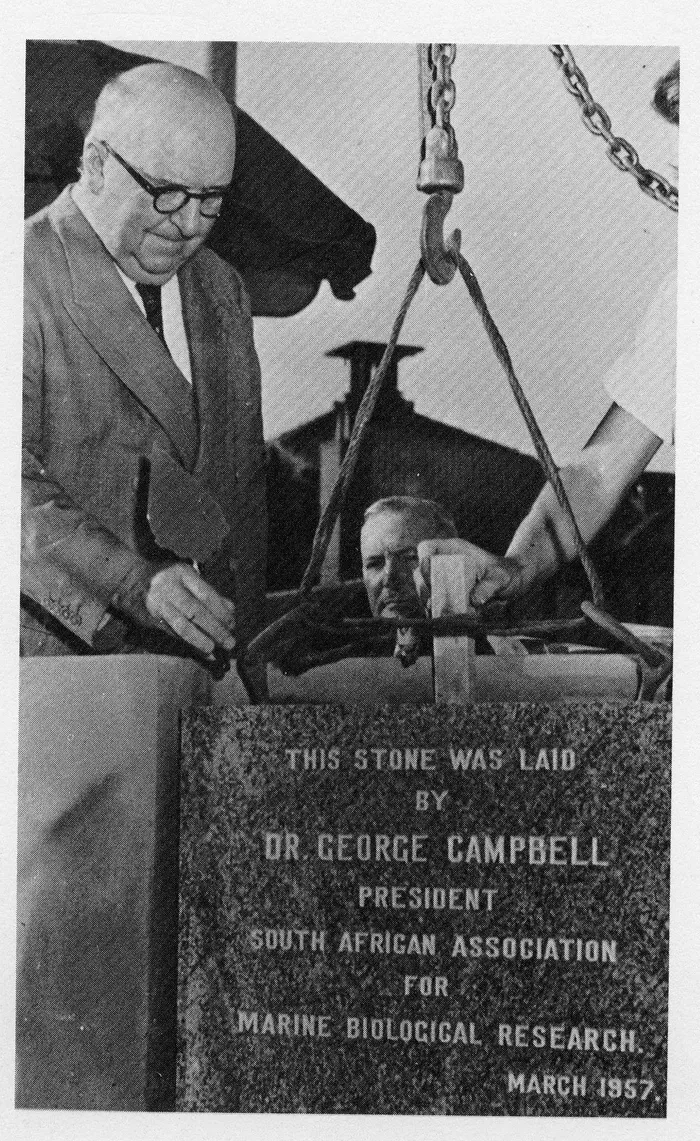
In 1957, Dr George Campbell laid the foundation stone.
Image: Saambr
Saambr Executive Manager: Conservation Education and Communications, Maryke Musson, said that, faced with increasing concern over shark bites on the KwaZulu-Natal coastline, the Saambr’s founders aimed to deepen understanding of sharks and the interconnected ocean ecosystems they rely on.
Their central vision encompassed applied marine research, public education, and the management of recreational fishing, all to foster a safe and sustainable coexistence between people and the coast.
To fund this, the team proposed a revolutionary public aquarium: entry fees would support animal care and research.
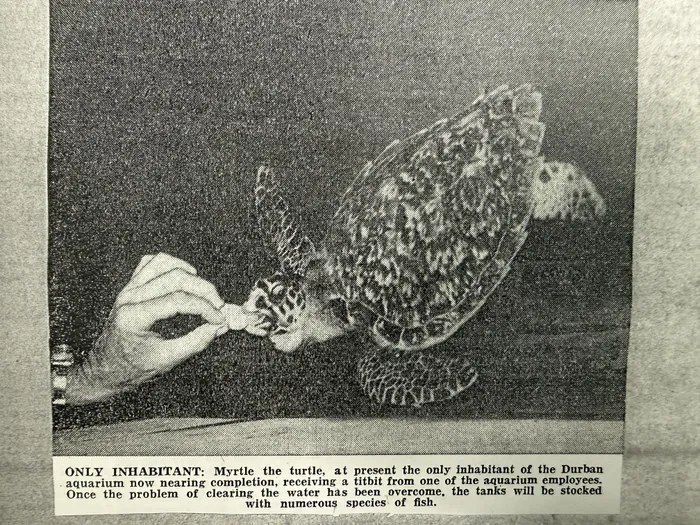
Myrtle, the first resident of Saambr’s aquarium, symbolised the start of a remarkable journey in marine conservation.
Image: Saambr
“In 1959, the aquarium opened its doors, and its very first resident swam straight into Saambr history. Myrtle, a rescued sea turtle, became the inaugural inhabitant of the first aquarium tank,” Musson said.
“Fittingly, sea turtle conservation and rehabilitation remain a cornerstone of Saambr’s work to this day.”
Musson said the organisation’s scientific impact expanded alongside its growth. The Oceanographic Research Institute (ORI), established under Saambr, formalised a research legacy.
This legacy now encompasses thousands of peer-reviewed publications, significantly influencing marine, coastal, and fisheries management and conservation throughout the Western Indian Ocean.
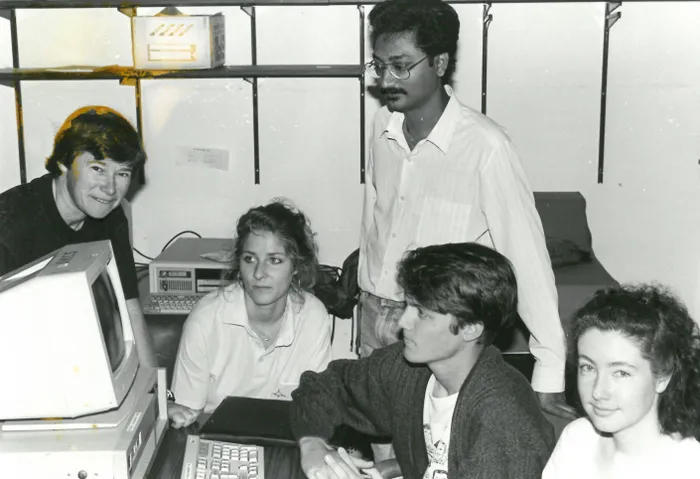
Staff using the first computer at the Oceanographic Research Institute.
Image: Saambr
“By the 1970s, ocean fascination had taken a surprising turn. A travelling dolphin show, dolphins in a trailer touring South Africa, was drawing huge crowds. Concerned that public interest (and essential research funding) might drift away from the aquarium, Saambr made another pivotal decision by establishing a dolphinarium,” Musson said.
“When it opened in 1976, the public response was overwhelming. Dolphins like Gambit became unforgettable ocean ambassadors, inspiring generations of visitors to care about marine life. The marine mammal landscape globally has changed, and Saambr remains fully committed to offering the seven dolphins currently under their care the best possible lives, from the youngest, Ingelosi, who is already 21 years old, to the oldest, Frodo, who has been under human care since 1979.”
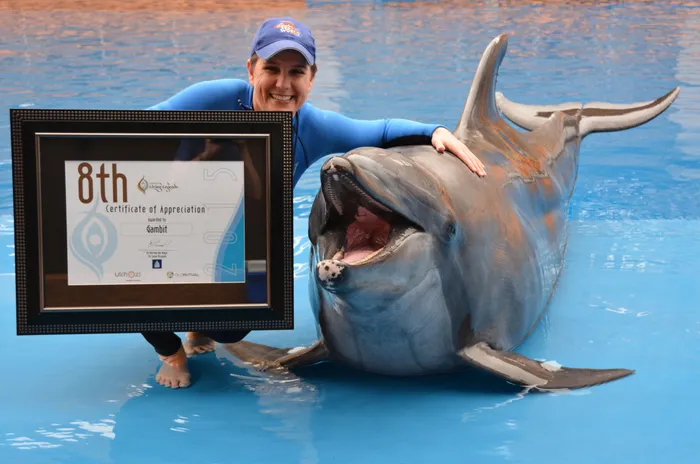
Inspiring generations to care for marine life and understand the importance of ocean ecosystems. In 2015, Gambit received a certificate of appreciation for being a living legend.
Image: Saambr
Musson highlighted that education has long been a focus. School visits began early, and in 1975, volunteer guides were formally introduced, supporting education for 50 years. Saambr appointed its first dedicated Education Officer in 1983, accelerating educational impact.
By 1993, the Education Outreach Programme expanded learning beyond the aquarium, reaching under-resourced and rural communities, committed to leaving no one behind.
“A major milestone followed in 2004, when Saambr moved to its current home at uShaka Marine World. With expanded research facilities, purpose-built education spaces, and the largest aquarium in Africa, the organisation entered a new era of scale and reach,” Musson said.
She said Saambr’s education programmes have since engaged over two million learners. Currently, more than 100,000 learners visit annually.
Simultaneously, Saambr’s ongoing research provides vital information that shapes conservation management, informs policy decisions, and enhances public understanding of the ocean.
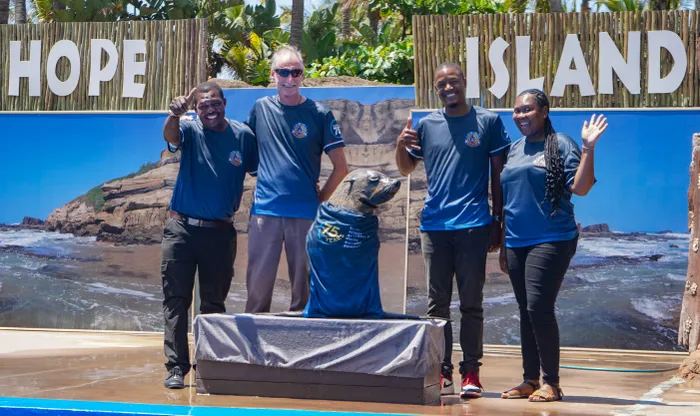
Celebrating the South African Association for Marine Biological Research (Saambr) 75th Anniversary are Saambr’s longest-serving staff members, Sipho Luthuli and Sean Fennessy, with Spongie the seal and Saambr’s most recent staff members, Mthokozisi Xulu and Partunia Hadebe.
Image: Saambr
“Seventy-five years on, Saambr remains true to the founding vision: research that informs conservation, education that inspires care, and science that serves both people and the ocean,” Musson said.
“From Myrtle the turtle to modern marine policy, from shark research to schoolchildren’s first glimpse of the sea, Saambr’s story is one of curiosity, courage, and a deep belief that understanding the ocean is the first step to protecting it.”
Looking at the next chapter, Musson said: “It’s already being written by an incredible team of dedicated ocean ambassadors quietly getting on with inspiring people every day.”
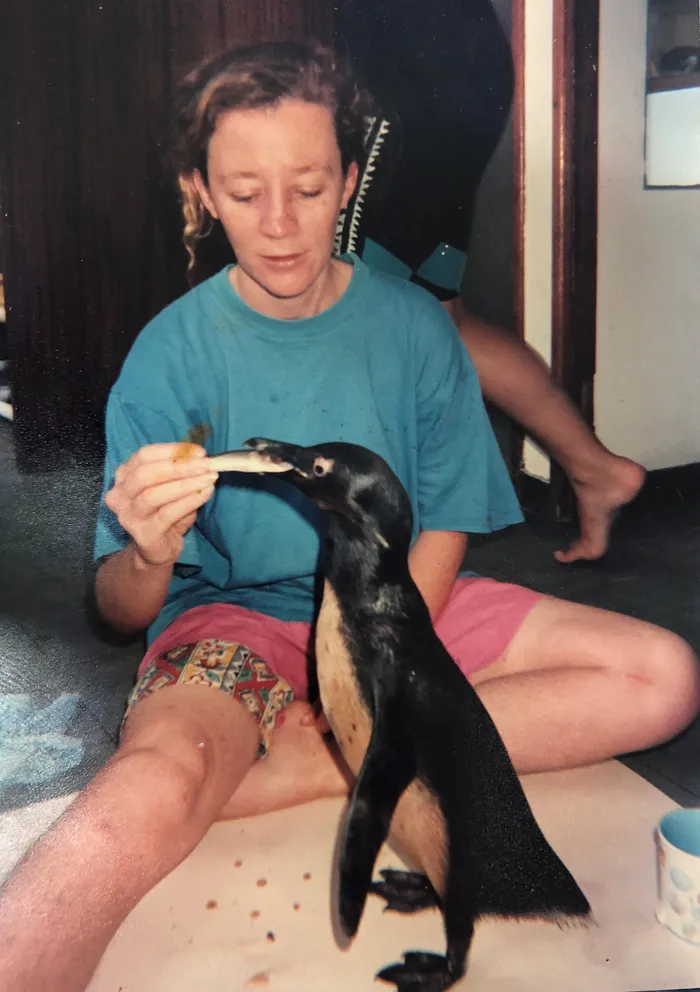
Gabby Harris with Pepper.
Image: Saambr
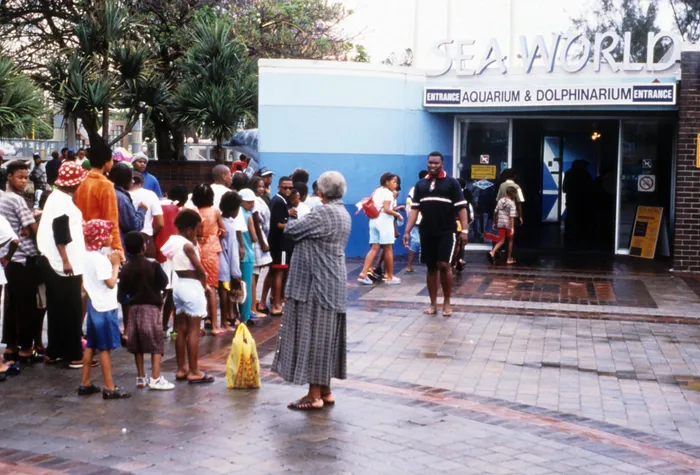
Engaging with over two million learners, Saambr’s education programmes foster a love for the ocean in young minds.
Image: Saambr

The construction of uShaka.
Image: Saambr
thobeka.ngema@inl.co.za