
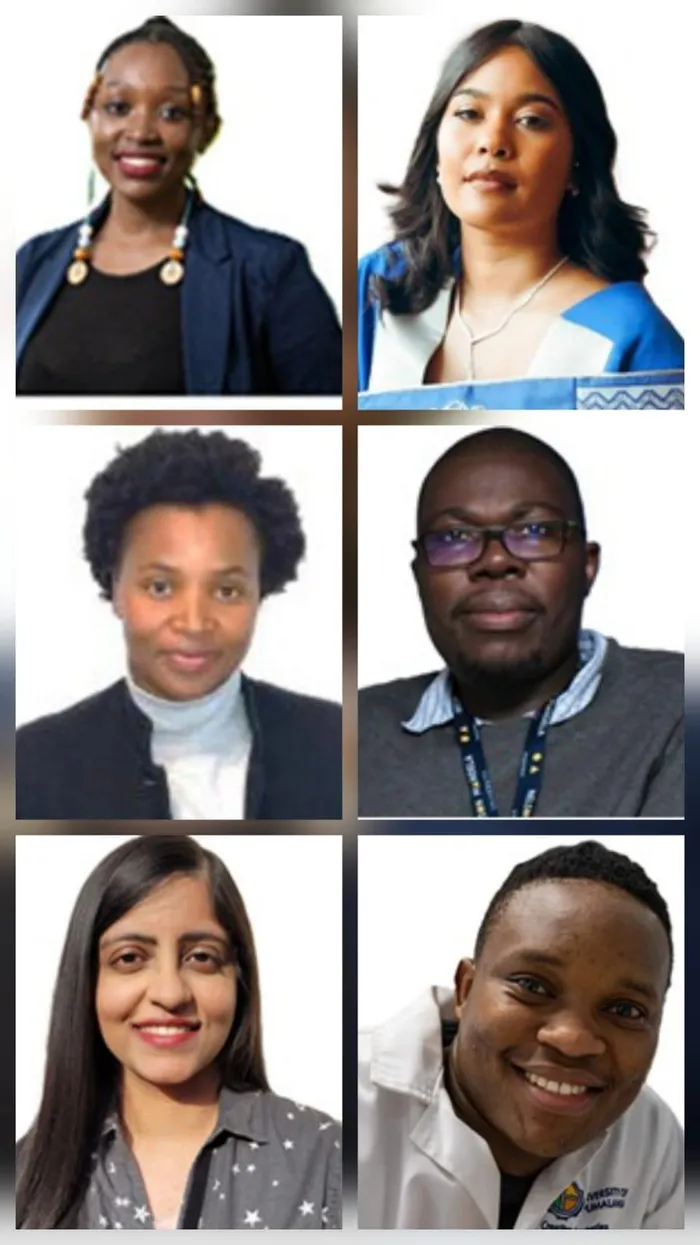
These are the six South African scientists who will be attending the meeting in Germany.
Image: ASSAf
Six South African scientists will be heading on an exceptional trip to Germany to attend the 75th Lindau Nobel Laureate Meeting.
This meeting in Lindau, described as one of the world’s most exclusive scientific gatherings, is expected to take place from June 28 to July 3, 2026.
This year's meeting, themed around interdisciplinary research, has drawn confirmations from 75 Nobel Laureates and will host approximately 636 young scientists from 88 countries. These candidates were all selected through a rigorous multi-stage evaluation process.
The annual event brings together early-career researchers and Nobel Laureates for a week of dialogue on cutting-edge science and global research challenges.
The Academy of Science of South Africa (ASSAf) serves as the official South African partner of the Lindau Foundation and makes annual nominations with support from the Department of Science, Technology, and Innovation (DSTI). The meeting is widely regarded as a career-defining opportunity, giving emerging researchers rare direct access to some of the most celebrated minds in science.
Before departing, the South African delegates will take part in a pre-travel engagement and science communication workshop organised by ASSAf, aimed at helping them make the most of the experience on an international stage.

Dr Itumeleng Baloyi.
Image: ASSAf
Dr Itumeleng Baloyi is a postdoctoral research fellow in the Medicinal Plants and Industrial Crops (MPIC) Division at the Agricultural Research Council – Vegetable, Industrial, and Medicinal Plants (ARC–VIMP) since 2025.
Her research focuses on natural products and innovative methods to tackle global health challenges. During her postdoctoral fellowship, she launched a biotesting service that aids academic research and SMMEs, generating data for regulatory approval of plant-based cosmetics and complementary medicines.
In August 2025, she earned the second-best poster award at the Indigenous Plant Use Forum.
Dr Baloyi obtained her PhD in microbiology in 2023 from the University of Pretoria's Department of Biochemistry, Genetics, and Microbiology, bolstered by a 2022 Erasmus+ scholarship for research at the University of Bologna, followed by a 2023–2024 postdoctoral fellowship there.
She received the 2024 IUBMB MilliporeSigma ENABLE-Africa Travel Grant to present at Nanyang Technological University in Singapore. Committed to mentorship, Dr Baloyi co-supervised two honors students and lectured part-time from June to December 2024. With 11 peer-reviewed articles (five first-author, two co-corresponding), her research targets medicinal plants for conditions such as dysmenorrhea.
Dr Jaymi January
Image: ASSAf
Dr Jaymi January is a postdoctoral fellow in chemistry at the University of the Western Cape (UWC), affiliated with SensorLab. Her research intersects nanoelectrochemistry, biosensing, and point-of-care diagnostics, focusing on advanced electrochemical and electrochemiluminescent (ECL) biosensors for disease biomarker detection.
Dr January designs and fabricates highly sensitive, selective biosensors using novel nanomaterials. Her current emphasis is on bipolar electrochemistry (BPE) and ECL-based systems to boost signal amplification, achieve lower detection limits, and develop portable, low-cost diagnostic platforms. Her work targets biomarkers for cancer, infectious diseases, and tuberculosis.
Beyond research, Dr January also teaches undergraduate chemistry and mentors students, nurturing future scientists. Passionate about translating innovations into real-world healthcare, especially in resource-limited settings, she explores commercialisation pathways for biosensor technologies. She advances accessible diagnostics and scientific talent development and was recently recognized as a finalist in the South African Women in Science Awards (SAWiSA).
Fannie Masina
Image: ASSAf)
Fannie Masina is a PhD candidate in Biology (Aquatic Ecology) at the University of Mpumalanga. His research focuses on freshwater ecosystems, with interests in biodiversity, ecosystem health, and the impacts of invasive species and human activities on aquatic communities. He holds a BSc in Agriculture and an MSc in Aquatic Ecology from the same institution.
Dr Xoliswa Lindokuhle Dyosiba
Image: ASSAf
Dr Xoliswa Lindokuhle Dyosiba serves as a postdoctoral researcher at the University of Pretoria, conducting interdisciplinary research at the nexus of chemical engineering, materials science, and sustainability. She develops innovative materials-based solutions to tackle global challenges in climate change, energy security, and sustainable industrial development.
Her current work centers on advanced materials and processes for clean energy, emphasising hydrogen technologies and Power-to-X systems. Through these efforts, Dr Dyosiba contributes to scalable, low-carbon technologies that enable a just energy transition.
Beyond technical research, Dr Dyosiba engages deeply with the innovation ecosystem, exploring policy, industry collaboration, and interdisciplinary strategies to accelerate sustainable technology deployment. She champions solutions that are technically robust, economically viable, and socially inclusive, particularly in Africa and emerging economies.
Throughout her academic career, she pursues excellence and impact, actively seeking collaborations, knowledge exchange, and global scientific engagement to foster interdisciplinary dialogue and innovative solutions to shared challenges.

Dr Patrick Mwanza
Image: ASSAf
Dr Patrick Mwanza is a postdoctoral fellow at Nelson Mandela University, where he contributes to research and academic development in microbiology, biochemistry, and public health. His work applies molecular science to address global health and environmental challenges, with a focus on wastewater‑based epidemiology, antimicrobial resistance, and biologically derived solutions for pathogen control.
His postdoctoral research explored wastewater surveillance for population‑level infectious disease monitoring and the antimicrobial and therapeutic potential of medicinal mushrooms, reflecting his commitment to accessible, innovative disease detection in resource‑limited settings.
Dr Mwanza has extensive experience in PCR, protein purification, bioinformatics, and advanced microscopy, underpinning his interdisciplinary approach.
He also mentors and lectures undergraduate and postgraduate students, building capacity in the life sciences. Looking ahead, he aims to integrate artificial intelligence with wastewater‑based epidemiology to develop predictive, real‑time disease surveillance systems, advance health equity, and strengthen global health preparedness.
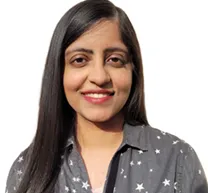
Dr Chevarra Hansraj
Image: ASSAf
Dr Chevarra Hansraj is a lecturer and early-career researcher in the Applied Mathematics Division at Stellenbosch University (SU), specialising in mathematical physics. Her research explores gravity, modified gravity theories, black hole geometry, and stellar modeling.
She earned her PhD in Applied Mathematics from the University of KwaZulu-Natal (UKZN) in 2022, completing her BSc, BScHons, and MSc summa cum laude in record time.
Her work solves the Einstein field equations to develop viable astrophysical models bridging theory and observation. Publications appear in top journals like Classical and Quantum Gravity, General Relativity and Gravitation, and Annals of Physics.
Dr Hansraj has presented at prestigious events, including GR24-Amaldi15 in Glasgow, the International Workshop on Gravity and Cosmology in Delhi (invited), and the Heidelberg Laureate Forum.
Her awards include the Oppenheimer Memorial Trust Fellowship, NRF Scarce Skills Fellowship, CoE-MaSS bursary, and S2A3 Masters Medal. Dr Hansraj lectures from introductory math to honours-level general relativity, supervises postgraduates, and champions mentorship via STEM MentHER and Women in STEM panels.
An elected council member of the South African Mathematical Society and Gravity Society, she drives leadership and frontier-pushing contributions in mathematical physics.
robin.francke@iol.co.za
IOL