

Despite South Africa's record matric pass rate of 88% in 2025, the true state of the education system reveals a troubling crisis in quality and teacher preparedness that threatens the nation's future, writes Shabodien Roomanay.
Image: Itumeleng English / Independent Media
South Africa’s 2025 matric results, with a record national pass rate of 88%, have been widely celebrated as evidence that the education system is improving. On the surface, this optimism seems justified. More learners than ever before have passed the National Senior Certificate, and government messaging has emphasised progress, resilience, and reform.
But headline pass rates tell only part of the story and not the most important part. South Africa’s education crisis is not primarily about access or exam throughput. It is about the quality of learning, especially in mathematics and science and about how the country treats and prepares its teachers.
If nations are built on the backs of great teachers, then South Africa’s slow economic growth, persistent inequality and skills shortages are inseparable from what is happening in its classrooms.
Over the past decade, matric pass rates have steadily increased, rising from the mid-70s to the high-80s. However, three uncomfortable facts are often ignored.
First, a large number of learners never reach matric at all. When dropouts between Grades 1 and 12 are included, the real success rate of the schooling system drops dramatically.
Second, fewer learners are taking gateway subjects such as mathematics and physical science, the very subjects required for engineering, medicine, technology and industrial growth.
Third, international assessments consistently show that South African learners perform among the worst globally in mathematics and science literacy. In short, we are producing more passes, but not enough capability.
The NSC may now be seen as a Certificate of Attendance. For twelve years.
More than three decades into democracy, South Africa’s global education standing remains deeply troubling. In international benchmarking studies, such as the TIMSS and PIRLS benchmarks, South African learners rank near or at the bottom in numeracy and scientific reasoning, often below countries with far fewer resources.
It seems that South Africa has fallen behind even compared to a damning 2008 Professor Nick Taylor report on education commissioned by then President Thabo Mbeki. In this report for example, Grade six teachers struggled to complete Grade four mathematics tests.
This matters because education quality is closely linked to economic performance. Countries that do well in maths and science tend to have stronger productivity, innovation and employment outcomes. South Korea, China, India and Finland for example, consistently rank among the world’s top education systems while also enjoying high productivity and social cohesion.
South Africa, by contrast, faces chronic shortages of engineers, scientists, technicians and skilled professionals. These shortages are a direct brake on economic growth.
South Africa is often praised for allocating a large share of its national budget to education — typically between 17% and 19% of total government expenditure. By international standards, this is substantial. Using rough approximations and assuming continued increases in absolute terms, total government spending on education since 1994 likely exceeds R5 trillion and is quite possibly well above R6 trillion when recent budgets are included. Is there evidence of this spending anywhere? .
And yet learning outcomes remain weak. Children are dying in pit latrines because allocated funds bleed into the pockets of corrupt tenderpreneurs and perhaps officials. This suggests that the problem is not only how much we spend, but how effectively we spend it.
A large proportion of education funding goes towards salaries, leaving limited resources for high-quality teacher training, classroom support, learning materials and early-grade interventions. Investment in quality has not kept pace with investment in access.
When some schools are built at a square metre rate that matches that of high quality finishes in Camps Bay homes, the haemorrhaging and mismanagement of funds become apparent.
Global research is clear: teacher quality is the single most important factor influencing learner outcomes inside schools. High-performing education systems treat teaching as a prestigious, intellectually demanding profession.
Teachers are rigorously trained, well supported, continuously developed and socially respected. South African teachers in many schools are afraid of their students -and parents.
South Africa’s reality is uneven. Many teachers work under severe pressure, with overcrowded classrooms, limited resources, heavy administrative loads and insufficient professional support. In maths and science especially, shortages of well-qualified teachers are acute, particularly in rural and township schools.
Salary structures and career pathways often fail to reflect the strategic importance of the profession. This is not an attack on teachers; it is a systemic failure to empower them.
Calls to recruit maths and science teachers from countries such as Zimbabwe, India, or Finland deserve serious discussion. In the short term, targeted international recruitment could help fill critical gaps and transfer skills. But importing teachers cannot be a long-term solution.
Sustainable improvement requires building a strong local pipeline of highly trained, well paid and respected educators who understand South Africa’s unique social and linguistic context. Foreign teachers can complement the system, but they cannot replace domestic reform.
There is an urgent need for a national education indaba; a genuine, solutions-driven dialogue between the education ministry, school leaders, teachers, unions, and communities.
Too often, policy is designed far from the classroom. A national indaba could confront the realities teachers face daily: learner readiness, curriculum overload, discipline challenges, infrastructure gaps and administrative burdens. Without this honest engagement, reforms risk remaining disconnected from classroom realities.
Finland’s education system is often cited because it prioritises teacher quality, early intervention, equity and trust. Teachers are highly trained, professionally autonomous and deeply respected. High-stakes testing is minimal and learning is emphasised over rote performance. Most teachers are required to have at least a Master’s Degree.
In Finland’s education system, there is only one formal national “exit” exam that functions like what many countries call leaving or final secondary school exams, and it occurs only at the end of upper secondary education, roughly age 18–19.
This is the Finnish Matriculation Examination. South Africa cannot simply copy Finland’s model. The contexts are vastly different. But phased adaptation, (unlike the disastrous OBE system introduced by then Minister of Education Professor Bhengu), particularly around teacher education, early-grade literacy and numeracy and curriculum coherence, could offer valuable lessons.
Global research from institutions such as the UNDP, World Bank, and OECD consistently shows that education quality, especially in numeracy and problem-solving, is strongly linked to long-term economic growth. Skills drive productivity, innovation and employment.
In this sense, education reform is not just a social issue. It is an economic imperative.
South Africa’s education debate must move beyond celebrating pass rates with fanfare and drum rolls. The country does not lack policies or spending commitments; it lacks a sustained focus on teacher quality, professional status with commensurate salaries and classroom realities.
If South Africa is serious about economic growth, social mobility and global competitiveness, it must restore teaching to its rightful place as one of the most respected and strategically important professions in society.
Great nations are built by great teachers. Until South Africa fully embraces this truth, both its education system and its economy will continue to underperform their potential. And for long as politicians jostle for jobs they are not capable of doing, the nation will not prosper.
Despite South Africa's record matric pass rate of 88% in 2025, the true state of the education system reveals a troubling crisis in quality and teacher preparedness that threatens the nation's future, writes Shabodien Roomanay.
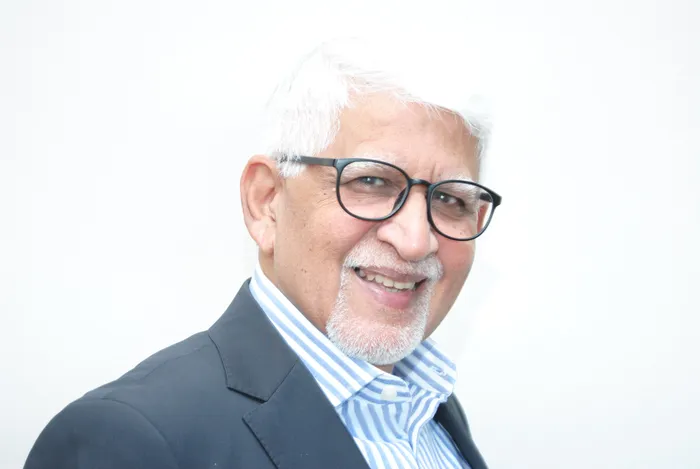
Image: Supplied
* Shabodien Roomanay is the board Chairman of Muslim Views Publication, founding member of the Salt River Heritage Society, and a trustee of the SA Foundation for Islamic Art.
** The views expressed do not necessarily reflect the views of IOL or Independent Media.