
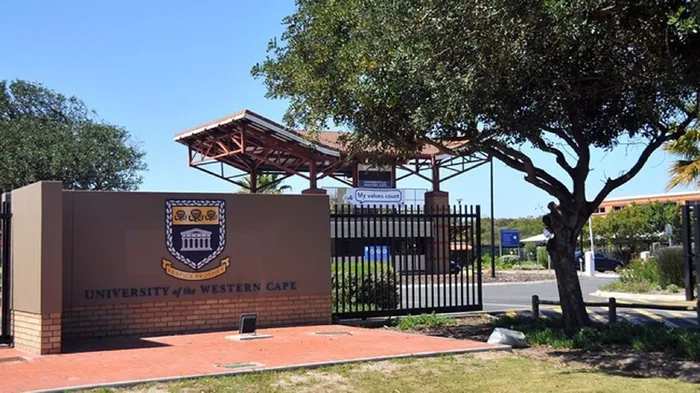
The university owes it to the proposers, its students, alumni, and the public to demonstrate that governance, not convenience, determines its decisions. Until that accountability is delivered, the rejection of the Boesak proposal will remain less a judgment than a stain on UWC’s integrity, says the writer.
Image: Supplied
Institutions reveal their character not only through the decisions they make, but through the processes by which those decisions are reached. Governance is the architecture through which legitimacy is produced and sustained. When governance processes are bypassed, compressed, or substituted with administrative pronouncements, what is lost is not merely procedural correctness, but the very integrity of the institution itself.
It is precisely this concern that arises from the recent correspondence issued by the University of the Western Cape (UWC) to the Thinking Masses of South Africa Foundation (TMOSAF) regarding the proposal to rename the institution in honour of Reverend Dr Allan Aubrey Boesak. The letter from the Registrar communicated that senior management had considered the proposal and declined it. The reasoning offered rested largely on claims that the university already possesses an established identity and that the name “University of the Western Cape” reflects geographic neutrality and inclusivity.
Yet beyond these assertions lies a far more troubling question: by what legitimate governance process did senior management decide to reject a proposal of such institutional magnitude?
The real issue is not the position taken. Reasonable people may support or oppose the renaming of a university.
The issue is whether the proposal was subjected to the governance structures required for a decision of this significance. A university name is not a branding exercise; it is the legal identity of the institution.
It embodies historical memory, intellectual heritage, political struggle, and symbolic meaning. Changing such a name, or rejecting a proposal to change it, cannot legitimately occur within the confines of a management meeting or the deliberations of an executive committee.
To treat it as such is to misunderstand the nature of university governance itself.
South African universities do not operate as private corporations whose executive management may alter institutional identity through administrative discretion. They are public institutions governed by statutes, councils, and legislative frameworks. Under the Higher Education Act and the governance statutes of universities, proposals affecting institutional identity, particularly the name of a university, must follow a structured and consultative pathway.
The first stage occurs when a formal proposal is submitted to the institution, usually addressed to the Vice-Chancellor or Registrar. At this point, executive management performs a procedural function: acknowledging receipt and ensuring the proposal enters the governance system. Crucially, executive management does not possess unilateral authority to approve or reject such a proposal. Their role is administrative facilitation, not final determination.
Once received, the proposal must move through the university’s internal governance structures. At institutions such as UWC, three bodies stand at the core of institutional governance: the Senate, the Institutional Forum, and the Council.
The Senate carries responsibility for academic governance and the intellectual character of the institution. While a name change may appear symbolic, it directly intersects with academic heritage, historical identity, and institutional mission. Senate deliberation, therefore, forms part of the legitimate governance pathway.
The Institutional Forum exists precisely to ensure that major institutional decisions are informed by the voices of those who constitute the university community. Staff, students, labour representatives, and other stakeholders are represented within this body to ensure participatory governance.
The Council stands as the highest governing authority of the university. It is the legally constituted body empowered to make binding decisions affecting institutional identity, structure, and long-term direction. Without a formal resolution of Council, no decision regarding the name of a university carries institutional authority.
In most cases where renaming proposals emerge, universities establish a dedicated task team or committee to investigate the matter. Such a committee may include historians, governance specialists, alumni representatives, student leaders, and external advisors. Its purpose is to evaluate the historical significance, institutional implications, and public reception of the proposed change.
The committee’s findings are then compiled into a report, which informs the deliberations of governance structures. Consultation forms the next essential phase of the process. Universities are communities of memory and intellectual inheritance; their identities belong not merely to current management, but to generations of alumni, staff, and students. Consultations typically extend to alumni bodies, academic staff, student formations, donor communities, and broader public stakeholders.
These engagements may take the form of written submissions, public forums, surveys, or institutional hearings. Their outcomes are documented and incorporated into the final report submitted to Council. Only after these processes unfold does the matter arrive before Council for a decision. Council considers the committee’s findings, the results of stakeholder consultation, and the recommendations of the Senate and Institutional Forum. Following deliberation, Council may adopt a formal resolution either supporting or rejecting the proposed name change.
Even then, the process does not end. Because public universities exist within a national legislative framework, any name change must ultimately be approved by the Minister of Higher Education. Once approved, the change is gazetted and becomes the institution’s legally recognised name.
The legitimate process therefore unfolds across several stages: submission, governance referral, committee evaluation, stakeholder consultation, Council resolution, and ministerial approval. This procedural architecture exists for a simple reason: to protect universities from arbitrary decision-making.
The governance failure at UWC is not merely procedural—it is historically ironic. This is an institution born out of the anti-apartheid struggle, often described as a university of the left, a space where dissent, critical thinking, and activism shaped the intellectual life of a nation.
Its legacy is one of resisting arbitrary authority, embracing debate, and embedding democratic principles in institutional culture.
And yet today, that legacy appears contradicted. By unilaterally issuing a letter to TMOSAF rejecting the Boesak proposal without clear evidence of Senate deliberation, Institutional Forum engagement, or Council resolution, senior management has replicated the very authoritarian shortcuts against which the university once positioned itself. It is a moment that should give pause.
Students, alumni, and public stakeholders have every reason to question whether UWC’s administrative structures respect the principles of deliberative governance that form the bedrock of its historical identity.
The deeper issue at stake is therefore not the name of the university, but the relationship between administrative authority and institutional legitimacy. Universities have historically presented themselves as guardians of open debate, intellectual freedom, and democratic governance.
Yet when proposals concerning institutional identity are met with administrative rejection rather than institutional process, it suggests that debate itself has been foreclosed before it could begin. That perception is corrosive.
A proposal of this nature should not be answered by a letter conveying the decision of senior management. It should be answered by evidence of institutional deliberation. Where governance has been followed, records exist: minutes of Senate meetings, reports of committees, Institutional Forum deliberations, and ultimately a Council resolution.
Transparency would clarify the matter immediately. Silence, by contrast, invites a different conclusion: either the process was never followed, or senior management believed itself entitled to substitute administrative authority for institutional governance.
Neither possibility reflects well on an institution historically positioned as a site of democratic intellectual life.
One cannot help but ask why the University of the Western Cape felt so entitled to handle the TMOSAF proposal with such evident disdain.
What confidence, or what arrogance, allows a senior management team to bypass established governance structures, flaunt statutory due processes, and yet assert a final decision as if it were indisputable?
To reject a proposal of such magnitude without the deliberation of the Senate, the engagement of the Institutional Forum, or a formal Council resolution is not merely a procedural shortcut; it is an affront to the principles of institutional integrity.
It speaks to a troubling temerity: the belief that administrative convenience can replace deliberative governance, and that executive authority alone is sufficient to settle matters that belong to the collective, historical, and democratic life of the university.
The University of the Western Cape cannot escape the implications of this failure by hiding behind a letter from senior management.
Council, as the institution’s highest governing authority, owes the proposers, the university community, and the broader public a clear account of the governance process followed, or not followed, in reaching this decision.
Silence in the face of procedural expectation is not neutrality; it is abdication. UWC’s legacy as a site of democratic intellectual engagement and principled dissent is at stake. To preserve its institutional integrity, the university must demonstrate that decisions of this magnitude do not emerge from administrative convenience, but from deliberation, consultation, and formal governance. Until that transparency is provided, the rejection of the TMoSAF proposal will stand not as a considered institutional judgment, but as a symbol of governance bypassed, debate foreclosed, and legacy undermined.
The time for administrative evasion has passed. UWC Council must step forward and account for how a proposal of such historical and symbolic significance was handled, or mishandled. Silence is complicity; opacity is abdication. For an institution that prides itself on its anti-apartheid legacy, its commitment to debate, and its democratic values, anything less than full transparency is a betrayal of its own history.
The university owes it to the proposers, its students, alumni, and the public to demonstrate that governance, not convenience, determines its decisions. Until that accountability is delivered, the rejection of the Boesak proposal will remain less a judgment than a stain on UWC’s integrity.
Bishop Dr Clyde N.S. Ramalaine,
UWC Alumnus and the visionary and project leader of the TMOSAF-led initiative to rename UWC as Allan Boesak University
** The views expressed do not necessarily reflect the views of IOL or Independent Media.