
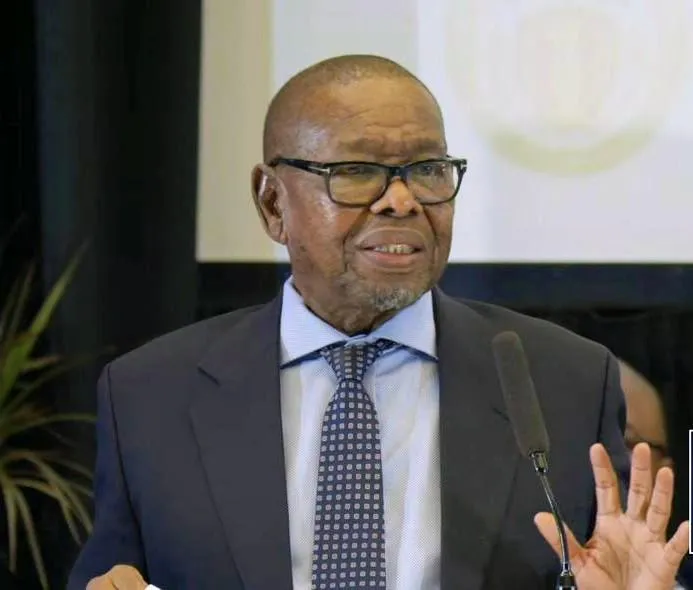
Minister of science, Dr Nzimande calls for the harnessing of science to serve the most vulnerable and marginalised
Image: Supplied
Science, technology and innovation (STI) hold immense promise for humanity to build a just and humane world.
But this can only be achieved if we deliberately harness STI to serve the most vulnerable and marginalised sections of society, said Professor. Blade Nzimande, minister of Science, Technology and Innovation (STI).
Dr Nzimande was speaking during the official opening of the annual Science Forum South Africa (SFSA) 2025 underway at the CSIR Convention Centre in Pretoria.
Considered one of the premier events on the science calendar, the SFSA was held under the theme: ‘Placing Science, Technology and Innovation at the centre of Government, Education, Industry and Society’.
He said the theme was inspired by a national call adopted by his Department to ensure that all aspects of national development are driven by science, technology and innovation.
In addition, we must consistently raise the levels of public awareness about the value of science, said Dr Nzimande.
The event brings together over 6000 delegates, ranging from scientists, policy makers to youth innovators, entrepreneurs and civil society representatives.
This year’s science forum marks the ten-year milestone, since it was first held in 2015. Over the past decade the SFSA has grown from strength to strength attracting eminent scientists, politicians and experts in various scientific fields.
This year participants are taking part in over 38 side events and 91 high level panel discussions on topics including science diplomacy, inclusive innovation, disruptive technologies, science journalism, the African Union’s Science Technology and Innovation Strategy for Africa (STISA 2034).
The event also includes an exhibition where exhibitors will engage with the public and display their products and services. The key feature of the science forum is the South African Tech Challenge 2025, which aims to identify high-potential SMMEs whose technologies address social challenges.
Dr Nzimande also reflected on the current geopolitical and economic climate, saying “we are living through one of the most paradoxical moments in human history”.
Dr Nzimande said while there has been the emergence of latest technological innovations in human history such as AI, robotics, and biotechnology, there has also been alarming levels of social inequality emerging across the globe.
These inequalities, he argued, are accompanied by “unprecedented levels of wealth acquisition by a small number of people who monopolise much of the world’s income and wealth”.
He said these are some of the conundrums that science must tackle if we are to create a fairer, more humane, and stable world.
The minister added that scientists should look into how they can use technology and innovation to promote social inclusion and social justice.
Dr Nzimande said the science community must find ways in which they can position science diplomacy to ensure science is accessible to all, especially the most marginalised citizens.
He also expressed disappointments that some of the “digital revolutions” have resulted in instances where the latest technology innovations such as AI have been deployed to commit genocide in places like Palestine, Congo, and Sudan.
He also highlighted the need to for Africa to forge a radically different future. He said African countries should refrain from depending on the generosity of external donors, regardless of their benign intentions.
“We need to be more forceful about extricating the African continent from the legacies of neo-colonialism and dependent ‘development. To enable this fundamental shift, we believe Africa desperately needs what I call a Sovereign Research Agenda for Africa”, said Dr Nzimande.
In addition, the continent should have a research agenda that is designed, funded, and directed on the basis of African priorities and concerns, he explained.
To fulfill this goal, according to the minister, African countries have to do the following:
According to Dr Nzimande, the DSTI, has achieved several milestones driven by its Decadal Plan for Science, Technology and Innovation (2022-2030.
He said their strategy is based on the National Development Plan 2030, which guided his department to make strategic and targeted investment in critical areas.
Some of these milestones include, among others; hosting the world’s largest radio astronomy project Square Kilometre Array (SKA) and the Southern African Large Telescope, Biovac getting approval from the South African Health Regulatory Products Authority to begin clinical trials of its Oral Cholera Vaccine, and African Institute on Indigenous Knowledge Systems (AIIKS), being designated by UNESCO as a category II centre.
Dr Nzimande said the conference takes place soon after the country’s G20 Presidency, saying he is particularly excited by paragraph 107 of the summit’s declaration on science, technology and innovation.
The declaration welcomes the second convening of the G20 Research and Innovation Working Group and also re-affirms the significance of promoting vibrant international partnership in science, technology, and innovation.
To ensure that science continues to serve society particularly the under-served communities, scientists should act collectively and in solidarity, argued Dr Nzimande. “Let us all join hands in harnessing the power of science to build a just and humane world,” concluded the minister.
Partnered Content