
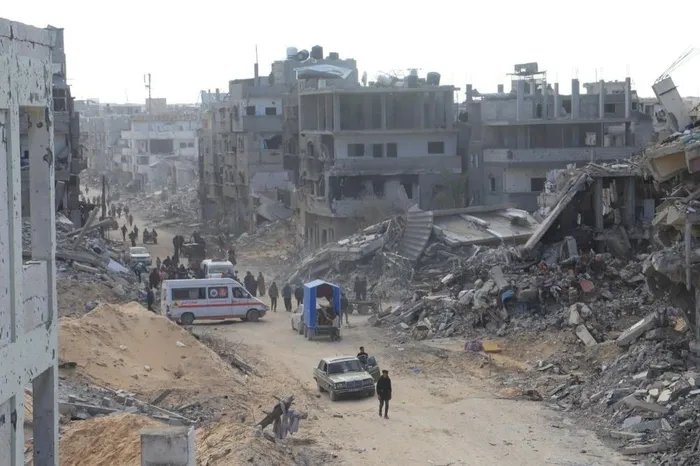
Palestinians brace for "sad Ramadan" amid Gaza violence, West Bank tensions
Image: Mariam Abu Dagga
As the Muslim holy month of Ramadan approaches, Palestinians in Gaza and the West Bank find themselves preparing for a sombre observance amid ongoing violence and increasing tensions.
The holy month is expected to begin on Wednesday or Thursday, but many are already dubbing it another "sad Ramadan" as humanitarian conditions in the region worsen.
Despite a ceasefire that has technically been in place in Gaza since October 2025, the reality on the ground tells a different story. On Sunday, medical officials reported that 11 Palestinians were killed across the Gaza Strip, with local authorities labelling these strikes as further violations of the truce.
The grim toll continues to rise, with Gaza's health authorities documenting a staggering 603 Palestinians killed and 1,618 wounded since the ceasefire began on October 10, 2025. This brings the total death toll in Gaza since October 2023 to over 72,000, with more than 171,000 injured.
In Gaza City, the bustling atmosphere typically associated with Ramadan is notably absent. The once vibrant Zawiya market in the Old City stands deserted, with shopkeepers watching helplessly as goods sit unsold on shelves.
Sameh al-Bitar, a 40-year-old spice shop owner, reminisces about the festive spirit that once defined the month. “We used to decorate our homes, streets, and markets,” he said, the pain evident in his voice. “Now everything in Gaza is sad.”
Adding to his sorrow, al-Bitar shared harrowing memories of losing two sons in an airstrike. “The war has not ended,” he mournfully stated. “Every day there are violations, deaths, and injuries.” He expects this year’s Ramadan to be limited to basic religious observance, stripped of the family visits and communal iftars that once characterised the month.
Meanwhile, in the West Bank and East Jerusalem, fears of tighter security and potential clashes abound as Ramadan draws near. Israeli forces have ramped up raids and arrests across cities and refugee camps, reinforcing military checkpoints at the entrances to towns and villages, significantly disrupting daily life just ahead of the holiday.
Areas such as Nablus, Jenin, and Tulkarm have witnessed sporadic confrontations between Palestinian youths and Israeli forces, with residents reporting frequent nighttime operations, arrests, settlement expansions, and land confiscations.
In Jerusalem’s Old City, 22-year-old Abdul Rahman al-Alami worries about possible restrictions barring young people from praying at the revered Al-Aqsa Mosque. “Only a few days remain, and people our age may be prevented from entering,” he lamented near the bustling Damascus Gate, noting that barriers and electronic gates are often erected during Ramadan, accompanied by extensive searches.
Adding to the complexities, Israeli officials recently announced the commencement of a land registration process in the West Bank for the first time since 1967, a move condemned by the Palestinian presidency as a violation of international law and a step towards de facto annexation. Most of the international community regards Israeli settlements in the West Bank as illegal, further complicating an already fraught situation.
As Ramadan approaches, Palestinians in Gaza, the West Bank, and Jerusalem brace themselves for a month likely to be marked by restricted movement, heavy security, and unrelenting hardship. With the spirit of the holy month overshadowed by violence and despair, hopes for peace and communal celebration appear distant.
Xinhua