
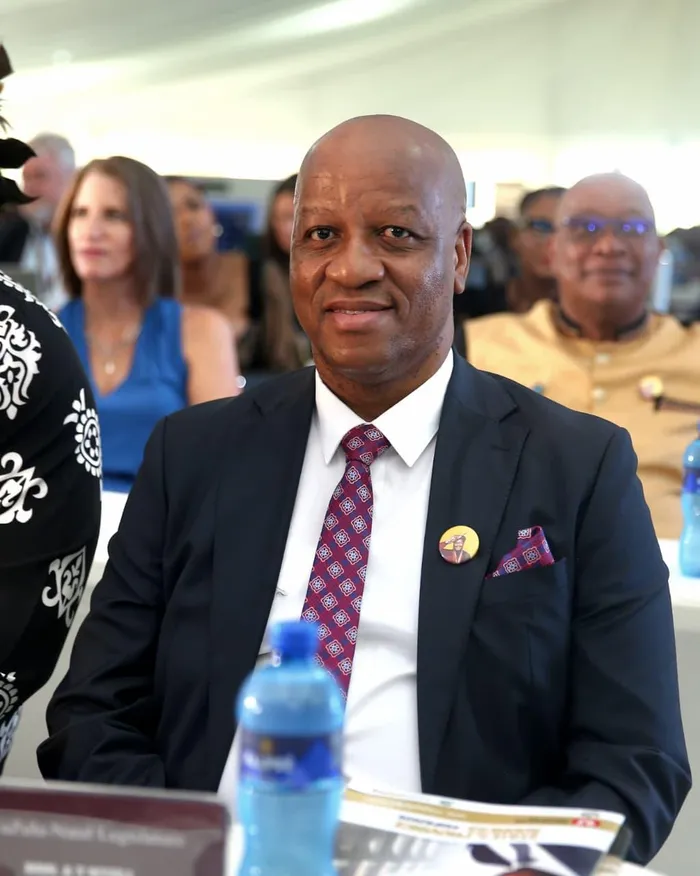
Premier Thami Ntuli has reaffirmed his administration's commitment to improving education and healthcare, outlining key milestones and future plans aimed at strengthening service delivery across KwaZulu-Natal.
Image: SIbonelo Ngcobo / Independent Newspapers
KwaZulu-Natal Premier Thami Ntuli has reaffirmed that improving education and healthcare remains a top priority for his administration.
Speaking in his State of the Province Address in Pietermaritzburg on Friday, Ntuli emphasised that these sectors are vital for long-term socio-economic growth.
“No economy can grow, and no society can thrive, without a healthy and educated population.”
In healthcare, Ntuli said the provincial government has made significant progress despite fiscal constraints.
A major highlight was the formal employment of over 4,000 Community Health Workers (oNompilo) on a full-time basis for the first time in January 2026.
Ntuli described the move as one that “restores dignity, job security, and stability to these frontline workers” while strengthening community-based healthcare.
The Premier also pointed to the success of the Ikhemisi Eduze Nawe programme, which now allows more than 1.1 million active patients to collect their chronic medication closer to home.
This initiative has helped reduce transport costs for families, eased congestion at health facilities, and improved continuity of care.
Ntuli confirmed plans to expand pick-up points and partnerships to reach even more communities.
The government's health strategy also includes the Healthy Lifestyle Programme, which encourages physical activity, healthier diets, and reduced consumption of tobacco and alcohol.
Ntuli described this as “a shift from a curative to a preventive healthcare model,” which he said was both necessary and sustainable.
KwaZulu-Natal has seen sustained improvements in HIV prevention and treatment.
The Premier announced that over 1.57 million people in the province are on antiretroviral treatment, and the #CloseTheGap campaign has successfully traced and returned over 210,000 patients who had defaulted on their treatment.
"KwaZulu-Natal is no longer the leading contributor to new HIV infections nationally," Ntuli said.
Infrastructure renewal remains central to improving healthcare delivery.
The province has renovated and upgraded several clinics, with projects such as the Cwaka Replacement Clinic, Newtown Clinic, and Sokhela Clinic strengthening the primary healthcare platform.
Ntuli also highlighted the addition of 44 new ambulances to the Emergency Medical Services fleet, with plans to purchase over 60 more in 2026.
Staffing in the healthcare sector has also been a key focus for the provincial government.
The provincial government has appointed more than 240 nurses and 238 doctors in the past year, focusing on critical clinical posts to stabilise health facilities and reduce staff workload.
Additionally, through initiatives such as Operation Sukuma Sakhe and the District Development Model, the government has been linking vulnerable households to essential healthcare and social services, further expanding outreach efforts.
The Premier emphasised that improving healthcare is not just about infrastructure and staffing but about restoring public confidence.
He said that through better queue management, staff accountability, and patient engagement, the province is working to improve the overall experience of care.
Monitoring of service standards will be intensified, and the government is committed to fostering a culture of professionalism, compassion, and excellence.
Ntuli also celebrated KwaZulu-Natal's education achievement in the 2025 National Senior Certificate Examinations, where the province secured the highest pass rate in the country at 90.6%.
He also highlighted significant investments in the education sector, including R29.764 million, R59.528 million, and R101.640 million over the medium-term expenditure framework to support the equalisation of Grade R teacher remuneration.
“As Grade R is now part of the compulsory phase of basic education, this funding will help improve the sector,” Ntuli said.
Additionally, R70.068 million will be allocated to the Teacher Assistants Programme in 2026/27, Ntuli said.
Early Childhood Development (ECD) was another area of focus, with R133.3 million allocated to the sector.
The Premier reaffirmed the government’s commitment to strengthening the foundation for quality education by prioritising ECD.
“These allocations will assist in fulfilling our commitment to delivering quality education,” Ntuli said, reaffirming that both education and healthcare are central to the province’s ongoing development.
hope.ntanzi@iol.co.za
IOL