
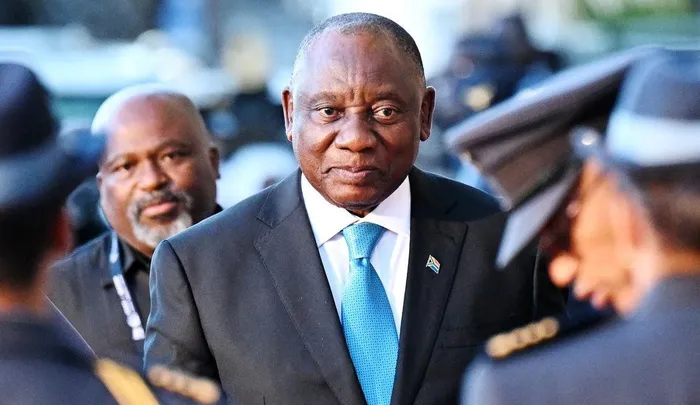
President Cyril Ramaphosa defended the government’s approach to Johannesburg’s water shortages.
Image: PHANDO JIKELO Parliament of SA
President Cyril Ramaphosa told Democratic Alliance MP James Moore to “stand by and watch,” saying the newly established National Water Crisis Committee will address the worsening water shortages in Johannesburg.
Ramaphosa made the remarks on Thursday while responding to oral questions from members of the National Assembly during a sitting at the Nieuwmeester Dome.
Moore questioned Ramaphosa about the effectiveness of the committee, saying it had not yet met and that there were no clear commitments to ring-fence funding or reverse policies that remove critical resources from Johannesburg Water.
He also criticised the lack of criminal charges against corrupt municipal officials and said the deputy president’s water task team had failed.
“A month is a long time in a crisis, Mr. President,” Moore said.
“Many people have been without secure water for years. With millions of South Africans suffering, are your SONA commitments not another failed promise?” He asked.
Residents in Johannesburg have been grappling with persistent water shortages, recurring power outages, rising crime and deteriorating roads.
Some areas have been without running water for days, forcing residents and small businesses to spend more money to secure alternative supplies.
The city has long struggled with water supply challenges, with outages frequently disrupting households and businesses.
In response, Ramaphosa said criticism of the committee reminded him of early skepticism toward the National Electricity Crisis Committee (NECOM), which was established to address the country’s power shortages.
“When we set up NECOM, there were people who dismissed it and said it would amount to nothing,” Ramaphosa said.
He said the government prefers a systematic approach to solving crises rather than rushing into short-term fixes.
“People often want us to resolve problems without approaching them in a systematic way,” he said. “They want us to rush in like a bull and knock everything out of place.”
Ramaphosa said the government’s aim is to build systems that are credible and effective over the long term.
Addressing Moore directly, the president said he could not personally investigate or prosecute alleged wrongdoing.
“You would want me as president to act as a police officer - investigate, charge people and judge them,” Ramaphosa said.
“I do not work that way, and the Constitution does not allow me to do that.”
He added that preparatory meetings had been taking place ahead of the committee’s first formal meeting scheduled for next week.
The Democratic Alliance, the second-largest party in the Government of National Unity (GNU) led by the African National Congress (ANC), has repeatedly clashed with the party over policy issues.
The DA has previously threatened to withdraw from the coalition but has remained in government, saying it wants to push for economic growth and job creation, among other things.
Ramaphosa said Deputy President Paul Mashatile has been working diligently on the water crisis.
“He’s going to bring together all the initiatives and efforts that have been put in place to make sure this is not a bad promise,” Ramaphosa said.
“It will be as good a promise as we made with electricity reform.”
“Stand by and watch this space,” he added.
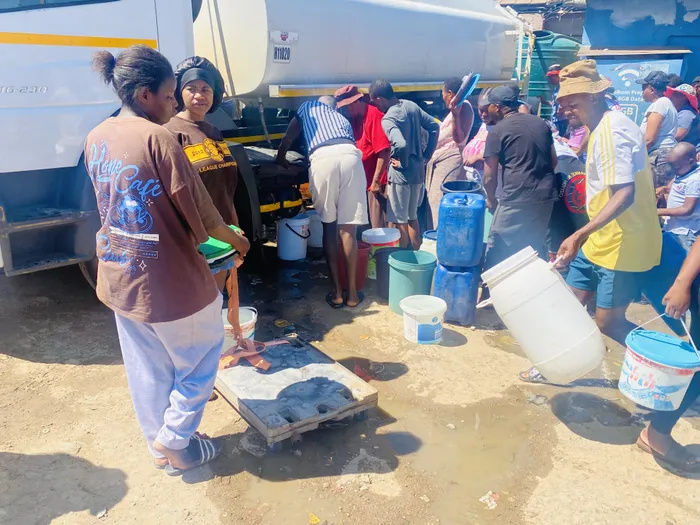
President Cyril Ramaphosa on Thursday said the newly established National Water Crisis Committee will address Johannesburg’s severe water shortages.
Image: Simon Majadibodu/IOL
Ramaphosa announced the establishment of the National Water Crisis Committee, also referred to as WaterCom, during his State of the Nation Address (SONA) in February.
The committee will coordinate government efforts to address the water crisis and deploy technical experts and resources to municipalities facing severe challenges.
Ramaphosa said work is underway to finalize a National Water Action Plan, which is expected to be completed by the end of March.
The committee will focus on three priorities: addressing immediate water and sanitation delivery failures in municipalities, accelerating institutional and regulatory reforms, and attracting investment into water infrastructure.
Ramaphosa said unreliable water supply places a heavy burden on households and businesses and hampers economic growth.
He attributed much of the crisis to failures at the local government level.
“Maintenance of municipal water and sanitation infrastructure has been neglected in many municipalities for decades,” he said.
In Johannesburg, aging pipelines and infrastructure require extensive repairs, with costs estimated in the hundreds of billions of rand.
According to him, the problem has also been worsened by capacity shortages, organized crime, theft of infrastructure, corruption, poor billing systems, illegal connections and water leaks.
Ramaphosa said addressing the crisis requires a multifaceted approach that includes institutional reform, infrastructure maintenance and improved skills at the municipal level.
He said national government could intervene where municipalities fail to meet their obligations under the National Water Act and the Water Services Act.
Interventions could include working alongside municipalities, taking over responsibilities where necessary and taking action against officials who violate regulations.
Ramaphosa also pointed to the Metro Trading Services Reform Program, which introduces a performance-based incentive grant worth R54 billion over six years to improve electricity, water and waste services in South Africa’s eight metropolitan municipalities.
The program rewards metros for improving financial management and meeting service delivery targets.
“It aims to reverse the long-term decline in municipal services, improve financial sustainability and unlock additional investment,” Ramaphosa said.
He said the government hopes the National Water Crisis Committee will replicate the success of electricity reforms in coordinating stakeholders and implementing lasting solutions.
Meanwhile, Panyaza Lesufi, premier of Gauteng, blamed infrastructure failures, leaks and high demand for the ongoing water shortages.
Speaking during his State of the Province Address in February at the Nasrec Expo Centre in Johannesburg, Lesufi announced a R760 million infrastructure upgrade for the city.
The investment aims to improve water supply systems in Johannesburg, which has been among the areas hardest hit by outages.
IOL Politics