
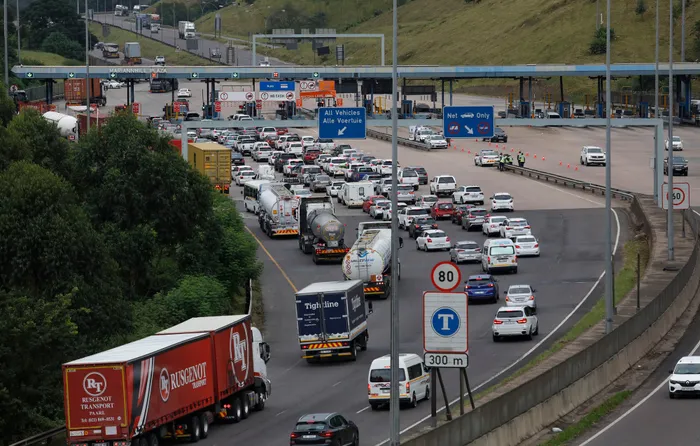
Dozens of vehicles in four lanes head towards a toll gate. Preparations are underway to deal with the increased travel volumes ahead of the Easter Holiday and border congestions
Image: Supplied
South Africa is preparing for a surge in cross-border travel this Easter, with authorities warning that daily volumes at key ports of entry could exceed 25,000 travelers as part of one of the busiest periods on the national calendar.
Unveiling the 2026 Easter Operational Plan, Michael Masiapato, Commissioner of the Border Management Authority (BMA), said the agency is ramping up deployments and tightening enforcement to manage increased movement while safeguarding national security.
“This plan is aimed at ensuring the efficient, secure and seamless movement of people and goods across South Africa’s 71 ports of entry during the Easter period,” Masiapato said.
The operation will run from 31 March to 9 April, with peak outbound travel expected on 2 April and return traffic peaking on Easter Monday, 6 April.
“During these peak periods, we expect significant traveller and traffic volumes potentially reaching double the baseline and exceeding 25,000 travellers per day at the busiest ports of entry,” he said.
The Easter period has historically placed pressure on border infrastructure due to its short and concentrated travel window. According to BMA data, more than one million traveller movements were recorded during the 2025 Easter period alone, with major crossings at O.R. Tambo International Airport, Lebombo and Beitbridge accounting for over half of that volume.
Authorities expect those numbers to rise in 2026.
To manage the influx, the BMA has secured additional support from provincial governments and key partners. The Western Cape has deployed 50 officials to assist with immigration processing at Cape Town International Airport, while Gauteng has provided 80 officers to support operations at OR Tambo.
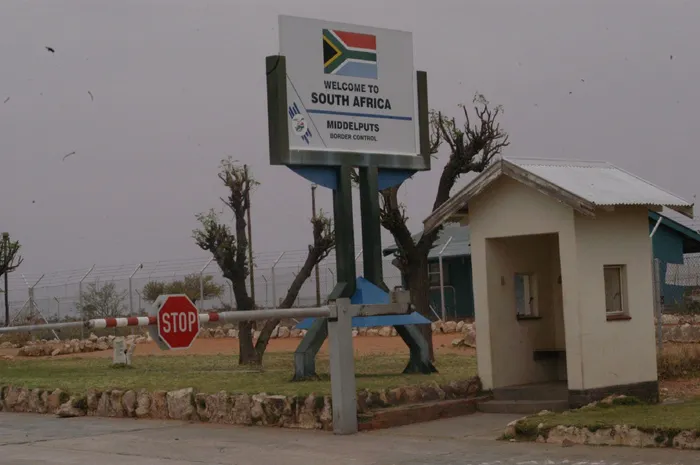
The border post at Middelputs is just one of the 53 border posts the South Afric The border post at Middelputs is just one of the 53 border posts expected to see an increase in travellers over the Easter Holidays.
Image: Etienne Creux
The plan also includes coordination with multiple agencies, including the Department of Social Development, which will deploy social workers to protect vulnerable travellers, and the Department of Tourism, which has assigned more than 160 tourism safety officers.
Beyond personnel, authorities are introducing technology-driven interventions to strengthen surveillance and enforcement.
“These partnerships align with the quest for technology-driven border management as they support the deployment of an integrated suite of advanced surveillance, mobility and protective technologies,” Masiapato said.
Temporary infrastructure upgrades, including lighting, sanitation facilities and water supply systems, will also be rolled out at high-traffic border posts.
A key feature of the plan is the extension of operating hours at several ports of entry, particularly along borders with neighbouring countries such as Botswana, Mozambique, Eswatini and Lesotho. These adjustments are intended to ease congestion and improve the flow of travellers during peak periods.
Masiapato said extensive coordination had taken place with regional partners to ensure smoother cross-border operations.
“At a regional level, we have conducted extensive port-based inter-jurisdictional discussions with our six (6) neighbouring countries, being Lesotho, Mozambique, Zimbabwe, Namibia, eSwatini and Botswana. These discussions were focused on maintaining streamlined border processes and enhancing coordination of operational modalities. As a result, agreements were reached to adjust operating hours at some of the key ports of entry, which do not operate on a 24-hour basis,” he said.
Security remains a central focus of the operation. The BMA said it will intensify checks on undocumented travellers, increase inspections of vehicles and goods, and deploy rapid response teams in high-risk areas.
“The authority will take firm action against corruption and illegal border crossings,” Masiapato said.
“We issue a firm warning that any individual attempting to enter or exit the Republic illegally, or to facilitate such activities, will face immediate arrest and prosecution.”
Authorities will also prioritise vulnerable groups, including elderly travellers, people with disabilities and families travelling with children, as part of queue management strategies.
In addition to immigration enforcement, health and biosecurity controls will be strengthened. Travellers arriving from yellow fever-endemic regions will be required to present valid vaccination certificates, while goods such as food, medicine and animal products must be declared.
Experts say these measures are critical in preventing the spread of diseases and protecting South Africa’s agricultural sector, which remains vulnerable to cross-border risks.
The BMA has also highlighted ongoing anti-corruption efforts, including the use of drones and body-worn cameras, as well as new passport stamps with advanced security features introduced in 2025 to curb fraudulent activities.
As preparations intensify, authorities are urging travellers to plan and comply with all legal requirements to avoid delays.
“Members of the public are encouraged to plan their journeys, comply with all legal requirements and cooperate fully with border officials,” Masiapato said.
karabo.ngoepe@inl.co.za