
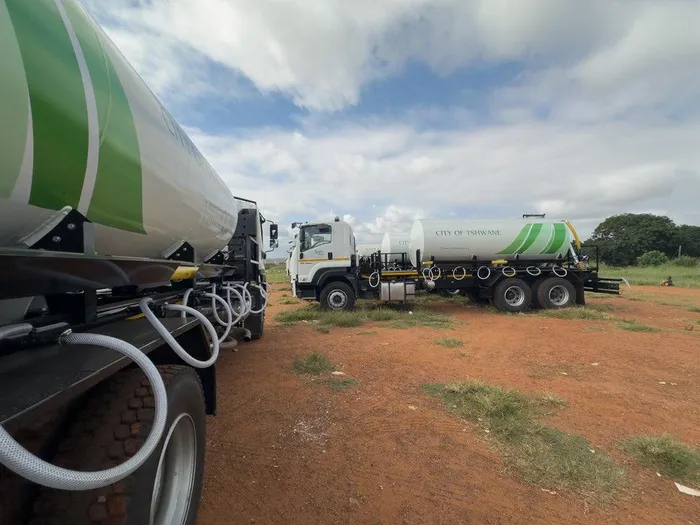
The City of Tshwane has commissioned 15 new municipal tankers, with 23 volunteer drivers recruited internally to operate them.
Image: X/@nasiphim
The City of Tshwane has abruptly suspended water tanker services to formal areas, citing a funding crisis, while launching a shift to internalise operations in a bid to regain control over a system clouded by corruption allegations.
From April 1, residents in formalised areas will no longer receive water tankers during outages, infrastructure failures or water quality crises.
The city confirmed the suspension will last for the remainder of the financial year after operational funds were exhausted and requests for additional budget were not approved.
“From April 1, 2026, formalised areas supplied by WASABU will not receive water tankers during outages or supply interruptions. This means that in the event of water outages, infrastructure failures, or water quality challenges, water tankers will no longer be dispatched to these areas,” it said.
The move does not affect informal settlements, where rudimentary water services will continue.
Mayor Nasiphi Moya said the city is pivoting sharply away from an outsourced tanker system widely criticised as expensive and difficult to control.
About 15 new municipal tankers have been acquired, with 23 volunteer drivers recruited internally to operate them.
“By insourcing, we are improving response times, expanding coverage and strengthening accountability. This is about restoring control over a critical frontline service,” Moya said.
The overhaul follows mounting allegations of a so-called “water tanker mafia” accused of exploiting municipal funds, deepening the urgency for reform.
kamogelo.moichela@iol.co.za
IOL Politics