
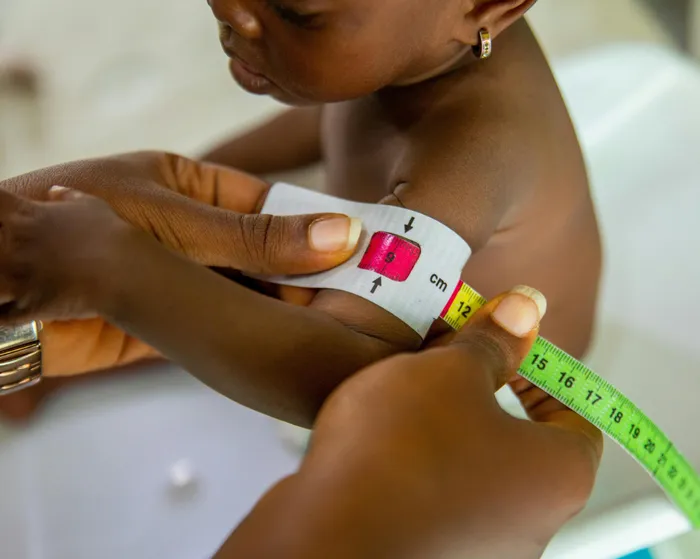
Young children in the Western Cape face a growing double burden of malnutrition.
Image: pexels
A new study led by the University of Cape Town (UCT) has revealed that young children in the Western Cape are facing a serious “double burden” of malnutrition, with high levels of both stunting and overweight or obesity recorded among those under the age of five.
The findings, published in the journal Development Southern Africa, are the result of research conducted by Emeritus Professor Marjanne Senekal from UCT’s Faculty of Health Sciences, in collaboration with Stellenbosch University, the DG Murray Trust and the Western Cape Department of Health and Wellness.
Using rigorous sampling methods, the research team surveyed a representative sample of 1 214 children under five across the province.
By contrast, wasting, a form of acute malnutrition, was recorded at 3.4%, considered a low public health concern.
“Chronic malnutrition in the form of stunting and overweight/obesity is a greater concern in the Western Cape province than acute undernutrition (wasting),” Senekal said.
The study identified several socio-economic risk factors linked to stunting, including children aged one to under two years, parental unemployment or part-time employment, households running out of money for food, recent hunger in the household, and living in rural towns. Protective factors included higher parental education levels, higher household income and wealth indicators.
For overweight and obesity, risk factors included being between one and three years old and having a low birth weight, while better household amenities, often linked to higher income, appeared to be protective.
Although the prevalence of stunting in the Western Cape is lower than national levels and may be declining, Senekal warned that international targets remain at risk.
“It is questionable whether the World Health Organization’s (WHO) / United Nations Children’s Fund’s (UNICEF) target of reducing stunting by 50% by 2030 is achievable within the current intervention landscape,” she said.
“It is also questionable whether the aim of reducing the prevalence of overweight/obesity to less than 3% by 2030, as recommended by the WHO/UNICEF, can be achieved.”
Senekal stressed that nutrition interventions must move beyond a narrow focus on undernutrition alone.
“Nutrition interventions should not focus on the reduction of stunting only, as is often the case, but should, at the same time, address the rising overweight/obesity prevalence in young children,” she said.
“To meet WHO/UNICEF targets for the reduction of stunting and overweight/obesity, we recommend urgent measures to identify, review, and adapt current policies/interventions targeting malnutrition in the Western Cape province.”
She added that the lessons drawn from the Western Cape could play a critical role in reshaping child nutrition policies across South Africa, as other provinces grapple with similar challenges.
IOL News