
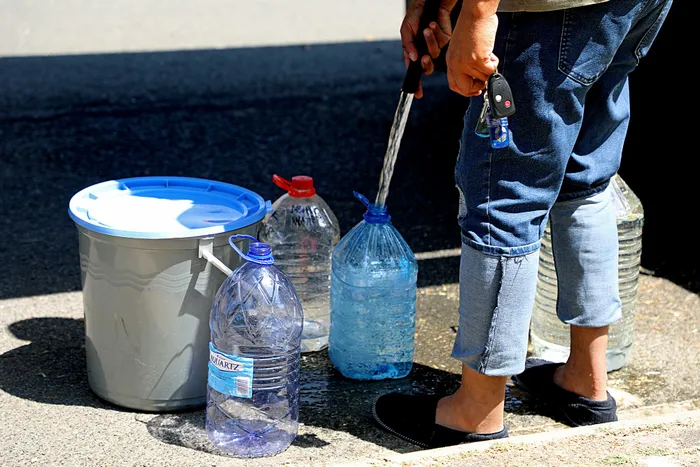
Rand Water says excessive water consumption in Johannesburg and Tshwane has worsened supply disruptions.
Image: File/ Timothy Bernard/ Independent Newspapers
Bulk water supplier Rand Water has expressed concern over what it describes as persistently high water consumption in Gauteng, particularly in the City of Johannesburg and the City of Tshwane, as parts of the province continue to experience water shortages.
Midrand has been among the hardest-hit areas, with some residents saying they had no water supply for more than 10 days.
On Tuesday, frustrated residents staged a peaceful protest as large parts of the area endured prolonged and recurring water disruptions.
In Laudium, West of Pretoria, residents also protested over ongoing water outages.
Rand Water spokesperson Makenosi Maroo said the utility remained concerned about water usage levels in Gauteng.
“Rand Water remains concerned with persistently high-water consumption in Gauteng particularly the City of Johannesburg and Tshwane.”
“This above-normal consumption, which has exceeded allocated volumes, continues to place significant strain on the overall water supply network,” she said in a statement on Saturday.
“Current demand is forcing the system to operate under pressure, stretching infrastructure capacity to accommodate abnormally high usage levels.”
Maroo said the high consumption had negatively affected water supply in parts of Rand Water’s bulk supply area.
“After engaging with high water-consuming municipalities, Rand Water will be reducing water supply to these areas to restore supply in affected regions and stabilise the entire bulk water supply system,” she said.
She urged municipalities and consumers to use water sparingly.
“We strongly encourage all high-water-consuming municipalities to implement water-saving measures to help reduce demand and protect system stability.”
Meanwhile, this week, Dr Ferrial Adam, executive director of WaterCAN (Water Community Action Network), a civil society initiative advocating for water justice, criticised the quality of information provided to the public.
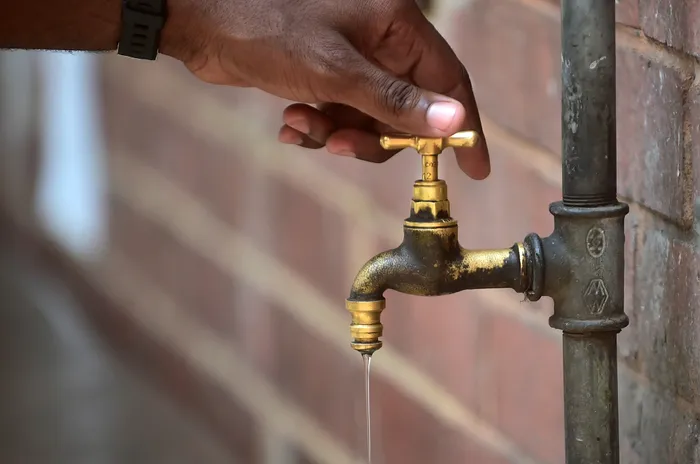
Bulk supplier Rand Water says unusually high water consumption in Johannesburg and Tshwane is straining the system, with Midrand residents protesting after days without running water.
Image: FILE
She said communication was fragmented, overly technical and failed to clearly explain the problem, often being filtered through political channels.
“Although councillors are briefed, in an election year this information is frequently repackaged for party-political purposes, which undermines clarity and public trust,” Adam said.
Johannesburg Mayor Dada Morero said the city was working to stabilise reservoirs and that water supply in Midrand should improve following a week of disruptions.
Speaking in Midrand on Tuesday, Morero said reservoir levels were slowly recovering after a series of system failures.
He said Rand Water notified Joburg Water on January 26, 2026 of emergency repair work at the Palmiet Pump Station, which required the isolation and repair of critical pump infrastructure.
“Although the work was initially expected to be completed within a short timeframe, technical and operational delays prolonged the repair process,” Morero said.
He said this was followed by a power trip at Rand Water’s Zuikerbosch Treatment Plant on January 27, which affected the Eikenhof and Zwartkoppies supply systems.
“Although partial pumping capacity was restored, these incidents significantly reduced the volume of water supplied into the Palmiet system.”
Morero said an additional power failure occurred at the Palmiet Pump Station on January 31, further destabilising the system.
“These cumulative incidents resulted in critically low levels at the Klipfontein Reservoir, which supplies Johannesburg Water’s Midrand system,” he said.

Water outages in Midrand and Laudium have sparked protests as Rand Water blames above-normal consumption and system failures for worsening shortages across the province.
Image: Picture: Timothy Bernard / Independent Newspapers
A leak was later identified at the Klipfontein Reservoir on February 1. Repairs were completed and commissioning finalised on February 2.
Several Joburg Water reservoirs were affected, including Grand Reservoir, President Park Reservoir, Grand Central Reservoir, Rabie Ridge Reservoir and Diepsloot Reservoir.
In an update issued on Friday, Joburg Water said Midrand systems remained constrained, with some reservoirs supplying water at fair levels while others were critically low.
“Most suburbs are receiving water, but restoration is slow due to overall high demand across Johannesburg Water systems,” the utility said.
It said both Joburg Water and its bulk supplier were recovering, with pumping taking place at full capacity, and that the entities remained in close contact while monitoring the situation and implementing necessary interventions.
“The restoration period will differ, but considerable improvement is expected over the coming days,” it said.
According to the utility, reservoirs that have shown improvement include Rabie Ridge Reservoir, Randjesfontein Tower Reservoir, Development Bank Tower Reservoir and Steyn City Tower Reservoir.
“Alternative water supply is being provided in a regionally coordinated manner,” Joburg Water said.
simon.majadibodu@iol.co.za
IOL News