
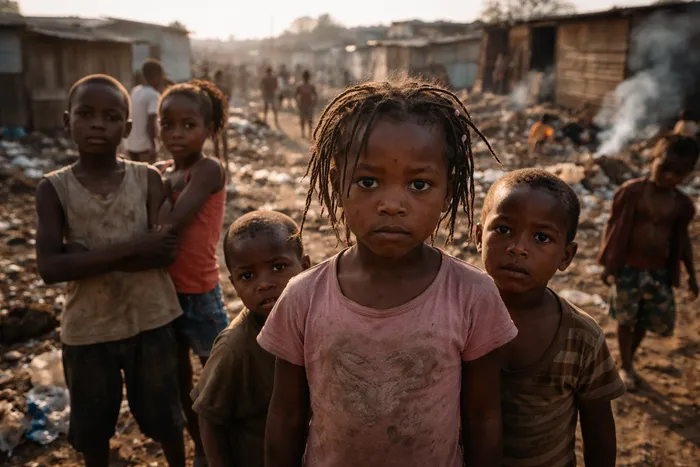
With 63% of children living in poverty, the challenges they face are grave. Malnutrition, abuse, and dangerous living environments are part of daily life for many.
Image: Sora
For millions of children across South Africa, human rights are often just words on paper, lacking the clarity and practical understanding necessary to elevate their voices.
As the nation commemorates Human Rights Day, the stark reality for children and youth, the largest demographic group in the country, remains one of silence and exclusion.
With 63% of children living in poverty, the challenges they face are grave. Malnutrition, abuse, and dangerous living environments are part of daily life for many.
Access to quality education, too, is alarmingly unequal, leaving countless children vulnerable and unprotected. The cruel irony is that most of these young individuals are unaware of their own rights.
In response to this bleak landscape, Afrika Tikkun, a non-profit organisation dedicated to transforming the lives of children and youth, advocates for a systematic education on rights that goes beyond theory, presenting it in a way that children can relate to and advocate for themselves. “Teaching children about their rights enables them with the tools to advocate for themselves,” explains Marc Lubner, Executive Chairperson & Group CEO at Afrika Tikkun.
“When a child knows their rights, everything changes. They understand they have the right to be safe, to be educated, to be heard and to determine their own future.”
Afrika Tikkun reaches over 40,000 children daily across its five centres, implementing a holistic “cradle-to-career” model that supports children from early development through education, skills training, and eventual employment pathways.
However, the organisation witnesses firsthand the repercussions of systemic gaps that shape a generation at risk. Lack of awareness and unfulfilled promises from the system contribute to a tragic duality: younger children miss out on vital lessons about their rights, while older youth, disillusioned, lose faith in a system that has failed to deliver suitable opportunities.
Lubner emphasises the vital link between education and economic outcomes.
“One of the most fundamental principles in any country for young people is that if they put in the time and effort into their education, society will reward them with something as simple as a job. With huge unemployment levels and gaps in the education system, young people are unprepared for economic participation.”
Afrika Tikkun calls for a critical reassessment of whether the existing education system genuinely guides young people toward sustainable income-generating opportunities.
“There need to be more trade-related schools and pathways into the digital economy,” insists Lubner. “Too many young people are being educated into a dead end.”
The issues extend beyond accessing services; they call into question how children experience their rights daily. The initiative goes beyond mere dialogue to provide tangible role models.
“It’s not about what we say, but what we do,” states Dr. Nellie Zembe, Head of Monitoring, Evaluation and Learning.
The organisation exemplifies core values, including diligence and sensitivity towards environmental and human rights. Each centre functions as a living embodiment of the rights children should experience, rather than just read about.
Afrika Tikkun’s comprehensive support model ensures that every child is educated about their rights.
“Children who understand their rights are more confident, more protected, and more resilient,” Zembe explains.
Their programmes include life skills training, child protection education, and psychosocial support, grounded by a child protection policy that applies to all.
Despite ongoing constraints and rising demand, Lubner remains hopeful, urging collaboration among government, business, and civil society.
“Afrika Tikkun is calling on partners to invest in the next generation. Before another generation grows up not knowing they had rights worth fighting for, South Africa needs to decide whose responsibility those children are,” he concludes.
IOL