
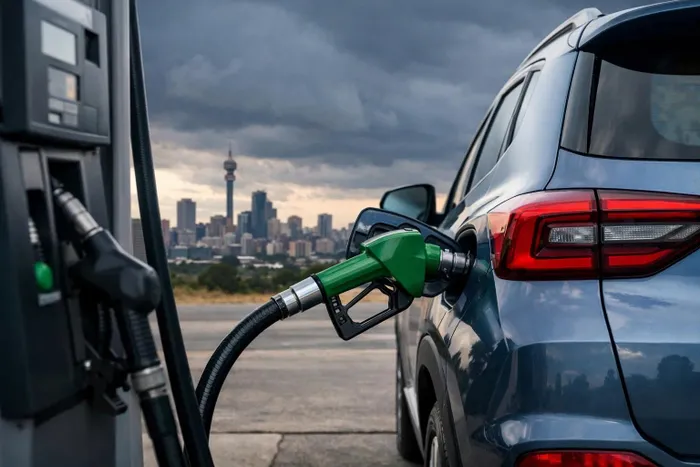
The official fuel price adjustments for April have been announced.
Image: AI / Sora
As the war in the Middle East intensifies, South Africans are bearing the brunt of higher petrol prices, even though the fighting is happening thousands of kilometres away.
But why does a war so far from home push up the price you pay at the pump in Cape Town, Johannesburg or Durban?
Here’s a simple breakdown of what’s going on.
It starts with oil, and the Middle East happens to supply a lot of it.
The Middle East is one of the world’s biggest oil-producing regions, so when war breaks out there, global supply is immediately at risk.
Even if oil production hasn’t stopped yet, the fear that it could be disrupted is enough to send prices higher.
According to the International Energy Agency, supply disruptions in the region have historically triggered sharp increases in global oil prices, as markets react quickly to uncertainty.
Shipping routes are just as important as the oil itself. What does this mean? What we heard and will hear a lot about is the Strait of Hormuz. A large share of the world’s oil passes through the Strait of Hormuz, which is a narrow but critical shipping route in the Middle East.
If that route is threatened or disrupted, even temporarily, it can choke global supply almost overnight. That’s why oil prices often spike not just when oil stops flowing — but when there’s a risk it might.
Oil prices don’t wait for shortages to happen.
Traders and investors react instantly to news of conflict, building the risk into prices almost immediately.
Studies published in journals like Energy Economics show that geopolitical tensions, especially in oil-producing regions, consistently lead to higher oil prices, even before actual supply losses occur.
In simple terms, the expectation of trouble is enough to push prices up.
Why does South Africa feel it so quickly then?
Despite the war happening on an entirely different continent, South Africa feels it because it doesn’t produce enough oil to meet its needs, and it imports most of its fuel.
That means global oil prices heavily influence local petrol prices, the rand/dollar exchange rate and shipping and transport costs.
When oil prices rise globally, South Africa pays more in dollars. If the rand is weak at the same time, the impact is even worse.
Here’s how a war translates into your petrol bill.
When global oil prices rise, import costs increase, fuel becomes more expensive, and the pump price goes up.
In addition to that, shipping insurance costs spike during war, and there are several supply chain disruptions, as well as currency pressure.
And the result is often a noticeable increase in petrol and diesel prices within weeks.
This will also have a knock-on effect on food and transport.
However, fuel doesn’t just affect drivers.
Higher petrol and diesel prices push up taxi and transport fares, food prices (due to higher delivery costs) and general cost of living
The International Monetary Fund has warned that conflicts in major oil-producing regions can drive inflation and slow economic growth globally, with developing countries like South Africa often feeling the effects more sharply.
IOL