
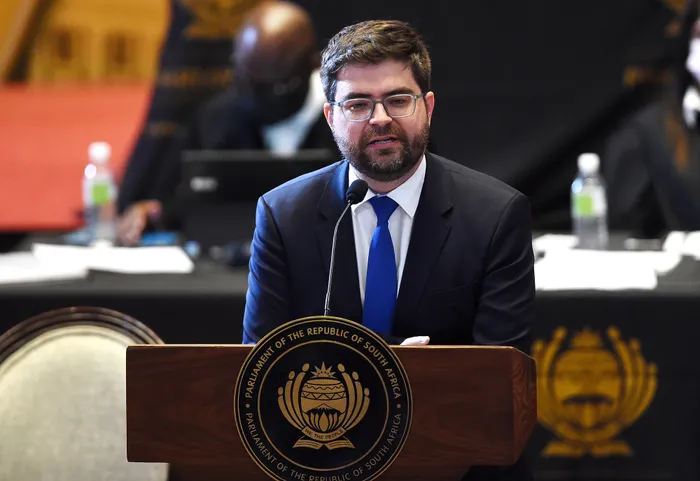
DA’s chief whip George Michalakis.
Image: Picture: Independent Newspapers Archive
The race for Parliamentary leader of the DA is underway, with the nomination process having closed, and voting set to begin once the candidates have been formalised.
The DA, which recently held its elective congress in which Geordin Hill-Lewis emerged as the Federal Leader, is now seeking its parliamentary leader.
This comes after Hill-Lewis shared how he intends to lead the party, in which DA members in Cabinet will be led by Minister Leon Schreiber, along with recently appointed strategist Ryan Coetzee, also playing a role.
With Hill-Lewis set on retaining his role as Mayor of the City of Cape Town, this leaves the position of Parliamentary leader vacant.
DA national spokesperson Jan de Villiers had explained that the DA's federal constitution states that if the elected leader of the party, Hill-Lewis, does not sit in the national caucus, which is now the case, then the caucus needs to elect its own parliamentary leader.
“That happens in the same way that all our internal elections happen. We've got a nomination process, and then by the beginning of this week, it will have closed. Then we, as the members of the caucus, will know who the nominated people are.
“One week later, we will have an internal election, in which people will cast their vote, and then we will know who our new leader is,” De Villiers said.
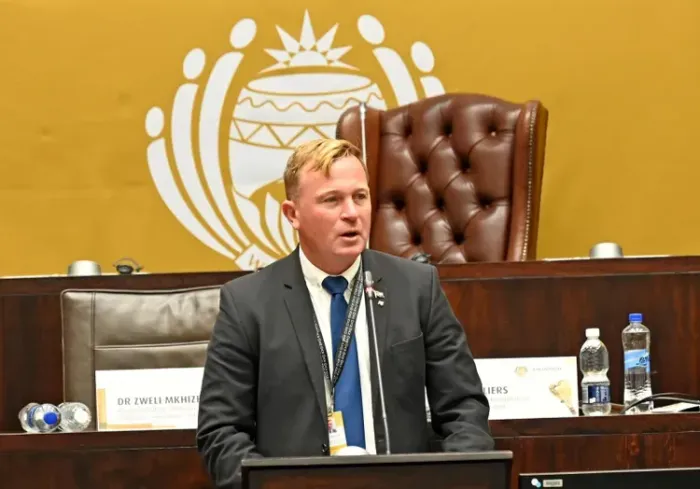
Jan de Villiers, the Chairperson of the Portfolio Committee on Public Service and Administration, and DA National Spokesperson.
Image: Ayanda Ndamane/Independent Newspapers
“That person will be responsible for coordinating with Hill-Lewis as the leader of the party, as well as with the cabinet colleagues.
“Those three people, the parliamentary leader, the head of Cabinet, Schreiber, and the leader of Hill-Lewis, form the three centres of power that decide forward on strategy and policy.”
In terms of how things are faring, De Villiers quipped, “We like elections. It's in our DNA.”
“There have been three candidates who have been visibly canvassing and who have contacted most caucus members already - Kevin Mileham, Andrew Whitfield, and the current Chief Whip, George Michalakis.
“We know for a fact that three people are already in the race. It's a three-horse race already, but who knows, there might be a fourth or even a fifth candidate, and time will tell. But it is my expectation that those are probably the three people who are going to compete because they've been actively canvassing all caucus members,” De Villiers said.
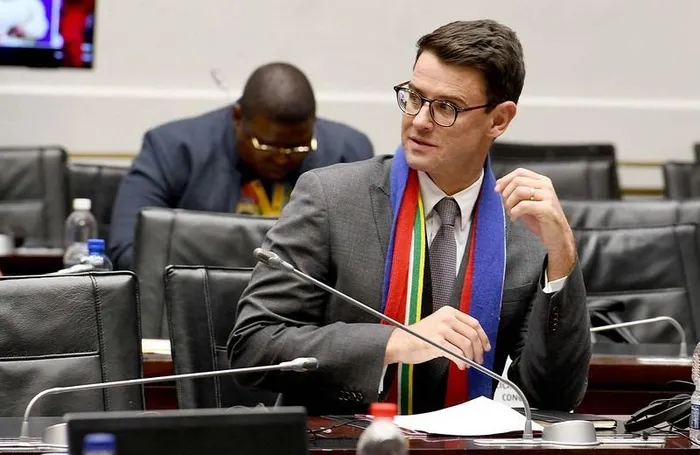
Former deputy minister of Trade and Industry, Andrew Whitfield.
Image: DTIC
DA Member of Parliament, Lisa Schickerling, said that all three of the aforementioned candidates — George Michalakis, Andrew Whitfield and Kevin Mileham — bring strong experience and credibility to the race.
“Each has demonstrated a commitment to the values of the DA and to serving the people of South Africa. It’s encouraging to see a healthy, competitive process with capable leaders who all have the best interests of the party and the country at heart.”
One source shared that the two most favoured are Whitfield and Michalakis.
DA Caucus Chairperson, Desiree van der Walt, explained that nominations for the election of DA Parliamentary Leader closed on Tuesday at 2 pm.
“We are verifying all nominations in order and will release the names today.”
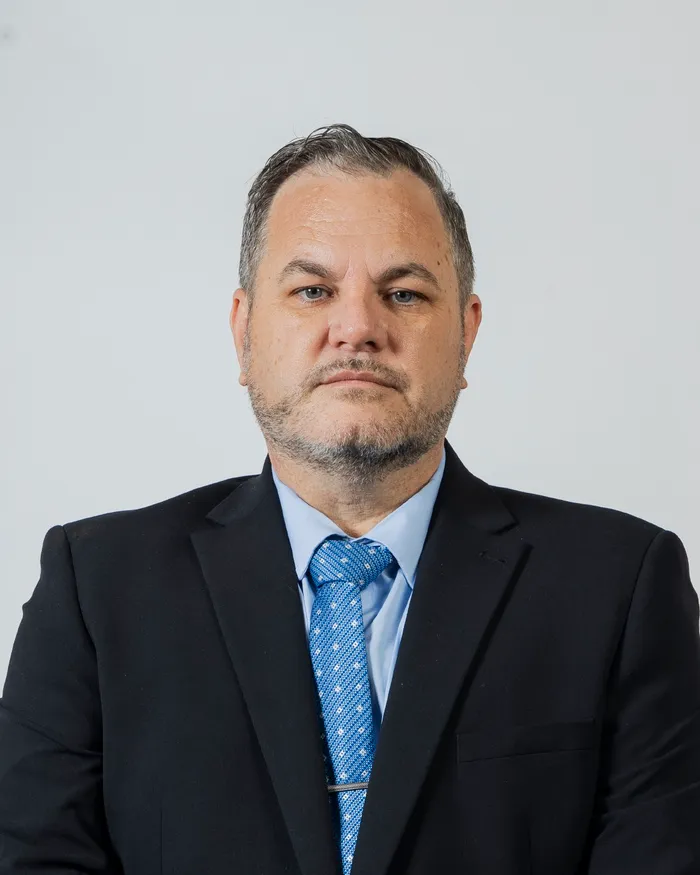
DA MP Kevin Mileham.
Image: Parliament RSA/Supplied
University of South Africa’s Professor Dirk Kotzé explained that while it is an important position, the DA’s structure means that the Parliamentary leader will still share responsibilities with the chief whip.
“This person will not be alone. The person in Parliament actually doing most of the work is the chief whip.
“Michalakis is there and is regarded as quite effective as the chief whip, so most of the work will actually be done by him. Whether he becomes the parliamentary leader, that might be something that will change the dynamics,” Kotzé said.
Kotzé said that the parliamentary leader is more of a symbolic person, and given that the DA is not an opposition party, it means that they won't play.
“In terms of the Constitution, the leader of the opposition in Parliament, and that person has some specific functions, but also privileges. For example, they have direct access to the president.
“But the parliamentary leader of the DA will not be in that position because they are not part of the opposition parties.”
He explained that it will be someone able to organise the party on which positions to take on certain legislative votes or appointments.
He added that this development is not a completely new dispensation because during the time of Helen Zille, they had Lindiwe Mazibuko in that position, and before that was Athol Trollip.
“It's not a new concept for them. But both of those people, for example, were not the final decision makers.”
He said that it goes back to the fact that the DA is different from the ANC, and has a federal structure, which means that they have many more people in leadership positions.
theolin.tembo@inl.co.za