
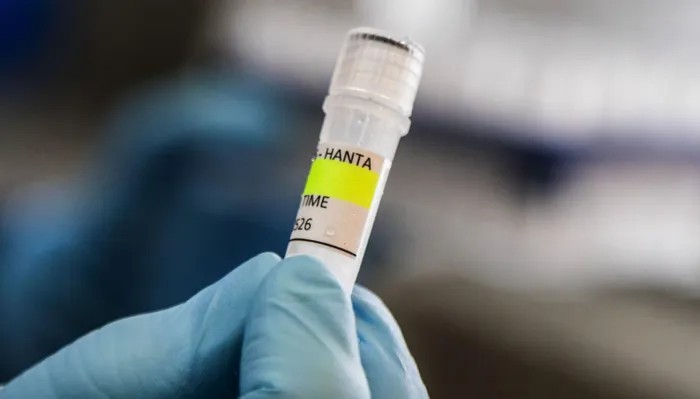
Cruise ship virus panic: What you need to know about hantavirus.
Image: Argentine Health Ministry / AFP
A deadly virus has suddenly triggered international contact tracing after a mysterious outbreak linked to a luxury cruise ship left multiple passengers dead.
The illness at the centre of the alarm is hantavirus, a rare disease carried mainly by rodents.
Now, after a cluster of infections aboard the expedition cruise ship MV Hondius, the World Health Organisation (WHO), South African authorities and international disease experts are racing to contain fears of further spread.
The outbreak has already claimed at least three lives and infected passengers from several countries, including travellers who passed through South Africa.
The first signs of trouble reportedly emerged in early April when passengers on board started becoming ill.
On April 11, a Dutch passenger died aboard the ship. At the time, the death was initially believed to be from natural causes.
But alarm bells started ringing after more passengers developed severe flu-like symptoms.
A second victim, the wife of the deceased Dutch passenger, was airlifted to Johannesburg for treatment after the ship stopped near Saint Helena. She later died in a South African hospital on April 26.
Soon afterwards, laboratory tests confirmed hantavirus infection in another critically ill British passenger receiving treatment in Johannesburg.
As the number of infections climbed, international concern escalated rapidly.
By May 4, the WHO had issued an official Disease Outbreak News alert warning of a multi-country hantavirus cluster linked to the cruise ship.
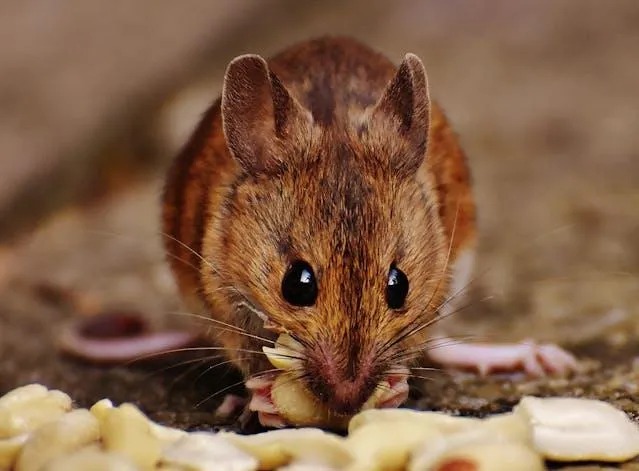
Most hantavirus infections are linked to rodents.
Image: PIXABAY
The organisation confirmed several suspected and laboratory-confirmed cases, including multiple deaths.
Then came the revelation that deeply unsettled health experts worldwide: the outbreak involved the Andes strain of hantavirus.
Unlike most hantaviruses, which spread only from rodents to humans, the Andes variant has been shown to spread between people through close and prolonged contact.
Health expert, Dr Angelique Cotzee, told IOL that South Africans shouldn't be afraid.
"We should not be afraid of this virus. It's not like the Covid-19 or flu virus, where you speak and the droplets spread the virus.
"Remember, this is a very well-known. It's an old virus. It's not a new thing like we saw in Covid-19," she said.
The Department of Health shared similar views this week.
Health minister Aaron Motsoaledi told Parliament's Portfolio Committee on Health on Wednesday that public worry over the epidemic was reasonable given recollections of the Covid-19 pandemic, but the situation was fundamentally different.
"The hantavirus is not a new virus. I am painfully aware that members of the public are very worried because they are thinking of the scary days of the Covid-19 virus.
"But remember that Covid-19 just fell on us without anybody suspecting anything," he said.
The outbreak sparked a global contact tracing effort as passengers disembarked in different countries before the virus was formally identified.
Several countries began monitoring travellers linked to the ship while authorities worked to trace possible contacts.
The Africa Centres for Disease Control and Prevention also confirmed it was monitoring the outbreak closely alongside international health agencies.
South Africa's Department of Health and the National Institute for Communicable Diseases (NICD) said the public should remain calm, stressing that the overall risk to the wider population remains low.
Still, experts say hantavirus is not something to take lightly.
The virus can be extremely dangerous once symptoms become severe.
In its early stages, hantavirus often looks like ordinary flu.
People may experience fever, chills, headaches, muscle pain, nausea, vomiting and fatigue.
But in more serious cases, the illness can suddenly turn deadly.
Patients can develop severe breathing problems as fluid rapidly builds up in the lungs, a condition known as Hantavirus Pulmonary Syndrome (HPS).
Victims may struggle to breathe, suffer dangerously low blood pressure and experience organ failure.
According to health authorities, severe hantavirus infections can kill between 30% and 40% of patients.
The Andes strain linked to the current outbreak has historically shown similarly high fatality rates.
Doctors warn that symptoms can appear anywhere between one and eight weeks after exposure, making the disease particularly difficult to detect early.
There is currently no specific cure or vaccine for hantavirus.
Treatment mainly involves supportive hospital care, including oxygen therapy and intensive medical monitoring.
Medical experts say early diagnosis dramatically improves survival chances.
Although the current outbreak has focused attention on human-to-human spread, most hantavirus infections still happen through exposure to infected rodents.
People usually become infected by breathing in tiny virus particles released from rodent urine, droppings or saliva.
This can happen while cleaning dusty areas contaminated by rats or mice, especially poorly ventilated spaces such as sheds, storerooms, cabins or abandoned buildings.
Touching contaminated surfaces and then touching the face can also spread infection.
Experts say people should never sweep or vacuum dry rodent droppings because this can release infectious particles into the air.
Instead, contaminated areas should first be sprayed with disinfectant before being carefully cleaned while wearing gloves and, where necessary, masks.
Authorities also recommend sealing holes where rodents can enter homes, safely storing food and properly disposing of rubbish to discourage infestations.
Travellers and campers are also urged to avoid sleeping in rodent-infested areas and to avoid handling dead rodents.
For people caring for someone who may be infected with the Andes strain, health officials advise avoiding direct contact with bodily fluids and using protective equipment such as gloves and masks.
Despite growing international concern, health authorities continue to insist there is no need for public panic.
The WHO has repeatedly stressed that the risk to the general population remains low and that the outbreak appears limited to close contacts linked to the cruise ship.
For now, officials across several countries continue tracing passengers, monitoring contacts and searching for answers about how a dream expedition voyage turned into a deadly international health scare.
IOL News