
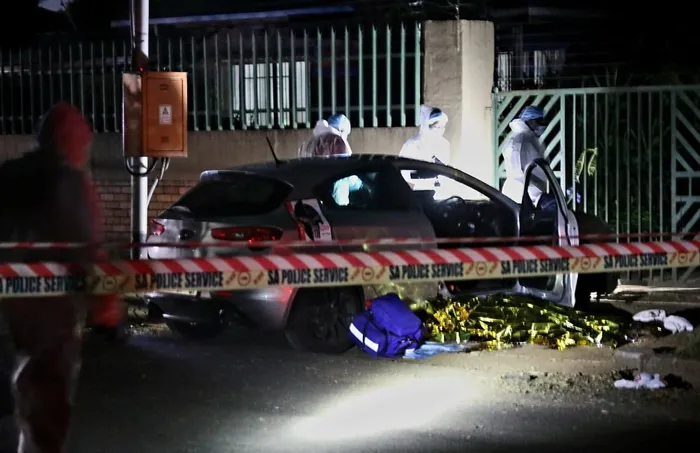
Civil society groups have urged Minister Kubayi to extend the deadline for public comment on the proposed Protected Disclosures Bill, 2026. This crucial legislation seeks to protect whistleblower such as Marius “Vlam” van der Merwe, and Babita Deokaran, who have paid with their lives.
Image: Timothy Bernard Independent Media
Civil society organisations united under Corruption Watch have urged the Minister of Justice and Constitutional Development, Mmamoloko Kubayi, to reconsider the deadline for public comments on the proposed Protected Disclosures Bill, 2026, which is currently set for Thursday, May 14, 2026.
This pivotal piece of legislation aims to overhaul South Africa’s whistleblower protection framework, promising enhanced safeguards, clearer procedures, and financial incentives for those who come forward with disclosures regarding wrongdoing.
The Minister gazetted the Bill on April 9, 2026, intending to repeal and replace the existing Protected Disclosures Act of 2000, which has been heavily criticised for its inadequacies. However, civil society groups highlight a pressing need for extended public consultation, citing limited time for widespread consultation and awareness, and several critical gaps within the Bill that need to be addressed before proceeding.
At a media briefing held at the Section 27 offices in Braamfontein, prominent voices, including former South African Airways whistleblower Cynthia Stimpel, shared harrowing testimonies about the consequences faced by whistleblowers.
Stimpel described the "journey of loss" experienced by those who expose wrongdoing, emphasising that the repercussions often extend far beyond job loss.
"It's their mental health. It's their physical health. Many people can attest to their face breaking out or you getting injuries in your elbows or your joints or you're getting a tummy ache constantly," Stimpel said.
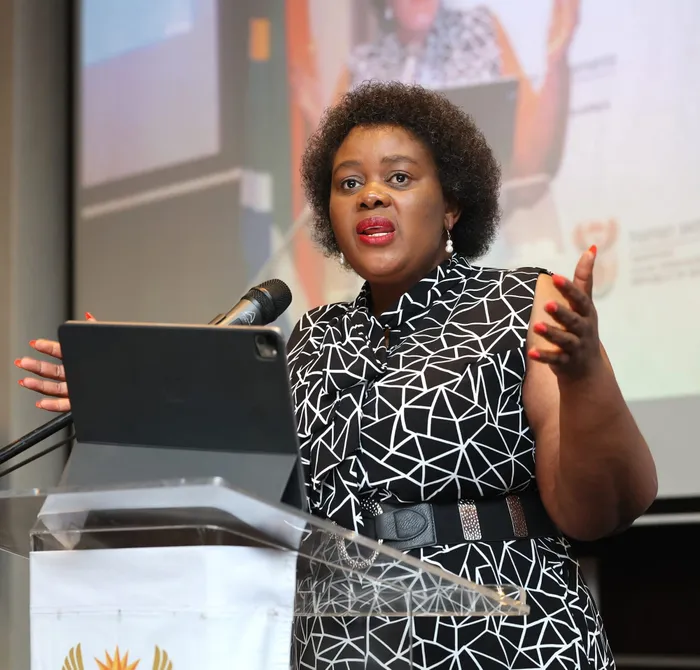
Civil society organisations have called on the Minister of Justice and Constitutional Development Mmamoloko Kubayi to reconsider the deadline for public comments on the Protected Disclosures Bil.
Image: File
Speaking on behalf of Open Secrets, Luthando Vilakazi echoed these sentiments, urging the government to take interim measures to support those who have endured financial hardship as a result of whistleblowing.
"For us collectively, we feel that this is an issue that involves all of South Africa, as any one of us could be a whistleblower. At that point, it is important that you feel that you have faith in a system that it would protect you," she stated.
Roshnee Narrandes from the Platform to Protect Whistleblowers in Africa (PPLAAF) outlined the serious deficiencies in the current iteration of the Bill, noting that it fails to sufficiently address key concerns around victimisation and the targeting of whistleblowers.
Civil society has identified eight critical gaps that the Bill must rectify, including the expansion of protections, compensation for job losses, and an overhaul of the current reporting mechanisms, which can expose whistleblowers to further risks.
Narrandes further indicated that the lived experiences of whistle-blowers who experienced workplace retaliation prove that disciplinary proceedings are frequently initiated by employers as the opening act of retaliation, adding that some victims have suffered secondary victimisation on top of losing their jobs and livelihood.
It is reported that one whistleblower is still fighting to receive 12 years' worth of salary benefits after being reinstated by his employer in the local government sector.
"Furthermore, Section 27 allows employers, who are often the perpetrators of workplace retaliation, to revoke the protection of their own employees, thus posing a direct conflict of interest. These provisions require urgent redrafting," she stated.
siyabonga.sithole@inl.co.za