
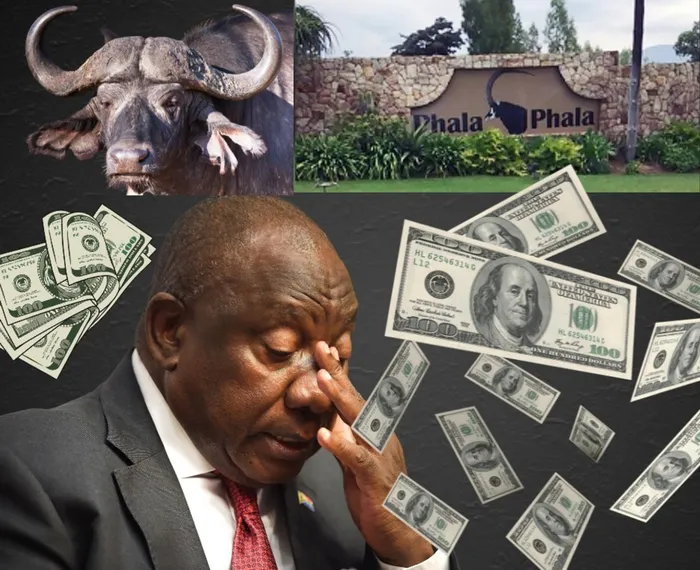
The African Transformation Movement (ATM) and Build One South Africa (BOSA) have condemned the deliberate withholding of records, urging Parliament to use all legal powers to enforce compliance.
Image: IOL graphics | File
The African Transformation Movement (ATM) and Build One South Africa (BOSA) have warned against the concealment of documents, saying Parliament should employ every legal recourse at its disposal to enforce compliance.
This comes after the National Assembly Speaker, Thoko Didiza, last week announced the formation of a 31-member impeachment committee, following the Constitutional Court (ConCourt) ruling that ordered Parliament to process the Section 89 report.
This was after the ConCourt ruled that Parliament acted unconstitutionally and unlawfully when it voted in December 2022 to block an impeachment inquiry against Ramaphosa.
The judgment set aside the National Assembly's majoritarian vote to reject the Section 89 Independent Panel report on the Phala Phala farm scandal, which found sufficient evidence that Ramaphosa may have committed serious violations of the Constitution and the law, as well as serious misconduct, in relation to Phala Phala.
The 31-member committee is expected to conduct a formal inquiry to determine if there are sufficient grounds to recommend Ramaphosa’s removal.
The ATM is one of the political forces behind the Constitutional Court ruling on the Phala Phala matter after joining the EFF to legally challenge Parliament's 2022 decision to block an impeachment inquiry against Ramaphosa.
Both parties argued that the National Assembly acted unconstitutionally by failing to establish a parliamentary committee to investigate and potentially impeach the president over the Phala Phala farm robbery.
The ATM's president Vuyo Zungula, will be on the impeachment committee.
He said any attempt to unlawfully withhold, conceal, or improperly redact documents relevant to Parliament’s oversight responsibilities would undermine constitutional accountability and the work of the committee.
The party added that Parliament must use all lawful mechanisms available to compel cooperation, including the enforcement powers available under parliamentary legislation and rules.
“No organ of state or executive authority should frustrate Parliament’s constitutional oversight obligations,” said spokesperson Zama Ntshona.
Ramaphosa previously faced criticism and legal battles for actively seeking to keep sensitive, high-profile documents and records out of the public domain. His legal team successfully went to court to seal sensitive bank statements and donor records tied to his 2017 campaign. The Pretoria High Court and Constitutional Court agreed to keep the records sealed, accepting the argument that the documents contained private third-party information that had been obtained unlawfully by the Public Protector.
A major political storm erupted in 2022 when it was revealed that Ramaphosa allegedly concealed a 2020 burglary on his Phala Phala game farm, where millions of dollars in foreign currency were stolen. This was after he was accused of failing to formally report the crime and covering up the incident to avoid scrutiny over how the cash ended up on his property.
The Independent Police Investigative Directorate (IPID) probe into the alleged police cover-up of the Phala Phala theft was also classified as “Top Secret”, before opposition parties like ActionSA and the EFF pushed for its declassification.
BOSA, on the other hand, said claims of executive privilege are not a blanket shield against accountability, adding that where such claims arise, the committee must carefully balance legitimate national interests with Parliament’s constitutional oversight responsibilities.
“BOSA’s view is that any limitation on disclosure must be narrowly justified and legally grounded. Otherwise, the process is rendered toothless and may be subject to further legal challenges,” said spokesperson Roger Solomons.
Solomons added that the core question is whether the President’s conduct aligns with the Constitution and his oath of office. He said BOSA’s primary focus is on uncovering credible proof of a constitutional or legal breach, specifically assessing if the President withheld facts, whether Parliament and the South African populace were deceived, and the true extent of the President's awareness regarding the incident.
“The central issue is whether the President acted in a manner consistent with the Constitution and his oath of office. For us, the most critical consideration is whether there is credible evidence of a serious violation of the Constitution or the law, particularly in relation to whether Parliament and the South African public were misled, whether there was interference or concealment, and what the President knew and didn’t know about the incident,” he said.
Meanwhile, Ramaphosa is planning an urgent court interdict to halt the impeachment proceedings in Parliament. This strategy aims to pause the formation of a parliamentary committee until a court reviews the independent panel report.
Solomons said while the President is allowed to exercise his legal rights, he cannot escape the perception that exercising such legal rights may create.
manyane.manyane@inl.co.za