
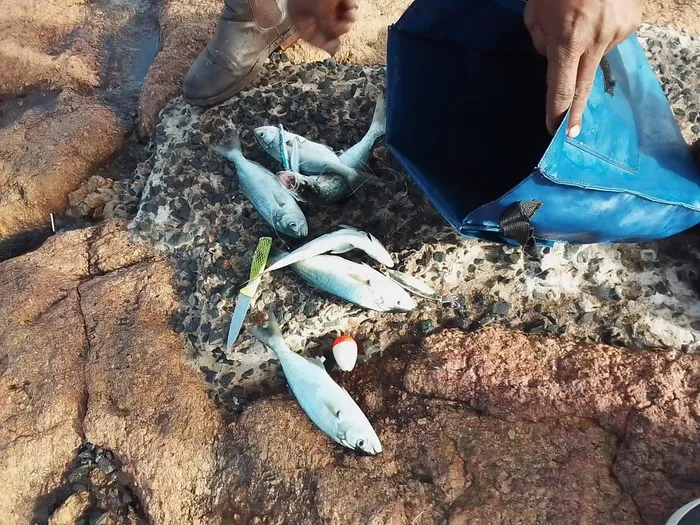
The Department of Forestry, Fisheries and the Environment (DFFE) and police, working with stakeholders such as the Coastal Marine Task Force, have clamped down on anglers who ignore the regulations relating to Shad.
Image: Supplied
Numerous anglers have been caught keeping undersized juvenile shad and exceeding daily bag limits as increasing numbers of the popular fish arrive along the KwaZulu-Natal coast ahead of winter.
The Coastal Marine Task Force (CMTF), a volunteer organisation that supports environmental stakeholders in protecting and conserving biodiversity resources in coastal operational areas, told IOL that many anglers were breaking the law by ignoring the daily bag limit of four fish per person, with a minimum total length of 30cm.
Offenders are issued spot fines or arrested and may face criminal prosecution.
“The CMTF does not create laws. We exist merely to educate and enforce the laws where applicable, along with other relevant stakeholders. Like any law in South Africa, there are those who argue different aspects, and fisheries bag limits are no exception,” a CMTF media spokesperson said.
“Firstly, there are clear criminal syndicates that operate as efficient catching, processing and distribution chains, and this is an obvious breach of the law on many fronts. Thereafter, we have heard it all — from greed and escalating fuel costs to poverty, ownership of the ocean and everything in between.”
The CMTF said lengthy observation and enforcement operations had revealed that some offenders appeared genuinely impoverished and used this as justification. However, authorities had also encountered anglers with high-value equipment and luxury vehicles committing the same transgressions while making similar claims.
The CMTF works with the Department of Forestry, Fisheries and the Environment, Ezemvelo KZN Wildlife, Durban Metro Police, eThekwini Municipality Coastal Aquatic Safety and Law Enforcement, Lifesaving South Africa and a wide network of informants along the KwaZulu-Natal coastline.
“Again, I will reiterate: we do not make the laws. They are there for very good reason and, at the end of the day, a species such as shad is being overexploited and needs protection from angling pressure,” the spokesperson said.
“We hear the excuse that ‘they are plentiful’, so people believe they must catch as many as they want. While there are days when shad feed freely, one needs only to speak to fishermen of old to get a true perspective on how abundant these fish once were and how their numbers have plummeted.
“One hears stories of shoals of shad so vast that the water turned black as they swam into bays and along beaches. Shad were once of such good size that measuring them for compliance with length limits was unnecessary. These stories are not just fishermen’s tales, but a true reflection of how plentiful their numbers once were. They make us realise how important enforcement and compliance are for the present and future.”
The task force’s recent successes include controlling illegal gill-netting in rivers and policing beach fishing in marine protected areas.
“We have also focused extensively on dismantling operations and apprehending those involved in the plunder of crayfish, or East Coast rock lobster, along the coastline, as well as regularly enforcing laws pertaining to recreational line fishing from our beaches,” the spokesperson said.
“Another success has been how the CMTF has won the hearts and minds of many recreational anglers who are tired of seeing people plunder species such as shad. These people have become a huge source of intelligence on so-called hotspots and the identity of guilty parties. We have done this by sticking to our mandate and treating people equally, with due respect for relevant laws.”
IOL News