
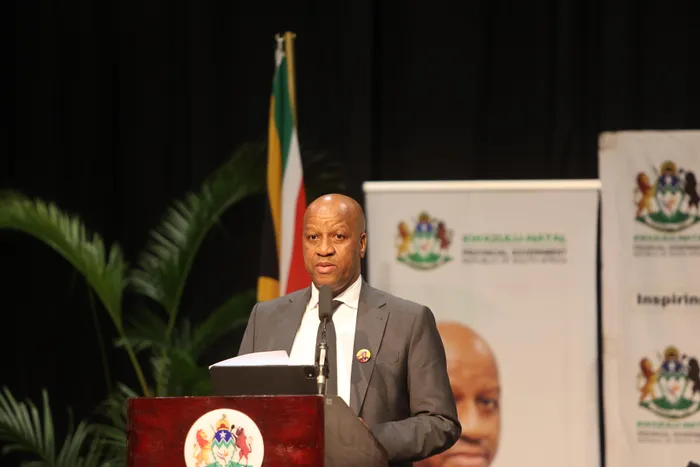
Premier Thamsanqa Ntuli emphasised the need for KwaZulu-Natal to prepare its people for a transformed labour market, focusing on high-demand skills in the digital and green economies at the KZN Jobs and Skills Summit.
Image: Tumi Pakkies / Independent Newspapers
KwaZulu-Natal Premier Thamsanqa Ntuli declared that the province is deliberately preparing for the “jobs of the future” by aligning its training systems with industry demand, investing in new industries from the green economy to advanced manufacturing and data analytics, and restoring dignity to essential technical skills as the backbone of a modern economy.
Speaking at the 2026 KZN Jobs and Skills Summit on Tuesday, Ntuli said the three priorities — growing our economy and creating jobs, improving service delivery, and building a capable, ethical state that works for its people — will be turned into action at the summit.
“The people of KwaZulu-Natal are not asking for promises — they are asking for progress. They are asking for leadership that prepares them not only for today’s opportunities, but for tomorrow’s economy,” Ntuli said.
He said jobs do not come from speeches alone, but partnerships, skills, and the courage to adapt to a changing world.
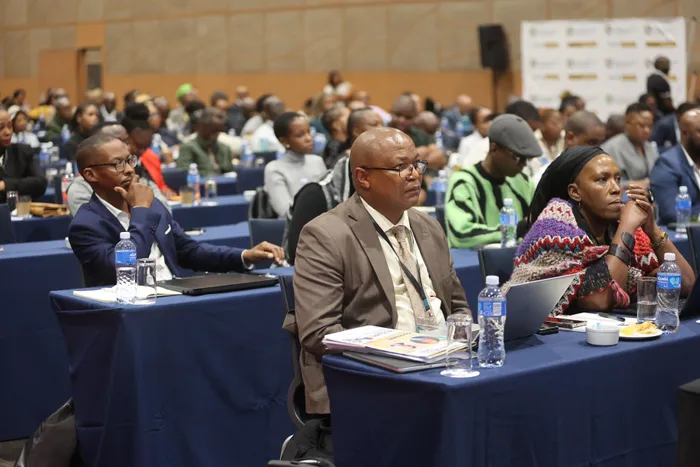
Delegates at the 2026 KZN Jobs and Skills Summit. The KZN summit serves as a platform for collaboration, aiming to close the skills gap and promote inclusive growth in the province.
Image: Tumi Pakkies / Independent Newspapers
“Through targeted skills development initiatives, we have already begun repositioning our province for the jobs of the future. We recognise that the labour market is undergoing a profound transformation. If we fail to prepare our people for this shift, we risk deepening inequality. But if we prepare deliberately — if we align education, training, and investment — we can unlock inclusive growth on a scale never seen before in our province,” Ntuli said.
“The jobs of the future will not look like the jobs of the past. While we will continue to strengthen traditional sectors such as agriculture, manufacturing, and tourism, the next wave of employment growth will be driven by new capabilities and new industries. It will be driven by innovation, by technology, and by the creativity of our people.
“We are preparing our young people for careers in the digital economy — in software development, cybersecurity, data analytics, and artificial intelligence. We are preparing technicians for the green economy — in renewable energy, electric mobility, and climate resilience. We are preparing artisans and engineers for advanced manufacturing — where robotics, automation, and smart logistics will define competitiveness.”
He said identifying the jobs of the future is only the first step. The greater task is to close the skills gap.
“This summit marks the beginning of a new compact — a compact between government, business, labour, and communities to prepare our people for the future of work. This will not be a talk shop. It will be an implementation platform. We will set clear targets, and we will define measurable outcomes. And we will hold ourselves accountable for delivery,” Ntuli said.
“We will expand technical and vocational pathways, because not every young person must follow the same road to success. Our economy needs artisans, technicians, coders, renewable energy installers, maritime engineers, and logistics specialists. These are not alternative careers — they are essential careers.”
Ntuli said the Government of Provincial Unity is aligning its training systems with industry demand, strengthening technical and vocational pathways, and ensuring that no young person is left behind in the transition to a modern economy.
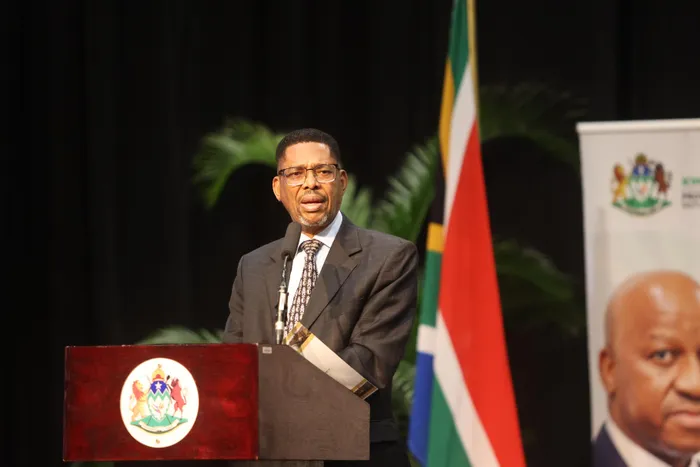
KZN Economic Development, Tourism and Environmental Affairs MEC Reverend Musa Zondi addressing the challenge of high unemployment and the critical mismatch between skills and economic needs at the KZN Jobs and Skills Summit.
Image: Tumi Pakkies / Independent Newspapers
KZN Economic Development, Tourism and Environmental Affairs (Edtea) MEC Reverend Musa Zondi said the province continues to face high levels of unemployment, particularly among the youth.
“At the same time, we are navigating a slow and uneven economic recovery, with certain sectors and communities, especially in rural and township areas, still lagging. This reality requires that we act with urgency, coordination, and purpose.”
Zondi said a key challenge that must be confronted is the mismatch between skills and the needs of the economy.
“We continue to see young people struggling to find employment, while employers struggle to find the skills they require,” Zondi said.
“This gap between education, skills, and economic demand must be addressed if we are to unlock growth and job creation.”
Zondi highlighted that KZN contributes about 16% to the gross domestic product. He said it is a challenge and they need to look at how they can increase the contribution from 16% to at least 20%.
thobeka.ngema@inl.co.za